
When One Job Is No Longer Enough
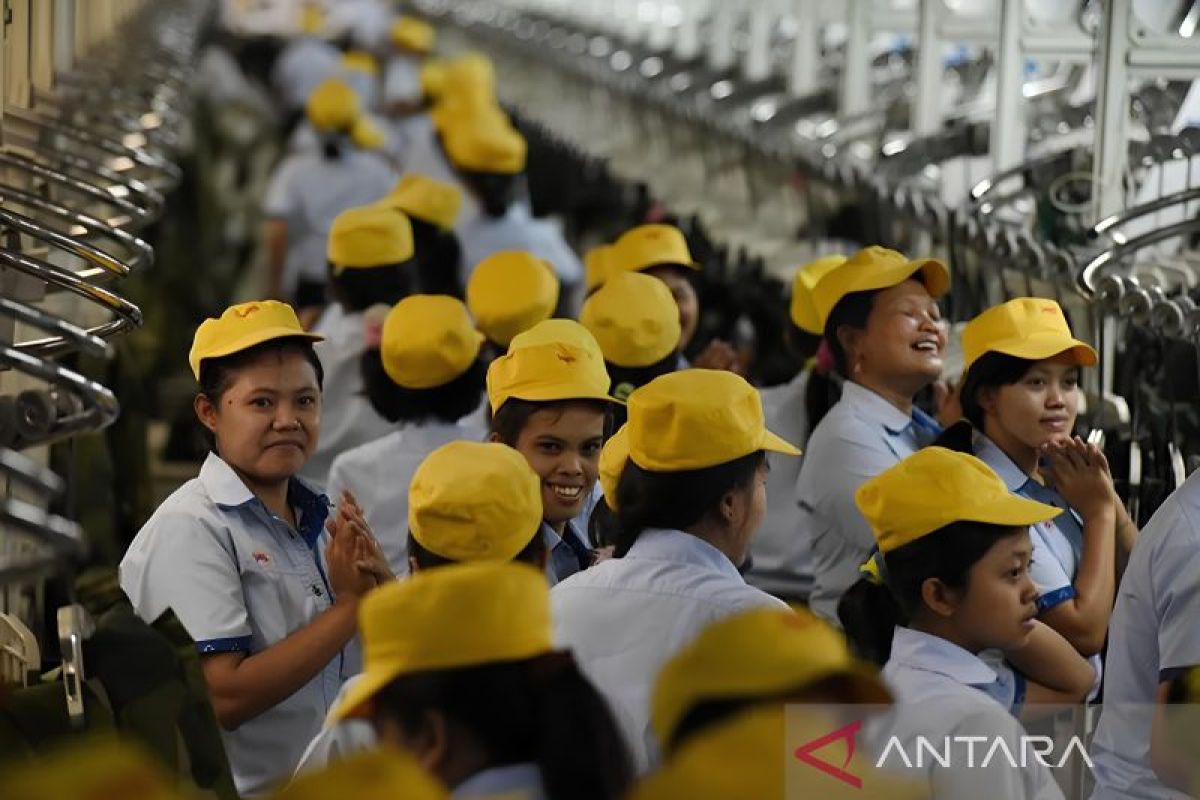
Multiple Income Streams Become Necessity
In many households, side work has become a way to close the gap between income and living expenses.
Jakarta — Increasingly, stories of workers with side hustles are emerging in public discourse. There are office employees who become online motorcycle taxi drivers after work hours, employees who manage online shops at night, and young workers offering various digital services. The term side hustle — additional economic activity outside primary employment — is gradually becoming part of everyday conversation.
This phenomenon is often seen as a sign of economic creativity among society in the digital era. Technology opens opportunities to earn additional income without leaving primary employment. However, behind this picture emerges a more fundamental question: why do more and more workers feel the need to have more than one source of income?
This question brings us to a broader picture of Indonesia’s labour market conditions. In employment statistics, the presence of additional work is not merely about lifestyle choices or entrepreneurial spirit. It is often related to the quality of primary employment, income stability, and labour market structure.
If primary employment is able to provide sufficient and stable livelihoods, additional work usually appears as a choice. However, when income from primary employment is not fully capable of supporting living needs, side work gradually transforms from a mere choice into a survival strategy.
Labour Force Data and Growth
BPS labour statistics show that Indonesia’s workforce continues to grow. The results of the National Labour Force Survey (Sakernas) for August 2025 recorded the workforce at approximately 154 million people, an increase compared to the previous year.
This increase reflects demographic and economic dynamics. Every year, millions of people enter the job market hoping to obtain employment that can support their livelihoods. However, the increase in the number of workers does not always go hand in hand with improvements in the quality of available jobs.
In examining labour market dynamics, success is not measured solely by the number of employed people. Equally important is whether the work provides adequate income, economic stability, and sufficient social protection. From this perspective, the phenomenon of side-hustle workers can be read differently. It is not merely a reflection of economic flexibility, but can also be a signal that many primary jobs are not yet fully capable of meeting living needs.
Employment Structure and Vulnerability
Indonesia’s employment structure provides an interesting picture of this condition. Sakernas data shows that the majority of workers remain in relatively vulnerable categories in terms of income and job stability. In August 2025, approximately 38.74 per cent of workers held the status of employee/worker/staff. Meanwhile, 21.40 per cent are self-employed, 13.86 per cent are self-employed with non-permanent workers, and 9.58 per cent are freelancers. Additionally, nearly 13 per cent of workers are family workers.
Small-Scale Economy
The dominance of workers in vulnerable employment categories suggests that much of Indonesia’s employment is still concentrated in the small-scale economy sector. This structure creates both opportunities and challenges. On one hand, it shows the resilience and adaptability of Indonesia’s labour market. On the other hand, it reveals structural constraints that limit workers’ ability to earn sufficient income from a single job.