
When Nastar Becomes the Spearhead of the Village
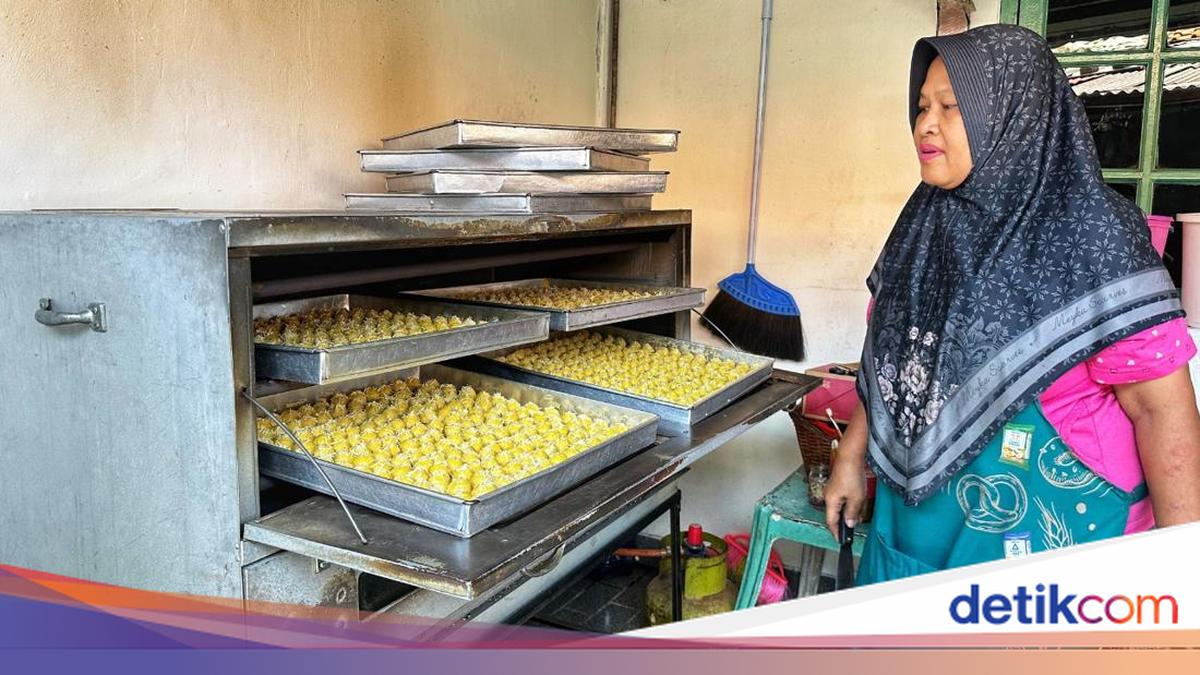
Ahead of Eid al-Fitr, the atmosphere in the residential area of North Larangan Ward, Tangerang City, changes dramatically. In residents’ homes, ovens run almost non-stop. The aroma of butter mixed with pineapple jam wafts from small kitchens that have become centres of dry cookie production.
This is where the community knows it as Kampung Nastar, an area renowned as a hub for homemade dry cookie production, especially nastar, which sees a surge in orders ahead of Lebaran.
For locals, this activity is more than just a seasonal routine. Dry cookie production has become part of daily life and a source of livelihood for many families. Sri Kusmiati is one of the business actors in the area. What started as a need to support family finances has now become part of the home-based business ecosystem in Kampung Nastar.
“I started producing in 1997,” said Sri when met by detikX at her production home. Initially, the business arose from simple needs. At that time, she tried to find extra income by selling cakes. “It started because I was in a pinch in Jakarta. To earn extra, to help my husband, I ended up selling cakes.”
Sri admitted that at first, she only tried making simple cakes with recipes learned independently. However, as demand increased and competition grew, she began developing variations and improving product quality. “At first, it was just simple stuff, the old-fashioned kind. But over time, with competition, I had to make it better, higher quality, tastier. So I started looking for recipes,” said Sri. Now, her home kitchen is one of the busier production points in the area.
Ahead of Lebaran, production activity in Kampung Nastar surges sharply. In Indonesia, dry cookies like nastar are almost always present on living room tables during Eid al-Fitr. These pineapple jam-filled cookies have become an inseparable part of Lebaran tradition.
At Sri’s house, the cake-making process starts from preparing pineapple jam to shaping the dough before baking. According to Sri, under normal conditions, she can produce hundreds of jars of nastar per day.
“If it’s just nastar, it can be 200-300 jars. There are two types of nastar here: cheese nastar and regular nastar. That’s around 300,” she said. Besides nastar, other types of dry cookies are also produced, such as snow princess and cheese sticks. However, nastar remains the most popular product. “Because nastar is the viral one. Nastar is the bestseller.”
Production usually starts well before Ramadan. But the surge in orders typically happens once the fasting month is underway. The high demand means some business actors even have to close orders earlier. Sri herself closed orders with a pre-order system a week ago.
Cake prices vary depending on size and type. One jar of dry cookies is sold for Rp55,000 to Rp140,000. The highest-priced jars usually contain a combination of several types of cakes. “The Rp140,000 one is a combination. It contains five kinds: nastar, snow, cheese, and cashew chocolate,” she said.
From Residential Area to MSME Hub
The nickname Kampung Nastar did not emerge suddenly. According to the Head of North Larangan Ward, Iwan Bambang Subekti, it started with just one resident producing nastar in the area. But because the product was popular with the community, the business grew and was imitated by other residents.
From there, some workers who previously helped with production started their own businesses from their homes. “So it developed, and now there are about 12 MSME business actors,” he said. Officially, the area began to be known as Kampung Nastar around 2021. Since then, the area has started receiving attention from local government and media.
As the popularity of Kampung Nastar grows, demand for products also expands. According to Iwan, orders come not only from the local community but also from various institutions and even abroad.
“Orders come from hotels, online, embassies, companies,” he said. He even mentioned that some cake products from the village have reached Europe. “Now it’s reached Europe. To the Netherlands, now to Germany.” Ahead of Lebaran, orders are usually full even two months in advance. Production activity runs almost around the clock.
“Kampung Nastar workers from morning to morning again, two shifts. From morning to evening, from iftar until almost suhoor,” he concluded.
The presence of the home industry in Kampung Nastar also has an economic impact on the surrounding community. According to Iwan, one home business usually employs several people from the local environment. One MSME can accommodate eight to ten workers. Overall, the dry cookie businesses in the area can absorb a large number of workers.
“Alhamdulillah, it means we’ve embraced more than a hundred local residents,” he said. The business actors also collaborate when receiving large orders. “If order A is overflowing, we share with order B. So we help each other, remind each other too.”
Residents of Kampung Nastar hope they can continue to develop as an MSME hub and a local culinary destination. According to Iwan, support from various parties is still needed to develop the village’s potential.
“I want Indonesia to have the one and only innovative nastar village in Tangerang City,” he said.
He wants the existence of this village not only to help residents’ economy but also to inspire other areas. “I hope this nastar village keeps advancing and becomes a regional attraction,” he said.