
When Millions Return Home, Trillions of Rupiah Follow: The Facts of Mudik 2026
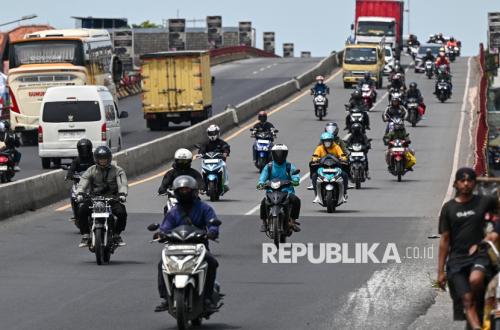
That morning, the roads were not yet fully lit, but the flow of people was already streaming like an unstoppable river. From cities to villages, from centres to outskirts, millions of people moved in the same rhythm: mudik.
Behind the tired faces and packed vehicles, there was something greater than mere homeward journeys; there was an economic pulse shifting direction.
Data from the Ministry of Transportation records that from H-8, or 13 March 2026, until Eid al-Fitr day, 10,887,584 people used public transport. This figure represents an 8.58% increase compared to the previous year, which reached 10,027,482 people.
This surge is not just a statistic of mobility but a signal that Eid is once again a collective moment driving many things simultaneously.
Behind those numbers, there were full trains, crowded planes, ships laden with passengers, and long lines of buses. Rail transport recorded 3,349,343 passengers, up 13.46%. Ferry crossings grew 14.01% to 2,664,004 passengers.
Buses increased by 9.37% with 1,693,931 passengers, while air transport served 2,397,192 passengers. All modes of transport saw rises, as if affirming that Eid is not merely a tradition but a silent yet massive economic engine.
However, what truly moved was not just people. Money also went home to the villages.
Each mudik traveller brought something, whether in the form of envelopes, souvenirs, or simply family necessities shopping. From Jakarta and other major cities, the circulation of money that is usually concentrated now flows to the regions. Villages that are normally quiet suddenly come alive, markets become bustling again, and small shops turn into non-stop transaction hubs.
The Head of Macroeconomics and Finance at INDEF, M Rizal Taufikurahman, stated that the Ramadan and Eid al-Fitr momentum will drive economic growth to 5.1-5.2% annually in the first quarter of 2026. Even the government targets growth of 5.5-5.6%, with Eid as one of its drivers.
The surge in consumption is key. Spending on new clothes, special foods, transportation costs, and tourism creates layered effects. INDEF notes that additional consumption during this period can contribute up to 0.5% to first-quarter economic growth, while household consumption increases 15-20% compared to normal periods.