
When Judges Across Indonesia Learn Philosophy
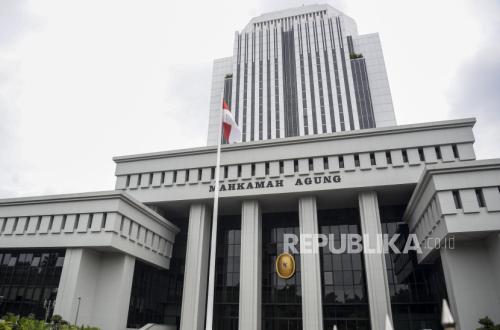
The Supreme Court’s Body for Legal Policy Strategy and Training (BSDK MA) organised Philosophy and Justice Education for Judges of the General, Religious, Military, and State Administrative Courts, as well as Ad Hoc Judges, across Indonesia on 6-10 April 2026. The event, conducted online, was attended by 229 participants. The training aims to underscore the importance of philosophy as a foundation in upholding judicial independence and prudence amid the complexities of law. Philosophy expert from the University of Indonesia, Tommy F Awuy, stated that judges should not solely rely on formal legal texts. Tommy encouraged judges to return to philosophical roots in line with empathy and humanity. “Imagination is important when judges face normative voids. From there emerge fresh and just decisions,” said Tommy during his presentation on the first day of the training, Monday (6/4/2026). Tommy observed that judges often encounter “empty spaces” in legislation. In such situations, he believes imagination plays a role in finding substantive justice, which is then tested through logic. Tommy advised judges not to be averse to imagining. “Imagination is the capital of creation. From there, ideas are tested through intuition and logic,” said Tommy. Tommy also recognised the challenges faced by judges in the digital era, where the boundary between facts and opinions blurs due to the torrent of information. Thus, Tommy urged judges to think maturely and objectively. “What goes viral is often considered truth. This is dangerous because it can dull logic,” said Tommy. Meanwhile, another speaker, Reza Alexander Antonius Wattimena, founder of Rumah Filsafat, encouraged judges to live modestly. Through such a way, Reza believes judges can produce fair decisions. Thus, Reza reminded judges not to succumb to base desires. “A modest life is the source of happiness. From an Asian philosophical perspective, satisfying desires is like drinking seawater, which only makes one thirstier. Desires, when satisfied without end, remain insatiable,” said Reza. Reza also likened the life of a judge to that of an ascetic. Those focused on their austerity are not influenced by worldly affairs. “A judge is like an ascetic, unaffected by the hustle and bustle of the world, creating space where we (judges) can be more contemplative,” said Reza.