
When Indonesia's Automotive Industry Tests Its Resilience
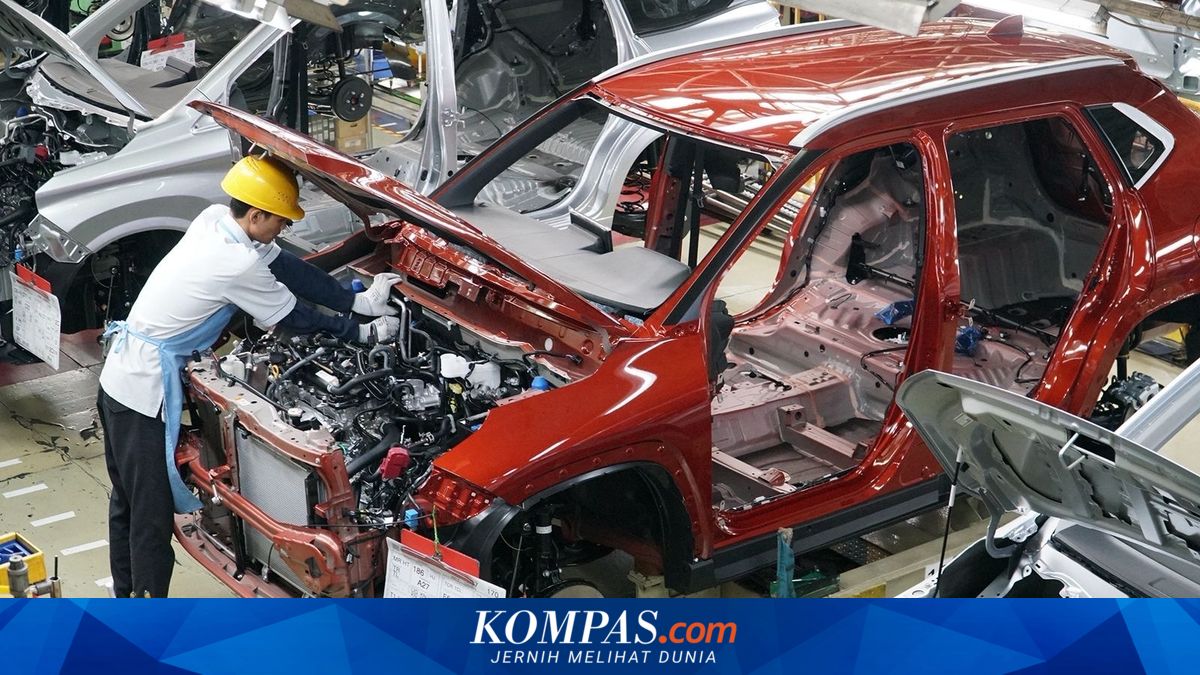
The Indonesia International Motor Show (IIMS) in early February 2026 once again demonstrates that Indonesia’s automotive industry is still thriving.
Industry Minister Agus Gumiwang Kartasasmita emphasised that the automotive sector plays a crucial role by creating added value, absorbing labour, and bolstering domestic investment. Throughout 2025, the industry is said to have directly employed around 99,700 workers, with a total investment value of Rp 194.22 trillion.
“Such contributions have proven effective in strengthening the domestic manufacturing structure,” Agus stated, as reported by Kompas.id on Thursday (5/2/2026).
The significance of the automotive sector’s role is also evident in its contribution to the national economy. According to data from the Indonesian Automotive Industry Association (Gaikindo), the sector contributed 1.28% to gross domestic product (GDP) in the third quarter of 2025, and an average of 7.6% to non-oil and gas manufacturing GDP over the past five years.
Unfortunately, behind these contributions, Indonesia’s automotive industry faces various challenges, both globally and nationally.
Additional pressure comes from the semiconductor supply chain. Chips are now a vital component in modern vehicles, while geopolitical tensions make their supply increasingly vulnerable.
Amid global pressures, Indonesia’s automotive industry also faces issues in the domestic market. The main challenge is no longer buyer interest, but affordability.
A study by the Institute for Economic and Social Research at the Faculty of Economics and Business, University of Indonesia (LPEM FEB UI), released in early 2026, shows that new car sales have significantly declined from their peak of around 1.22 million units in 2013 to about 866,000 units in 2024.
At the same time, the share of used cars reached 67.5% in 2024, surpassing the share of new cars, which fell to 32.5%.
In other words, the automotive sector’s challenge is no longer just boosting sales, but how to expand the new car market, which is constrained by affordability issues.
The weakening new car market does not stop at dealerships or showrooms. Its impact directly extends to the component industry and other supporting industrial layers.
As reported by Kompas.com on Thursday (4/9/2025), the decline in car sales has triggered waves of efficiency measures and layoffs (PHK) in the automotive sector, particularly in the component industry.
This means that when the car market slows, not only vehicle sales are at stake, but also the sustainability of the industrial network, workforce, and production capacity built over many years.
In such a situation, the strength of the local supply chain becomes one of the keys to making Indonesia’s automotive component industry more robust.
This is where it is important to view the automotive industry not only as a finished vehicle sector, but also as a long production network.
An exposition by the Indonesian Automotive Parts and Components Industry Association (GIAMM), as reported by Kompas.com on Wednesday (4/2/2026), indicates that one vehicle is supported by around 25,000 individual components and thousands of companies in its supply chain, from raw material suppliers, single parts makers, component systems, to the machinery and tools industry.
The industry’s opportunities for survival also grow larger as the world faces supply disruptions, price volatility, or trade tensions.
The new car market remains constrained. However, at the same time, the automotive industry cannot delay the transition to low-emission vehicles. This means the industry’s challenges are now multi-layered. The market needs to be revived, but the direction of technological change cannot be ignored.
This shift is already visible in the market. Data from the Ministry of Industry shows that the share of hybrid electric vehicles (HEV) in the four-wheeled market rose from 0.28% in 2021 to 7.26% in the January-June 2025 period. In the same period, the share of battery electric vehicles (BEV) surged from 0.08% to 9.77%.
However, the rising share of electrified vehicles does not automatically make the industry’s structure healthier. The LPEM FEB UI study indicates that during the incentive phase, BEV growth was still largely supported by imports.
This is evident from the portion of completely built up (CBU) units in BEV sales, which rose from 4% in 2022 to 64% in January-May 2025. In contrast, internal combustion engine vehicles (ICEV) and HEVs are still predominantly from local production or completely knocked down (CKD)/incompletely knocked down (IKD).
This condition shows that in 2026, electrification is no longer just a market trend. The main issue is how the automotive sector undergoes a technological transition to reduce emissions without weakening domestic manufacturing.
That challenge is also linked to the availability of resources supporting electrification, particularly battery materials. Therefore, the utilisation of resources needs to be calculated more efficiently so as not to become a new obstacle in the technological transition.
In that context, HEVs become one of the more realistic options. This technology is built on the existing ICE industry foundation, so its transition does not immediately sever the old industrial chain links.
This approach is important, especially when the market is still price-sensitive and localisation is not yet fully strong.
Despite facing pressures, Indonesia’s automotive industry does not stand on shaky foundations. Its manufacturing track record has grown through a long process, from simple assembly, component localisation, engine factory development into a production base, to export base development.
Indonesia is also continuously strengthening its position as an automotive production hub in the region. This affirms that Indonesia is not just a vehicle market, but also a manufacturing base.
That foundation continues to be built even when conditions are not easy. When Indonesia was hit by the 1997 monetary crisis and the 1998 political crisis, the construction of the Toyota Karawang factory still proceeded.
When purchasing power weakened and exchange rates