
When Import Permits Stall, Industry Suffers
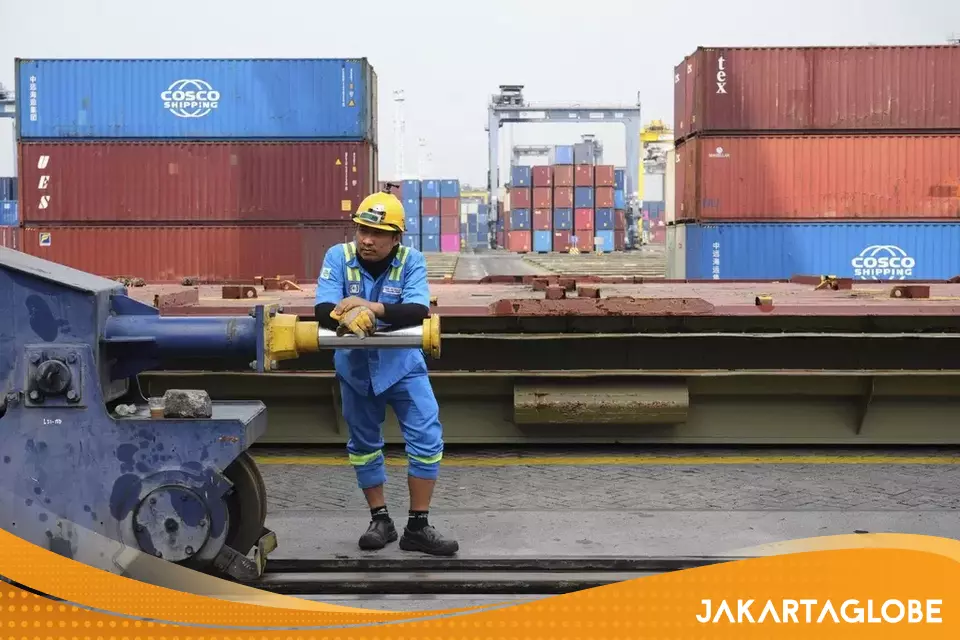
When Import Permits Stall, Industry Suffers
In discussions about trade balances, national independence and economic sovereignty are often simplified as reducing — or even eliminating — imports. Yet such an approach overlooks an important reality: imports are often essential components of domestic production. Import restrictions therefore must be implemented selectively. When imported goods form a critical link in domestic industrial supply chains, restricting them may undermine national production, job creation, and economic growth rather than strengthen them.
In recent years, industrial players in Indonesia have faced a persistent challenge in foreign trade governance: delays in the issuance of import permits. In practice, some permits remain unissued even after the Service Level Agreement (SLA) deadlines have been exceeded.
Consider the implications for manufacturers of nutritional products for mothers and children when essential ingredients — such as fish oil — cannot be imported due to pending permits. Similar challenges arise for other basic production materials that must be sourced abroad because the domestic supply is insufficient in quality, quantity, or consistency.
Prolonged delays in import permit processing contradict the SLA established by the Trade Ministry, which stipulates that permits should be processed and issued no later than 15 working days after an application is declared complete and technical approval from the relevant ministry or institution has been obtained. The SLA exists to provide business certainty, maintain smooth supply chains, and support a conducive investment and industrial climate.
It is therefore problematic when delays occur without adequate explanation to applicants. Such conditions disrupt production processes, undermine business planning, and threaten the availability of essential production materials.
Import permit delays should not be viewed merely as administrative inconveniences. In the processing industry — particularly in sectors such as food and beverages — the timely import of certain raw materials is an integral part of sustaining production, maintaining price stability, and meeting consumer demand.
When import permits are delayed without clarity, the risks extend beyond the companies directly involved. The effects ripple across the industrial ecosystem — affecting workers, suppliers, distributors, logistics providers, and other supporting businesses. Ultimately, such uncertainty can destabilize domestic supply chains and erode business confidence in the consistency of government policies.
Implementation Challenges
Import licensing policy in Indonesia forms part of the country’s broader foreign trade control framework and is regulated through statutory provisions. Under Law No. 7 of 2014 on Trade, the government has the authority to regulate and control import activities to protect national interests, domestic industry, and public safety.
Trade Ministry regulations governing import policies classify goods into several categories: those that can be freely imported, those that are regulated, and those that are prohibited or restricted. For goods falling into the regulated or restricted categories, import permits are a mandatory requirement before shipments can enter Indonesia.
However, import permits are not intended to serve as administrative barriers. Rather, they function as instruments for monitoring and supervising goods entering the national customs territory. They ensure compliance with safety standards, product quality requirements, and appropriate usage, while also enabling coordination among relevant ministries and agencies.
The establishment of the Indonesian National Single Window (INSW) system reflects the government’s commitment to integrating the import licensing process across ministries and agencies through a single digital platform. The objective is to accelerate processing, increase transparency, and provide greater certainty for businesses.
In practice, however, delays in the issuance of import permits still occur due to a range of technical and policy-related factors. The legitimacy of import permit regulations must therefore be accompanied by certainty in service timelines. Problems emerge when SLAs — which represent commitments to public service and business certainty — are not consistently upheld.
It is understandable that import permit processing may require additional time for data verification, cross-agency validation, or policy adjustments. Authorities may need to analyze import volumes, examine product specifications, or review the intended use of imported goods. In some cases, policy adjustments may be necessary due to domestic supply conditions, price fluctuations, or sector-specific regulations.
Under such circumstances, the permit process may be temporarily paused while awaiting policy clarification.
Nevertheless, prolonged delays can significantly disrupt industries that rely on imported raw materials unavailable or insufficient domestically. Uncertainty in raw material supply can slow production, halt specific production lines, or even force temporary shutdowns.
These disruptions undermine production planning, increase operational risks, and raise costs through additional storage expenses, logistical adjustments, contractual penalties, and the need to source alternative materials. Over time, these pressures weaken industrial cost structures and reduce product competitiveness.
The government must also consider the broader consequences for downstream supply chains. When production is disrupted due to delayed imports, the impact spreads to distributors, retailers, and ultimately consumers. In sectors such as food and beverages, such disruptions may affect product availability and price stability.
Production interruptions can also have longer-term implications for labor productivity and industrial relations. More broadly, prolonged uncertainty risks weakening private sector confidence in the consistency of go