
When 'Fallen Flowers' Permeate Jakarta
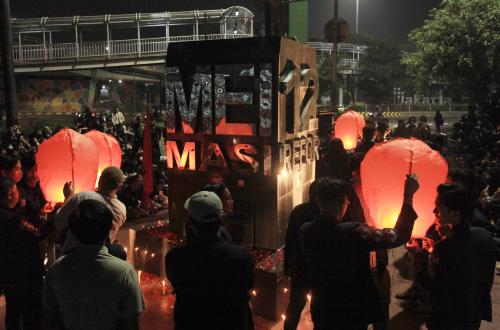
On 12 May, 28 years ago, blood was spilled and history was changed. The nation’s flowers fell in Jakarta. Four students from Trisakti University perished, igniting a series of events that shaped Indonesia’s future.
In an era without social media, how did the public convey their anger?
“Tuesday, 12 May, love was met with terror
Rose stems exchanged for bullets—hundreds of bullets” – Excerpt from the elegiac poem by Yudhistira ANM Massardi
On the night following the shooting, statements of condolence like Yudhis’s above poured in ceaselessly from the public to Republika. Hundreds of fax sheets piled up on the newsroom desk, and the phone rang almost every minute.
All expressed profound concern and shared condolences over the deaths of six reform heroes, students from Trisakti University.
Some sent condolences in their personal capacity, from mothers who said they had student children to members of the DPR RI. Many also sent them on behalf of community organisations, such as Gema Madani led by Emil Salim.
Even companies were represented. Employees of Medco, for instance, included dozens of signatures from their staff as an expression of grief.
The content of the statements was almost uniform. First, offering the deepest condolences to the six Trisakti University students who fell in the struggle for reform.
Second, encouraging students not to lose hope in fighting for their idealism and aspirations. And third, condemning the authorities for their arbitrary treatment of the students.
It was not only Republika that was flooded with condolence statements. Almost every newsroom of print media, radio, and television received condolence messages from the Indonesian people. Even nearly all radio stations, after playing songs, would read out public condolence statements that kept coming in.
Some radio stations opened direct on-air phone lines. Pro-2 FM, for example, despite being owned by RRI, freely gave the public a chance to voice their opinions on the Trisakti Tragedy. “Students’ weapons are books and brains, yet they’re met with bullets and muscle,” said one loyal listener.
Trijaya FM, which usually read morning news for Jakarta’s morning papers, instead read portions of the hundreds of condolence faxes that came in. Even one of its broadcasters could not hold back emotion, audible through choked sobs.