
When Ecology Becomes Medicine
A doctor does not wait for a patient’s heart to stop to conclude that they are ill. He reads the early signs: changes in heart rate, mild inflammation, metabolic disturbances that seem “insignificant” but already signal danger. In clinical practice, the most sensitive systems typically collapse first—and precisely because of this, they express truth.
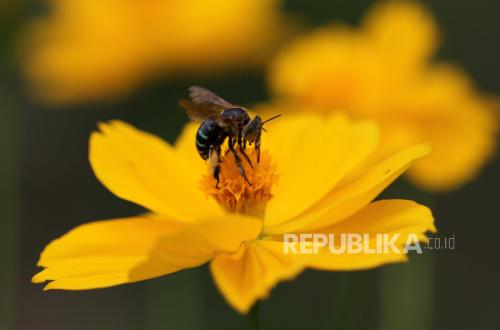
In planetary biology, insects play the same role. The loss of insects is not merely an environmental issue or matter of biodiversity. It is a population-level biomarker of environmental toxicity and systemic physiological stress. If the Earth is a body, then insects are rapidly dividing cells with high metabolism—the first to collapse when the environment becomes pathological.
The short life cycle of insects, their high metabolic rate, and strict dependence on chemical signals, light, and nutrients make them extremely sensitive to disturbance. Pesticides, changes in the electromagnetic spectrum, habitat fragmentation, and declining soil quality—all of these strike insects first, long before humans experience disease in clinical terms.
In medicine, failure of sensitive systems is called an early warning. In modern civilisation, we call it an “ecological problem” for life’s survival. Scientific evidence increasingly shows that exposures involved in insect population decline correlate with rising endocrine disruption, immune dysregulation, neurodevelopmental disorders, and metabolic disease in humans. The most striking example is neonicotinoid pesticides.
Neonicotinoids are designed to target nicotinic acetylcholine receptors in insects. Yet homologous receptors also exist in mammals, including humans—playing roles in nervous system development, cognitive function, and autonomic nerve regulation. Chronic low-dose exposure does not cause acute poisoning. But the medical world has learned too many times, at great cost, that the absence of acute toxicity does not mean biological safety.
Asbestos, lead, tobacco, and many other endocrine disruptors were once declared “safe” because they did not kill immediately. Disease emerged decades later—when correction was too late and victims too numerous.
Furthermore, insect loss—particularly of pollinators—directly affects the nutritional quality of human food, not in the form of starvation, but through micro-nutrient erosion. Fruits, vegetables, nuts, and legumes depend heavily on pollination. When pollination declines, harvests may still exist, but nutrient density falls. Folate, polyphenols, magnesium, flavonoids, and various antioxidants do not vanish dramatically. They thin gradually. The result does not emerge as a food crisis, but as chronic disease: weakened immunity, slow wound healing, low-grade chronic inflammation, metabolic disturbance, and vulnerability to infection.
These phenomena are increasingly seen in clinical practice. Yet they are rarely connected to ecosystem integrity and food systems. We treat symptoms with supplements and medicines, without touching the upstream cause: an environment no longer supporting healthy physiology.
At this point, the distinction between medicine and ecology actually disappears. Both speak of balance, tolerance thresholds, and system failure. The human body and the planetary body obey the same principles: no biological system is immune to chronic exposure.
The only difference is the timescale and the courage to read the signs. Ironically, we live in an age with the most advanced diagnostic technology, yet fail to read the most obvious diagnosis: the disappearance of tiny creatures that for hundreds of millions of years have maintained biospher stability. In clinical language, this is not merely a minor complaint. This is a red flag.
If a doctor ignores early biomarkers, he is called negligent. If civilisation ignores ecological biomarkers, we call it “the price of progress”. Yet true progress should enhance life capacity—not shorten it collectively. Insects are not merely pollinators or decomposers. They are silent guardians of planetary health, and indirectly, guardians of human health.
Proposed Solutions: From “Environment” to “Public Health”
First, change the policy framework: the insect crisis is identical to a public health issue. As long as insect loss is treated solely as an environmental matter, it will always lose priority to short-term economics. The solution is not merely green regulation, but policy reframing: biodiversity decline must enter public health risk indicators—equivalent to air or drinking water pollution. If a chemical significantly reduces insect populations, it must be treated like a medicine with systemic side effects—not like a neutral industrial product.
Second, apply clinical principles in regulation: “chronic low-dose matters”. Modern medicine long ago abandoned the logic of “safe because not lethal”. The same principle must apply to pesticides, food additives, and other environmental exposures. Toxicity testing must not stop at acute death, but must include chronic low-dose exposure effects, cross-generational effects, and impacts on indicator organisms such as insects.
Third, transition agriculture as therapy. Agroecology, reduction of synthetic chemical inputs, crop diversification, and restoration of microhabitats are not romantic agendas, but preventive health interventions. Living soil produces plants with higher nutrient density—and clinically, that means a more resilient human immune system.
Fourth, integrate clinicians in food and environmental policy. Doctors, nutritionists, and epidemiologists are rarely involved in food and agricultural system design. Yet they understand the long-term health consequences of these systems.