
When Creative Work is Tested by Corruption Articles: Lessons from the Amsal Sitepu Case
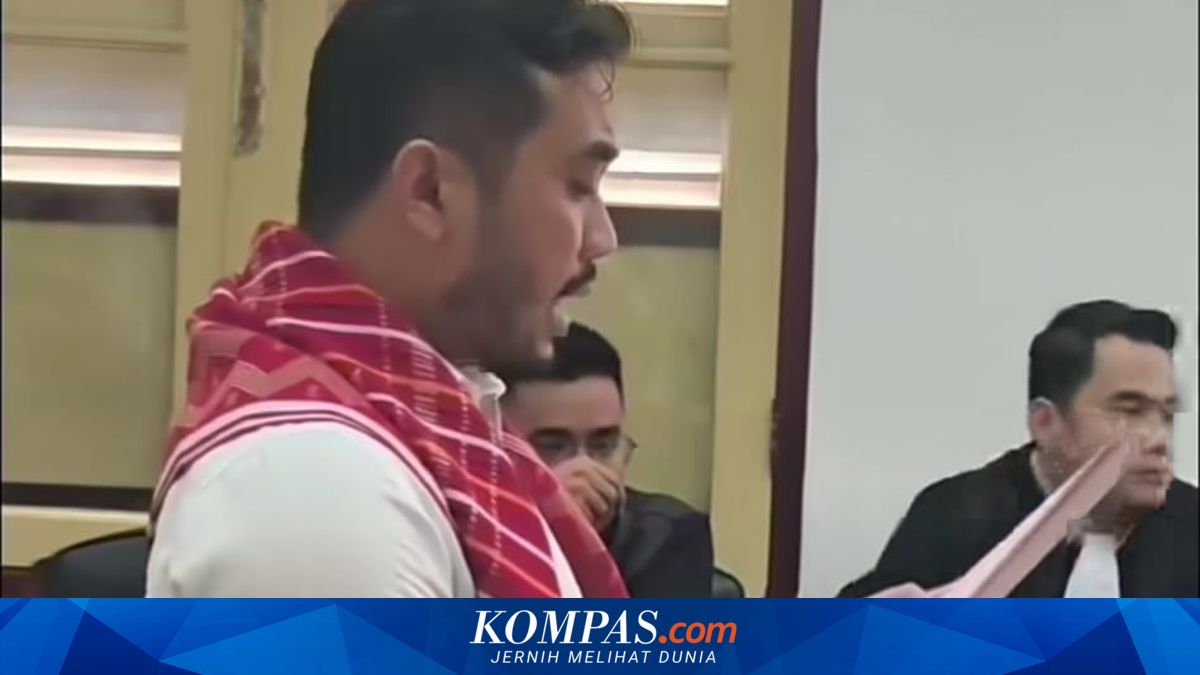
JAKARTA - A project to produce village profile videos in Karo Regency from 2020 to 2022 has led to a legal process for corruption offences that is now drawing widespread attention.
The case began when videographer Amsal Christy Sitepu from North Sumatra offered video production services to 20 villages in four sub-districts at around Rp 30 million per village.
Through his company, CV Promiseland, Amsal is accused of budget inflation (mark-up) in the village promotional video project.
Based on an analysis by auditors from the Karo Regency Inspectorate, the cost of producing the video should have been around Rp 24.1 million per village.
For this matter, Amsal is being demanded a two-year prison sentence, a fine of Rp 50 million, and an obligation to repay state losses of Rp 202 million by the Karo District Prosecutor’s Office.
Currently, Amsal is detained and undergoing various stages of the trial.
He is scheduled to hear the verdict reading at the Medan District Court on Wednesday (1/4/2026).
Criminal law expert from Trisakti University, Albert Aries, assesses that this case reflects a tendency towards increasingly repressive enforcement of corruption offences.
“This case reflects an increasingly draconian eradication of corruption,” said Albert in his statement on Monday (29/3/2026).
He explained that the term “draconian” refers to Draco, the lawmaker in ancient Athens in the 7th century BCE, known for very harsh and disproportionate rules.
Its characteristics include excessive sanctions, unbalanced with the level of fault, and rigid application of the law without considering substantive justice.
He questions the application of Article 3 of the Corruption Offences Law (UU Tipikor) to Amsal, who is a private party.
“How is it possible for Amsal, who is essentially a private party, to be charged under Article 3 of UU Tipikor, which can only be applied to officials who abuse their positions or authority?” said Albert.
According to him, even if linked to the concept of participation (deelneming) in the Criminal Code (KUHP), the village head as the party with authority should have been able to reject the proposal.
“Unless it can be proven that there was collusion between them,” said Albert.
In that context, law enforcers are obliged to prove the existence of malicious intent (mens rea).
Albert said that not all state losses must be resolved through criminal channels.
In some cases, administrative errors are not always appropriate to be processed as corruption offences.
“If this is the way, there will be no good people willing to do business with the state, because the risk of being criminalised using UU Tipikor articles is wide open,” he said.
A similar view was expressed by criminal law expert Boris Tampubolon, who emphasised the importance of proving illegal fund flows in corruption cases involving procurement.
In the context of government procurement, Boris stated that prosecutors must be able to prove kickbacks or rewards from tender winners to rogue officials.