
When Access is No Longer Sufficient: Trust as the Key to Financial Inclusion
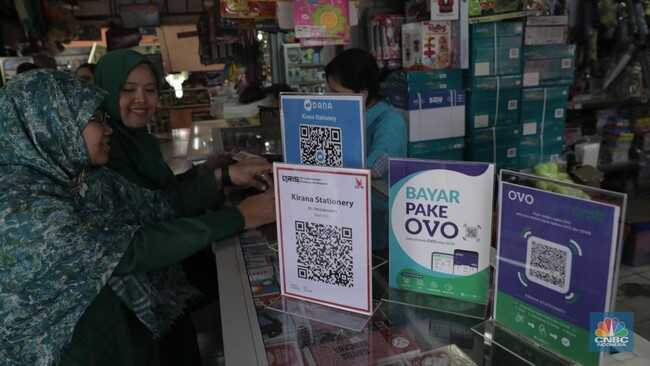
We often discuss financial inclusion in numerical terms. What percentage of the population already has a bank account? How many millions of SMEs are connected to banking services? How extensive is the network of agents and digital platforms available?
Access is indeed a prerequisite. However, access does not automatically result in sustained participation. And sustained participation ultimately depends on one fundamental variable: trust. This is where the discourse on financial inclusion needs to expand from mere infrastructure concerns to institutional and ethical matters.
Access as a Structural Dimension
Based on the latest results of the National Survey of Financial Literacy and Inclusion (SNLIK) conducted by the Financial Services Authority (OJK) in collaboration with the Central Statistics Agency (BPS), Indonesia’s financial inclusion index increased to approximately 80.5 per cent in 2025 and is targeted to reach 83 per cent in 2026. This figure suggests that formally, the majority of the population has access to financial system services.
Nevertheless, this achievement requires more critical analysis, particularly when compared with developments in Islamic finance inclusion. The results of the National Survey of Islamic Financial Literacy and Inclusion (SNLIKS) show that the level of public engagement with Islamic financial services remains relatively low.
The Islamic finance inclusion index experienced only marginal growth, rising from 12.88 per cent in 2024 to 13.41 per cent in 2025. This gap confirms that the expansion of access in the financial sector generally has not been fully accompanied by increased participation in the Islamic finance ecosystem.
Former Vice President of the Republic KH Ma’ruf Amin, towards the end of his tenure, announced an ambitious target of pushing the Islamic finance literacy and inclusion index to reach 50 per cent by 2026. This target reflects a commitment to strengthening the role of Islamic economics in the national financial system, whilst demanding more substantive strategies in building public trust and engagement.
In policy practice, financial inclusion is generally measured through structural indicators such as the percentage of account ownership at formal financial institutions, the number of investment accounts and insurance policies, participation in financing institutions and capital markets, and penetration of digital payment services and credit.
National survey data shows significant increases in bank account openings, capital market accounts, and access to financing during the period of the national inclusion programme. Structurally, these achievements reflect the success of supply-side expansion in broadening technical access to financial services.
However, this expansion of access has not been fully proportional to the intensity of productive use. Many individuals and micro and small business operators still do not optimise formal financial services for savings, investment, or business financing activities.
This phenomenon demonstrates that success in the structural dimension does not automatically generate the depth of participation. An increase in the number of accounts is not always accompanied by an increase in transaction frequency or the quality of financial product utilisation.
Empirical observations at commercial centres such as Tanah Abang and Thamrin City during the Ramadan period, for instance, reveal high levels of economic activity, but this has not been followed by a significant shift towards using Islamic finance accounts for productive transactions.
The majority of business operators still rely on conventional accounts from major banks. This indicates that the issue of inclusion, particularly in the Islamic finance sector, is not merely about the availability of services, but also about perceptions of benefit and trust.
Demand-Side Analysis
From the demand side, the public’s decision to use financial services is heavily influenced by rational considerations regarding economic benefits. Anggito Abimanyu, Professor at Gadjah Mada University and Chairman of the Deposit Insurance Corporation Board, emphasises that most of the population still considers the pros and cons pragmatically when interacting with Islamic finance institutions.
This means that the decision to use a product is driven not only by normative considerations of halal and haram, but also by cost efficiency, service convenience, returns, and fund security certainty. From an institutional economics perspective, this reflects that trust and perceived value become the primary determinants of participation.
If the public believes that financial benefits are not competitive or the process is more complex than conventional alternatives, then preference will remain with the system considered more efficient. In other words, increased normative literacy is not necessarily sufficient to drive changes in economic behaviour without support for a clear value proposition.
Supply-Side Analysis
Meanwhile, from the supply side, challenges lie in service design and the perception of institutional visibility. Murniati Mukhlisin, an expert in accounting and Islamic fintech, notes that based on statements from Bank Syariah Indonesia (BSI), some of the public still demand concrete physical presence such as ATM networks and branch offices. This shows that institutional legitimacy has not fully shifted to the digital realm.
This phenomenon is also influenced by demographic factors. The generation currently possessing the largest asset accumulation, namely the early millennial and Generation X cohorts, tends to still view the existence of physical infrastructure as a symbol of credibility and security.
Conversely, service digitalisation is more dominantly utilised by Generation Z, who are relatively still at the early stage of wealth accumulation. This lack of synchronisation creates a gap between structural expansion and the demographic composition of actual users, revealing that the challenge of financial inclusion transcends mere infrastructure provision.