
What Will Happen to the IHSG Today, After It Slumped Almost 5% Yesterday?
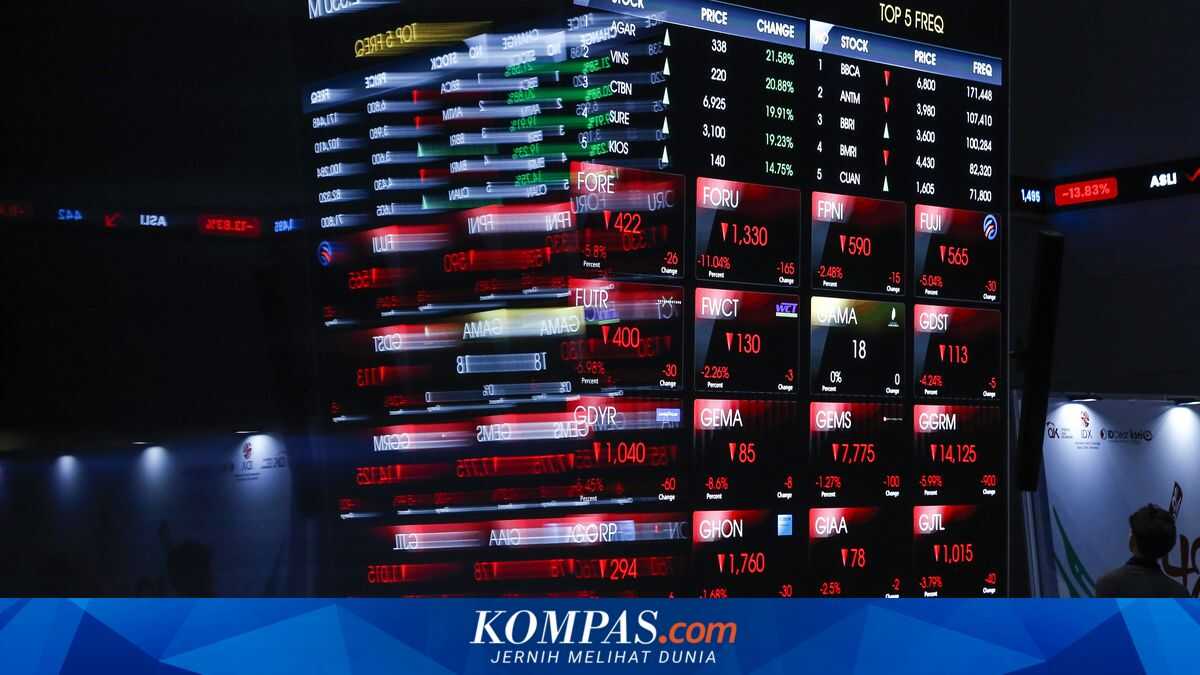
Jakarta — The Jakarta Composite Index (IHSG) is expected to strengthen in Thursday’s trading session (5 March 2026) after closing yesterday at 7,577.064, down 362 points or 4.57%.
Maximilianus Nico Demus, Associate Director of Research and Investment at Pilarmas Investindo Sekuritas, projects the IHSG could make a modest rebound with support at 7,460 and resistance at 7,860.
According to technical analysis, we see the IHSG potentially rising modestly with support and resistance at 7,460-7,860, Nico said in his daily analysis.
The assurances given by United States President Donald Trump regarding energy market stability have not been able to completely quell market participants’ fears. In fact, selling pressure remains in several global stock exchanges.
The IHSG fell 4.57%, while the Nikkei in Japan weakened 3.61% and the Hang Seng in Hong Kong fell 2.01%. The Kospi in South Korea slid as much as 12.06%, marking the two-day decline largest since the 2008 global financial crisis.
On the other hand, world oil prices continued to rise. Both West Texas Intermediate (WTI) and Brent crude rose even as the United States pledged to escort oil tankers. The rise in energy prices is seen as potentially increasing global inflationary pressures, which could reduce the chances of rate cuts by the US central bank, the Federal Reserve (The Fed).
Nevertheless, Nico sees signs of recovery emerging in global markets. World stock markets closed higher in the latest session, while futures contracts also showed rebound signals. This opens up the possibility for stock markets in the Asia region to move back into the green.
On the data front, market players are watching the release of the US ISM Services Index, which rose from 53.8 to 56.1, the fastest rise since 2022 and supported by stronger new orders. The US ISM Services New Orders index rose from 53.1 to 58.6. Meanwhile, the US ISM Services Prices Paid index, which measures changes in input prices in the services sector such as raw materials, labour, logistics, and supporting services, fell from 66.6 to 63.