
What We Know So Far About Danantara Sumberdaya, Indonesia’s New Export Entity
What We Know So Far About Danantara Sumberdaya, Indonesia’s New Export Entity
Jakarta. President Prabowo Subianto announced on Wednesday that Indonesia will establish a new state-controlled export company to centralize overseas sales of strategic natural resource commodities.
The new entity, named Danantara Sumberdaya Indonesia, will oversee exports of coal, crude palm oil (CPO), and other strategic natural resource commodities as part of the government’s effort to tighten trade governance and combat export under-invoicing.
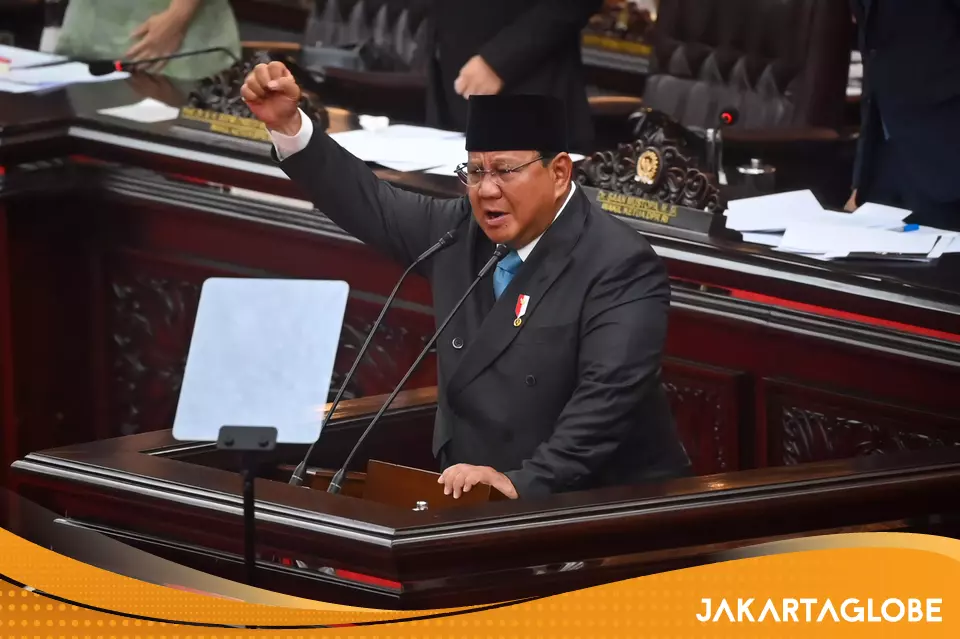
“The designated state-owned enterprise will act as a marketing facility. We want to tackle under-invoicing,” Prabowo Subianto said during his fiery speech.
Prabowo unveiled the plan during his address on the government’s macroeconomic framework and fiscal policy direction at the parliament in Jakarta. Indonesia’s economy has come under pressure in recent months as the rupiah weakened to record lows and the stock market declined sharply since March.
The government estimates Indonesia lost around $908 billion between 1991 and 2024 due to export under-invoicing practices, where exporters allegedly reported lower export values than actual transaction prices.
According to draft government regulations obtained by The Jakarta Globe, the new state-owned enterprise Danantara Sumberdaya Indonesia will operate as a special entity tasked with handling exports of strategic commodities.
The company’s main shareholder will be Danantara Investment Management, part of Indonesia’s sovereign wealth fund structure.
The proposed management structure names Luke Thomas Mahony, former director of Vale Indonesia, as president director. Meanwhile, Harold Jonathan Dharma TJ, formerly a director at Mandiri Sekuritas, is slated to become president commissioner.
Timeline of Export Reform Implementation
Phase I: Transition Period (June 1 – Aug. 31, 2026)
Main Focus:
Transfer of export trading transactions from private exporters to the state-owned enterprise.
Implementation Scheme:
Export trading transactions between overseas buyers and domestic exporters will gradually be shifted.
Export companies will be required to transfer export transactions and contracts to a state-owned entity (Danantara Sumberdaya Indonesia).
The state-owned enterprise will begin handling contracts and transactions with foreign buyers.
Phase II: Full Implementation (Starting Sept. 1, 2026)
Main Focus:
Full centralization of export management under the state-owned enterprise.
Implementation Scheme:
Full implementation of centralized export transactions between overseas buyers and Indonesian exporters.
Domestic companies will only transact with the state-owned entity through a business-to-business (B2B) mechanism.
All overseas contracts and export transactions will be handled entirely by the state-owned entity.
Authority and responsibility for export management will be fully transferred to the state-owned entity.
Export Process Under the New System
Pre-Clearance Stage
The state-owned entity will oversee:
Legal compliance, licensing, and regulatory requirements
Preparation of sales contracts and payment terms
Goods preparation, packaging, labeling, packing lists, and commercial invoices
Cargo space and logistics booking
Clearance Stage
The state-owned entity will manage:
Export documentation and customs clearance
Cargo loading and shipment arrangements
Post-Clearance Stage
The state-owned entity will handle:
Completion of export documentation
Export payment settlement mechanisms