
What We Know About the Uncovered 'Treasure' Export Violations in Batam
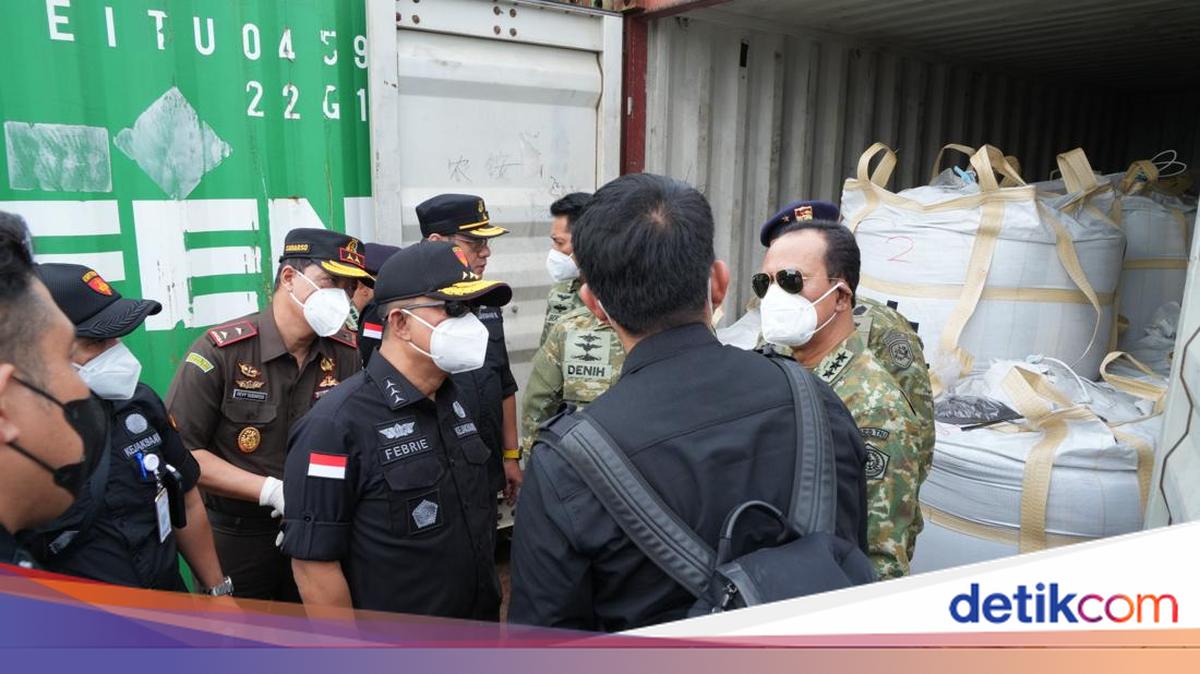
The Forest Enforcement Task Force (Satgas PKH) has uncovered alleged violations in the export of rare earth minerals (LTJ) from Batam, Riau Islands. These ‘treasures’ were discovered during the inspection of 25 containers, with Satgas PKH suspecting legal breaches in the export process.
Why are rare earth minerals referred to as ‘treasure’? Due to their strategic significance and role as critical raw materials for modern technologies.
The alleged violations were discovered when the Attorney General’s Office’s Special Crimes Prosecutor (Jampidsus), Febrie Adriansyah, inspected the site at Batam’s Kodaeral IV Dock on Tuesday (27 May). Also present was the First Executive Deputy Chair of Satgas PKH and Chief of Staff of the Indonesian Army (Kasum TNI), Lieutenant General Richard Tampubolon.
This inspection followed a report by the Indonesian Navy’s investigators on 17 May 2026 regarding the seizure of a ship carrying radioactive mineral content. During the on-site check, authorities opened 15 out of 25 containers to verify the physical goods against export documents.
Satgas PKH spokesperson Barita Simanjuntak revealed the task force has gathered evidence pointing to potential legal violations, following a cross-check of export trade documents.
“There is a strong suspicion of violations concerning documents required for export activities,” said Barita.
“Moreover, some evidence items must be accompanied by specific documentation, and certain goods are prohibited from export trade,” he added.
PT Putraprima Mineral Mandiri (PMM), alleged to have committed violations in LTJ exports, responded after Satgas PKH reported the findings. PMM visited the Jampidsus office to submit permit documentation.
“These accusations are defamatory, baseless, and highly detrimental to our company as a law-abiding entity in this country,” said PT PMM’s lawyer, Poltak Silitonga, at the Jampidsus building.
Poltak claimed they presented 20 valid permit documents, including industrial business permits (IUI), environmental impact assessments (UKL-UPL), operational mining permits (IUP), mine development plans (RKB), and export approvals (PE) from the Ministry of Trade.
“We also brought customs documentation for the 15 PT PMM containers, which were complete before export, including surveyor reports from PT Sucofindo,” he explained.
According to Poltak, PT Sucofindo is a government-appointed agency for testing mined minerals. Laboratory results from Sucofindo showed no radioactive or hazardous substances in the materials slated for export.
“If our goods contained radioactive or hazardous materials, Sucofindo would not have issued the certificate, and Customs would not have issued the Export Notification (PEB),” Poltak stated.
Satgas PKH acknowledged PMM’s denial as expected but confirmed the Indonesian Navy’s investigators worked based on authentic mineral content tests, ensuring the legal process proceeds with laboratory evidence.
“They can do as they wish; that’s their affair. But the Indonesian Navy investigators have worked professionally based on authenticated material tests,” said Barita.
Barita stated PT PMM was uncooperative during verification, refusing checks on the 15 inspected containers—a stark contrast to PT Timah, which cooperated in matching document data with physical cargo.
“PT PMM specifically objected to testing. Laboratory sample results then revealed indications of potential violations,” he said.
Based on these findings, Indonesian Navy investigators handed the case to law enforcement agencies within Satgas PKH.
Barita noted discrepancies between documents and the physical cargo contents, with rare earth minerals found in PT PMM’s shipment.
“PT Timah was not at fault; their 10 containers contained tin, and they cooperated. After lab tests, the contents complied with regulations,” Barita explained.
“However, for PT PMM’s 15 containers, they objected, refused, and were uncooperative. Investigators, exercising their authority due to strong suspicion of violations, conducted scientific sampling, and results confirmed the presence of rare earth minerals,” he added.
Barita explained that rare earth mineral exports are prohibited under government trade regulations, stressing the issue lies in document inaccuracies.
“Rare earth sand exports are banned. Regardless of the cargo contents, rare earth minerals are prohibited commodities for export,” he stated.
“So the issue is that documents appear correct but contents mismatch. It’s not arbitrary; physical inspections were conducted by breaking seals, all documented and accountable,” Barita stressed.