
What to Do If You Need to Leave Congregational Prayer? The Prophet's Unique Guidance
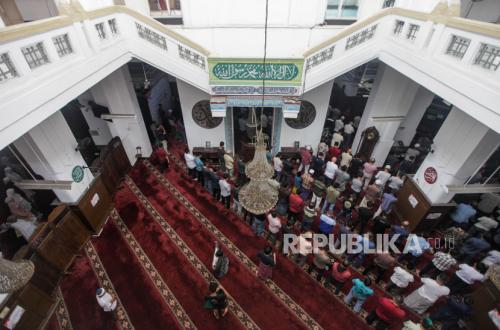
REPUBLIKA.CO.ID, CAIRO— It is common for someone to realise they are in a state of minor or major ritual impurity during congregational prayer, feel embarrassed, and continue praying anyway. What should be done, and what is the status of such a prayer? Sheikh Ahmad Wisam, a member of Egypt’s Darul Ifta Fatwa Commission, addressed this question regarding a person who realises they have not performed ablution (wudu) during congregational prayer but continues due to embarrassment, intending to repeat the prayer later at home.
Citing Masrawy on Saturday, 30 May 2026, during the Fatawa An-Nas programme broadcast on An-Nas channel, Sheikh Wisam explained that anyone certain they are not in a state of ritual purity must immediately terminate their prayer. This is because ritual purification (thaharah) is a fundamental requirement for the prayer’s validity.
He stated that continuing prayer without wudu is not permissible under Islamic law, and such a prayer is invalid, regardless of feeling embarrassed or hesitant to leave the prayer row in front of other worshippers.
Sheikh Wisam also noted that Islamic law has considered such situations and provided solutions to alleviate embarrassment. The Prophet Muhammad (PBUH) taught that those needing to exit prayer should do so discreetly, for example by pretending to sneeze or having something in the mouth or nose, then leaving calmly without drawing attention.
A hadith from Aisha, narrated from the Prophet (PBUH), states: “If one of you breaks wind during prayer, let him place his hand on his nose and leave.”