
What Lies Ahead for South Korea After Former President Yoon Is Sentenced to Life in Prison?
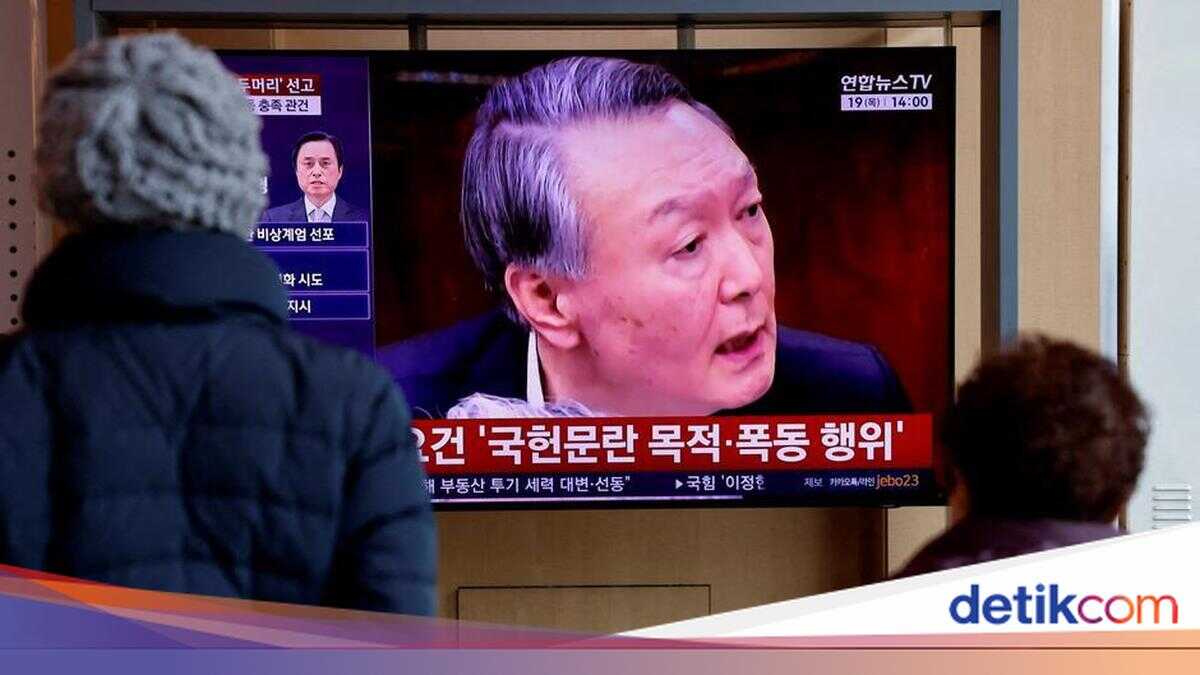
After more than a year of political turmoil, former South Korean President Yoon Suk-yeol was found guilty on Thursday (19 February) of leading an insurrection in December 2024 and sentenced to life in prison.
Although the Seoul Court’s verdict has concluded the most serious case against Yoon, analysts say it will take a long time for South Korea to recover from the crisis and its long-term consequences.
On 3 December 2024, Yoon declared martial law, claiming that his political rivals in the Democratic Party (DPK) had “collaborated” with North Korea and engaged in “anti-state activities.”
That same evening, troops were deployed to the National Assembly, preventing lawmakers from entering the building. Legislators eventually managed to gather and voted to revoke the declaration, which had lasted six hours.
The scenes that night shocked South Korea and caused political polarisation between the president’s supporters and opponents.
Yoon was promptly impeached and in January 2025 was detained following a stand-off between presidential security forces and law enforcement officers outside the presidential residence.
During the trial, prosecutors claimed he had mobilised the armed forces to seize control of the National Assembly and arrest opposition politicians as part of a personal coup.
In his defence, Yoon said he had acted to counter a “national crisis” caused by the left-wing opposition, adding: “This was an act to protect freedom and sovereignty and to save constitutional governance.”
The verdict does not mean “it’s all over”
“Regardless of the verdict, it doesn’t automatically mean ‘it’s all over,’” said Hyobin Lee, a professor at Sogang University in Seoul. “This is actually just the beginning.”
“I believe the deep-rooted malaise among the elite that has affected Korean society cannot be entirely eradicated,” she said.
“And there are still ‘Yoon’ supporters who cheer for him and believe he did nothing wrong. I see this as fertile ground for the emergence of a second or third Yoon Suk-yeol,” she added.
Recent opinion polls in South Korea indicate public sentiment that Yoon should pay a heavy price. A survey released this month showed that 32 per cent of respondents expected Yoon to receive the death penalty (the sentence sought by prosecutors), whilst 43 per cent expected a life sentence. In an earlier poll in January, more than 58 per cent said the prosecution’s request for the death penalty was “appropriate.”
Lee believes that South Korean democracy, which was born after military dictatorship ended in 1981, has actually emerged stronger from this crisis.
“On the night martial law was declared, the young soldiers who were supposed to carry out orders did not do so. No soldiers were injured or killed,” she said. “Even though these young people are often regarded as leaning to the right and as a group that supported the Yoon administration.”
“Korea has now become a country where martial law no longer ‘works’ and non-democratic governance is no longer conceivable. I think martial law demonstrated this very clearly,” Lee said.
South Korea’s “resilient” democracy still needs reform
Leif-Eric Easley, professor of international studies at Ewha Womans University, said South Korean democracy had “demonstrated resilience, managing to restore domestic stability and conduct foreign policy in accordance with national interests.”
“However, challenges to South Korean democracy come from both ends of the political spectrum and all branches of government,” he added.
Protecting democracy going forward will require fundamental changes, including constitutional amendments concerning the role of the president, bureaucratic reform, safeguarding the courts from partisan interests and corruption, and establishing a properly functioning legislature.
Achieving these goals will require “better political parties,” he added.
How is Yoon’s party responding?
Attention will now inevitably turn to how the People Power Party (PPP), which Yoon led, responds to the guilty verdict and his sentence.
Amid the upheaval, the party has signalled a break from its former leader and plans to elect a new leader on 1 March. Nevertheless, the party comprises various factions — those who still support Yoon and those who wish to distance themselves from him and move forward.
Easley believes a “generational change” is needed within the PPP — a new leader not associated with Yoon — along with time to become an effective opposition party.
On the other side, the Democratic Party, which holds a majority in the National Assembly, risks becoming complacent and failing to meet public needs. The party could then be judged as only capable of governing as an opposition party that defined itself against Yoon.
“Ultimately, the people of South Korea want and deserve a democracy where their leaders do not need to be impeached, removed, prosecuted, and sentenced to life in prison,” Easley said.