
What is the "Trump Always Chickens Out" Index? Can It Be Used to Make Money?
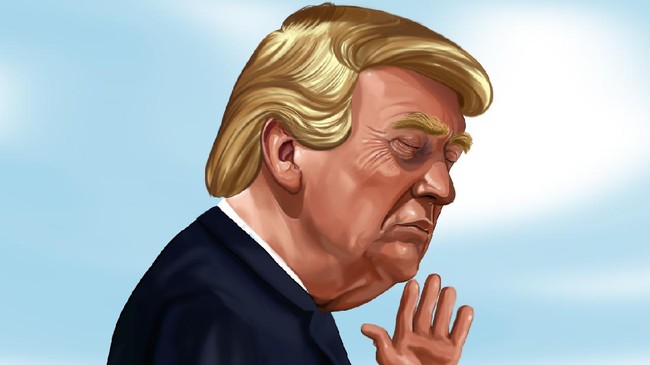
There is an index that can detect how US President Donald Trump’s policies affect global financial markets.
It is called the Trump Pain Point Index, or more commonly known as the TACO Index (Trump Always Chickens Out).
It sounds casual, even a bit joking, but behind that unique name lies a broader picture of how Donald Trump’s policies can influence, even shake up, global financial markets, from stocks and bonds to energy prices.
Therefore, the index is now being used seriously by analysts to read one important thing: when market pressure becomes too heavy, leading Trump to soften or “back off slowly”.
Simple but Powerful
Conceptually, the TACO Index combines various important indicators into one measure of pressure. Among them:
Movements in stocks like the S&P 500
Yield on 10-year US government bonds (a benchmark for global borrowing costs)
Mortgage interest rates
Petrol prices (energy)
Inflation expectations
Public satisfaction levels with the president
If all these indicators move negatively at the same time—when stock prices fall, interest rates rise, and energy prices become expensive—it means pressure on the government is at a high level.
In other words, this index tries to answer a simple question: how “painful” is the current economic and political situation?
Reading the TACO Index Pattern
According to the TACO Index as described by BCA Research over the last 15 periods, there is a fairly consistent pattern: every time this index rises extremely, Trump’s policies usually change as well.
Some examples:
April 2025 → Surge in pressure followed by a 90-day tariff pause
September 2025 → Government shutdown ends
December 2025 → Threat against Greenland withdrawn
March 2026 → Threat to Iran’s energy infrastructure pulled back
This pattern is consistent. When government bond yields spike too high alongside falling stock prices, Trump steps in.
So all these things happen not by coincidence. The market has its own “brake”. The most common triggers are a combination of two things:
High bond yields → government borrowing costs soar
Stock market falls → investor confidence weakens
If these two things happen together, the impact is immediately felt in the real economy, where credit interest rates rise, living costs increase, and the risk of economic slowdown grows larger.
At this point, the government usually has few choices other than to calm the markets.
This is where the term “Trump Put” comes in. It means there is an unwritten limit: if market conditions become too painful, the government will almost certainly intervene to soothe the situation.
Interestingly, markets are now even starting to “play strategies” based on this pattern.
Many investors believe that if conditions become too bad, Trump will pivot. So markets sometimes do not panic too much, hoping for policies that will ease the situation.
However, on the other hand, this also creates a dilemma. If markets are too calm, aggressive policies can continue. On the other side, if markets are too pressured, policies will be relaxed.
In the end, the TACO Index shows one important thing: the relationship between policy and markets is no longer one-way. Policies can move markets, but markets can also “push back” on policies.
As long as this pattern persists, the TACO Index can serve as a detection tool for investors to assess when major pressure will trigger major changes in global policies.