
What is the Minimum Number of Raka'ah for Tarawih Prayers? Here's the Explanation
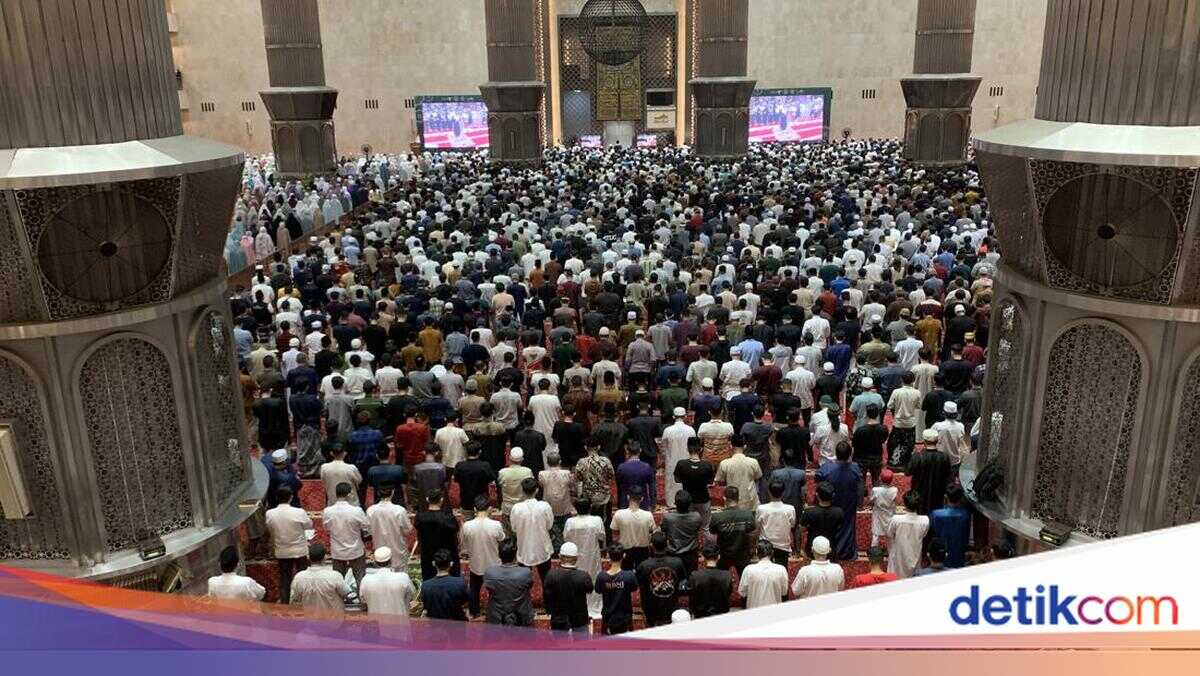
Tarawih prayers are a sunnah (recommended) worship performed during the month of Ramadan. Debates often arise regarding the number of raka’ah in Tarawih prayers, with some performing 8 raka’ah, others 20, and some even up to 36. So, what is the minimum number of raka’ah for Tarawih prayers? Here is an explanation from the Indonesian Council of Islamic Scholars (MUI).
Minimum Raka’ah for Tarawih Prayers
Quoting from the MUI website, in the book Al-Fiqh ’ala al-Madzahib al-Arba’ah by Sheikh Abdurrahman Al-Jaziri (died 1360 H), it is explained the method of performing Tarawih according to the four schools of thought. Here is a quote that shows the agreement that Tarawih is performed with two raka’ah in each salam, as well as technical differences between the schools:
“It is recommended to say salam at the end of every two raka’ah. If it is done with one salam and sitting after every two raka’ah, then it is valid but disliked, except according to the Shafi’i school. See their school in the detailed explanation of the schools below: The Hanafi school said: ‘If he prays four raka’ah with one salam, it counts as two raka’ah; if he prays more than four with one salam, there is disagreement about its validity, some say it counts as an even number of the Tarawih, and some say it is invalid.’
The Hanbali school said: ‘It is valid but disliked, and it is counted as twenty raka’ah.’
The Maliki school said: ‘It is valid, and it is counted as twenty raka’ah, and he is leaving the sunnah of saying salam and tashahhud in every two raka’ah, and that is disliked.’
The Shafi’i school said: ‘It is not valid except if he says salam after every two raka’ah, so if he prays it with one salam, it is not valid, whether he sits after every two raka’ah or not.’
(Al-Fiqh ’ala al-Madzahib al-Arba’ah [Beirut: Dar al-Kutub al-’Ilmiyyah], vol. 1, pp. 310-311)
This quote shows that the 20 raka’ah Tarawih prayer is widely recognized in the fiqh tradition, although there are technical differences in its implementation.
Explanation of the 8 Raka’ah Tarawih Prayer
However, Shafi’i scholars also explain that someone who performs some of the Tarawih raka’ah - including eight raka’ah - still receives the reward for Tarawih. In the book Busyra al-Karim by Sheikh Sa’id Ba’ali Ba’ishn, it is stated:
(قوله: وكذا من أتى ببعض التراويح) أي كالاقتصار على الثمانية فيثاب عليهم ثواب كونها من التراويح، وإن قصد ابتداء الاقتصار عليها كما هو المعتاد في بعض الأقطار
“Similarly, whoever performs some of the Tarawih, such as limiting it to eight raka’ah, will still be rewarded as if it is from the Tarawih, even if he intends from the beginning to limit it to that number, as is customary in some countries.”
(Busyra al-Karim bi Syarh Masa’il al-Ta’lim [Jeddah: Dar al-Minhaj], p. 711)
Meanwhile, the authentic hadith narrated by Sayyidah Aisyah is the basis for those who choose a smaller number, namely eight raka’ah. In Tuhfat al-Ahwadzi by Sheikh Abul ’Ala al-Mubarakfuri (died 1353 H), the hadith that is the basis for this is mentioned:
ما كان يزيد في رمضان ولا في غيره على إحدى عشرة ركعة يصلي أربعا فلا تسأل عن حسنها وطولها ثم يصلي أربعا فلا تسأل عن حسنها وطولها ثم يصلي ثلاثا، الحديث. فهذا الحديث الصحيح نص صريح في أن رسول الله ما كان يزيد في رمضان ولا في غيره على إحدى عشرة ركعة…
“…The Prophet (peace and blessings be upon him) did not add (to the night prayers) in Ramadan or at other times more than eleven raka’ah. He would pray four raka’ah - do not ask about their beauty and length - then he would pray four raka’ah - do not ask about their beauty and length - then he would pray three raka’ah…. This authentic hadith is a clear text that the Prophet (peace and blessings be upon him) did not add in Ramadan or at other times more than eleven raka’ah…
This narration is understood as a description of the Prophet’s qiyam (night prayers) which was known to the companions and did not consist of many raka’ah, namely eight raka’ah of Tarawih and three raka’ah of Witr.
About the 36 Raka’ah Tarawih Prayer
As for the practice of 36 raka’ah in Tarawih prayers, it is known in the tradition of the people of Medina and is attributed to the practice of the scholars of Medina during the reign of Umar bin Abdul Aziz. This practice was then accepted in the Maliki school and explained by Imam Malik as part of the breadth of worship practices.
This is clearly stated in the book Al-Fawakih al-Dawani by Sheikh Ahmad al-Nafrawi al-Azhari al-Maliki (died 1126 H):
(وكان السلف الصالح) وهم الصحابة رضي الله عنهم (يقومون في)