
What is the Mecca Route, the Fast-Track Immigration Service for Hajj Pilgrims?
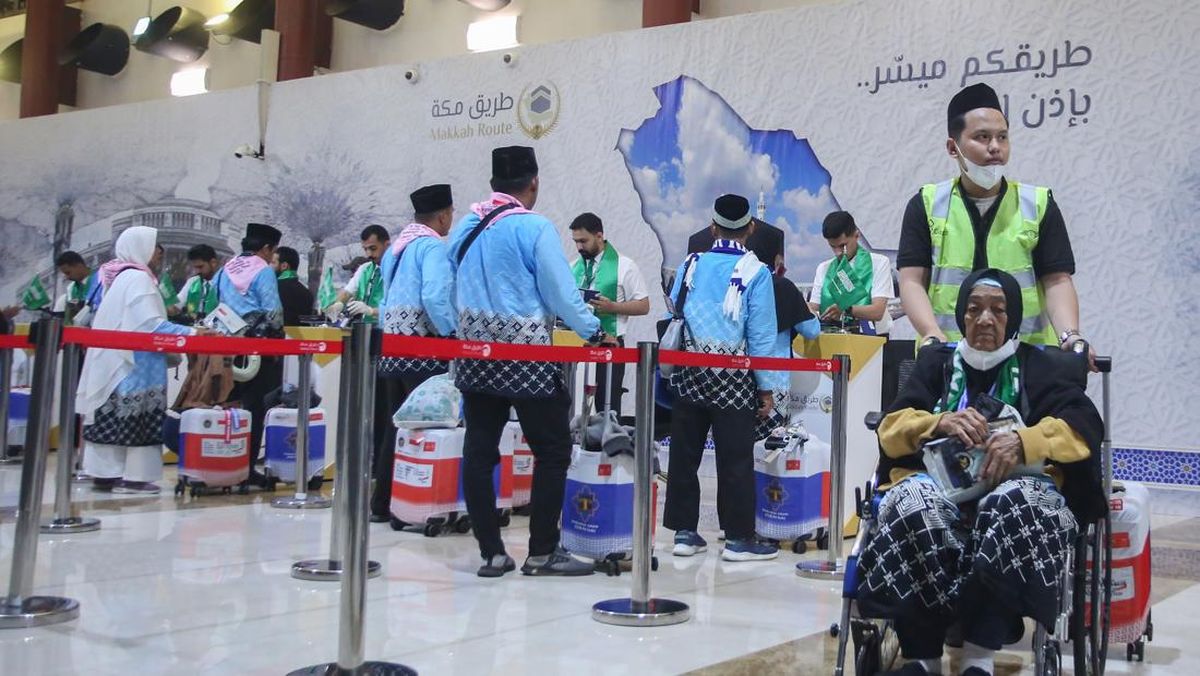
Indonesia’s Ministry of Hajj and Umrah (Kemenhaj) has assured that the departure process for prospective Hajj pilgrims from Indonesia for 1447 Hijriah/2026 will proceed in an increasingly organised and efficient manner through the implementation of the Mecca Route, or fast-track immigration service.
“We highly appreciate the implementation of the Mecca Route service, which increasingly facilitates Indonesian Hajj pilgrims,” said Minister of Hajj and Umrah (Menhaj) Mochamad Irfan Yusuf in Jakarta on Friday (24/4).
Since the start of Hajj operations on 22 April 2026, prospective Hajj pilgrims from Indonesia have begun departing via several embarkation points that have adopted the Mecca Route service, namely Soekarno-Hatta International Airport (Jakarta), Adi Soemarmo Airport (Solo), Juanda Airport (Surabaya), and Sultan Hasanuddin Airport (Makassar).
This departure forms part of an integrated service scheme that enables all immigration and Hajj administration processes to be completed while still in Indonesia.
Upon arrival in Madinah, he said, pilgrims are directly directed to their accommodation without having to undergo immigration procedures again. This is one of the main advantages of the initiative, designed to provide maximum comfort for pilgrims from departure until arrival in the Holy Land.
So, what exactly is the Mecca Route or fast-track immigration?
The Mecca Route is an immigration service conducted directly by Saudi Arabian immigration officers at Indonesian departure airports.
The Mecca Route scheme serves a total of 221,000 prospective Hajj pilgrims across Indonesia.
The Mecca Route encompasses various services, from biometric recording, electronic Hajj visa issuance, health checks, to immigration processes carried out at the departure airport.
In addition, pilgrims’ baggage has been organised and sent directly to their accommodation in Saudi Arabia in accordance with transport and accommodation arrangements.
“The integrated process from Indonesia not only accelerates services but also provides comfort and certainty for pilgrims upon arrival in the Holy Land. This is a tangible manifestation of our joint commitment to enhancing the quality of Hajj worship organisation,” said Menhaj Irfan.
He views service innovations like the Mecca Route as an important part of the ongoing transformation of Indonesia’s Hajj ecosystem being developed by Kemenhaj.
“We want to ensure that every pilgrim receives a better, more orderly, and more humane Hajj worship experience,” said Menhaj Irfan.
The service is the result of cross-ministry and institutional collaboration in Saudi Arabia, including the Ministry of Interior, Ministry of Foreign Affairs, Ministry of Health, Ministry of Hajj and Umrah, as well as several other related authorities.
Since its launch in 2017, the programme has served more than 1.25 million Hajj participants from various countries.
Previously, the Indonesian government hoped that the Mecca Route fast-track service could be applied to all embarkation points in Indonesia, as it helps accelerate the immigration process for prospective Hajj pilgrims from Indonesia upon arrival in the Holy Land.
Indonesia’s Ambassador Extraordinary and Plenipotentiary (LBBP) to Saudi Arabia, Abdul Aziz Ahmad, said that currently the fast-track service is only applied to a portion of prospective pilgrims. However, in the future, the government hopes that Indonesian prospective Hajj pilgrims can experience similar facilities.
“Now it might still be half, in the future we hope all pilgrims can undergo this process,” he said.