
What is the Impact of Danantara's Governance Reset on SOEs? Here is the Explanation.
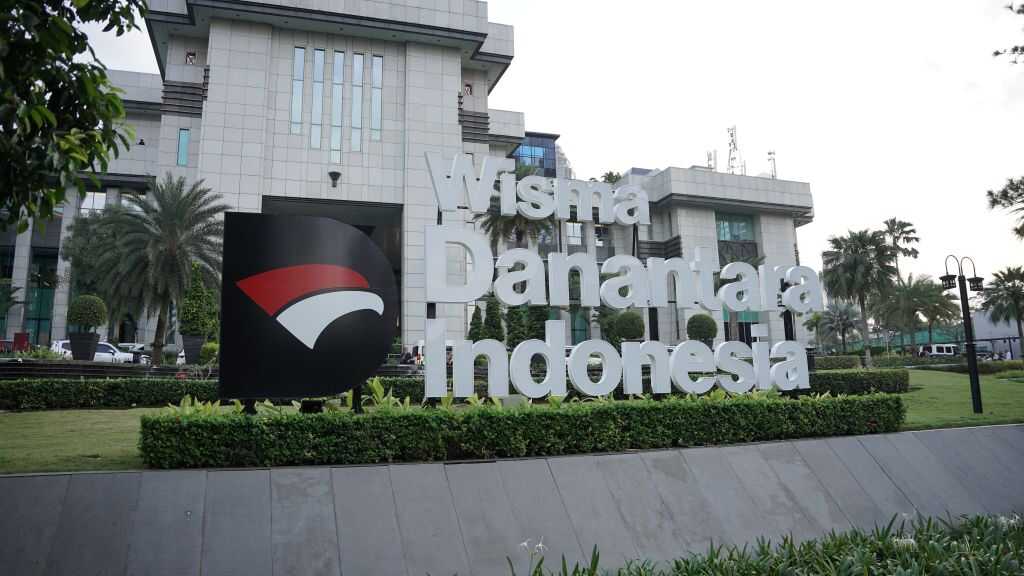
Jakarta: The Investment Management Agency (BPI) Daya Anagata Nusantara (Danantara) will implement a Governance Reset to strengthen the fundamentals of state-owned enterprises (SOEs). According to Syafruddin Karimi, Professor at the Faculty of Economics and Business (FEB) at Andalas University, the move is a positive step to improve the governance structure of SOEs, with expectations that it will be more efficient and more productive in the long term.
‘Governance reset of SOEs should be read as two things. First, a correction of long-standing issues, and second, a strategic repositioning for the future. The government aims to transform SOEs from policy implementers to value creators capable of driving industrialisation, downstreaming, and long-term investment,’ Karimi said on Thursday, 5 March 2026.
Karimi noted that for decades, many SOEs have faced classic problems, such as policy interventions, weak investment discipline, and an unclear relationship between the state’s role as owner and as policy maker. He said these conditions could reduce corporate efficiency and conceal fiscal risks. Here, governance reset enters to rectify the structure through strengthened governance, professionalising management, and a clearer separation between business mandates and policy mandates.
Strategic repositioning for SOEs
Moreover, Karimi said this step can also be read as signalling a strategic repositioning. He said the government wants to transform SOEs from policy implementers to value creators that can drive industrialisation, downstreaming, and long-term investment. ‘In an increasingly competitive global context, this repositioning is important so that SOEs can become more productive instruments of development while also improving investor confidence,’ he added.
Nevertheless, Karimi sees significant challenges in consolidating governance across SOEs under a single entity. He notes that SOEs operating in Indonesia span diverse sectors, from energy companies, banking, infrastructure, telecommunications, to transportation. Each sector, he said, has different market structures, business models, and risk profiles. ‘Consolidating governance means creating a supervisory framework that can reach across all these differences without hindering the operational flexibility of each company,’ said Karimi.
Karimi also sees other challenges arising in integrating risk management standards, financial reporting, and performance evaluation mechanisms. Without a strong institutional design, he said, consolidation could trigger conflicts of interest or misalignment of strategies between companies. He suggested that Danantara should build a portfolio system capable of separating investment functions from operational functions, and establish transparent performance indicators. ‘The success of this consolidation depends heavily on institutional capacity and consistent governance discipline,’ he said.