
What is Space Debris, the "Rocket Scrap" that Passed Over Lampung?
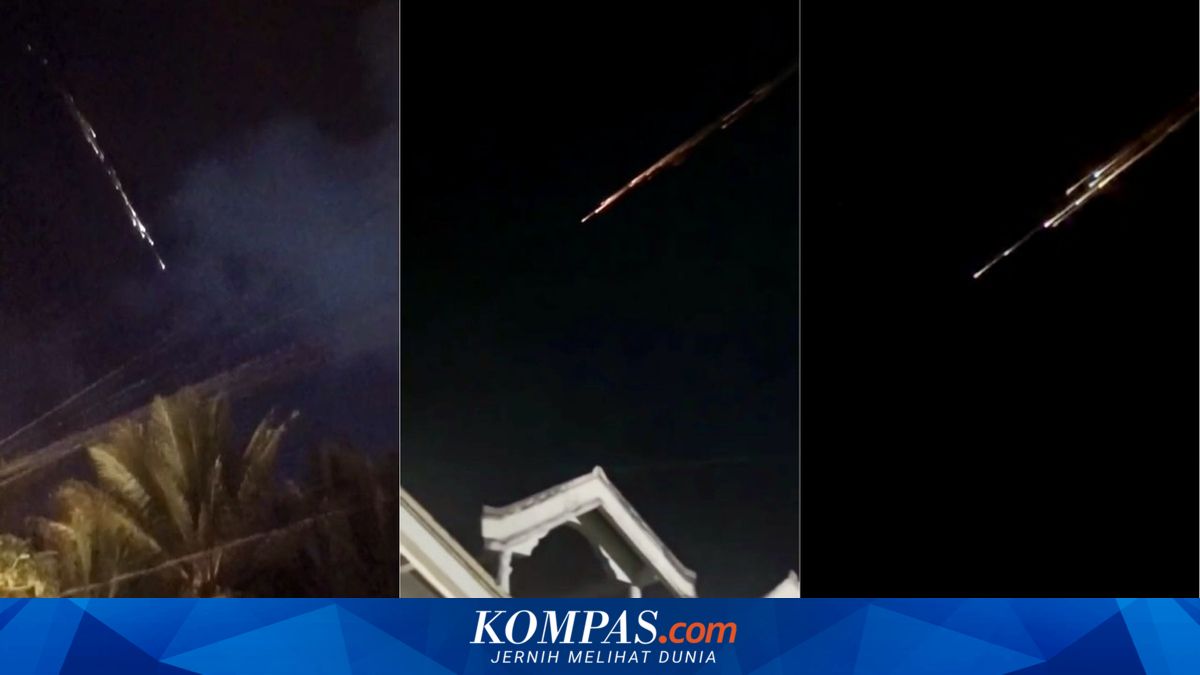
The phenomenon of space debris passing over the skies of Lampung on Saturday night (4/4/2026) serves as a harsh reminder that Earth’s orbit is far from empty. The object, confirmed to be part of a Chinese Long March-3B rocket, is just one of thousands of objects in outer space that could potentially re-enter the atmosphere at any time. Since the beginning of space exploration in the 1950s, thousands of rockets and satellites have been sent up there. Now, Earth is surrounded by human-made machine wreckage, popularly known as space debris. This can range from giant objects like defunct satellites that have failed to function, to items as small as flakes of peeling paint from rocket bodies. Data shows an increasingly worrying situation: By comparison, there are currently only about 2,000 active satellites in operation. This means the number of “carcasses” in space far exceeds the number of still-useful devices. According to Earth.org, debris in low Earth orbit (a few hundred kilometres away) typically loses altitude gradually due to atmospheric friction and falls back to Earth within a few years. However, a different challenge arises with communication satellites in geostationary orbit (36,000 km altitude). Debris at this height can continue to orbit Earth for hundreds to thousands of years before finally falling. The dangers of space debris do not only threaten the safety of active satellites or the International Space Station (ISS). Real impacts can also be felt on Earth’s surface. Large debris that does not fully burn up has the potential to damage the environment. For example, Russian Proton rocket debris in Siberia often leaves behind highly toxic fuel residue, namely unsymmetrical dimethylhydrazine (UDMH).