
What is Ogoh-ogoh? Origins, Meaning, and Its Role in Nyepi Celebrations
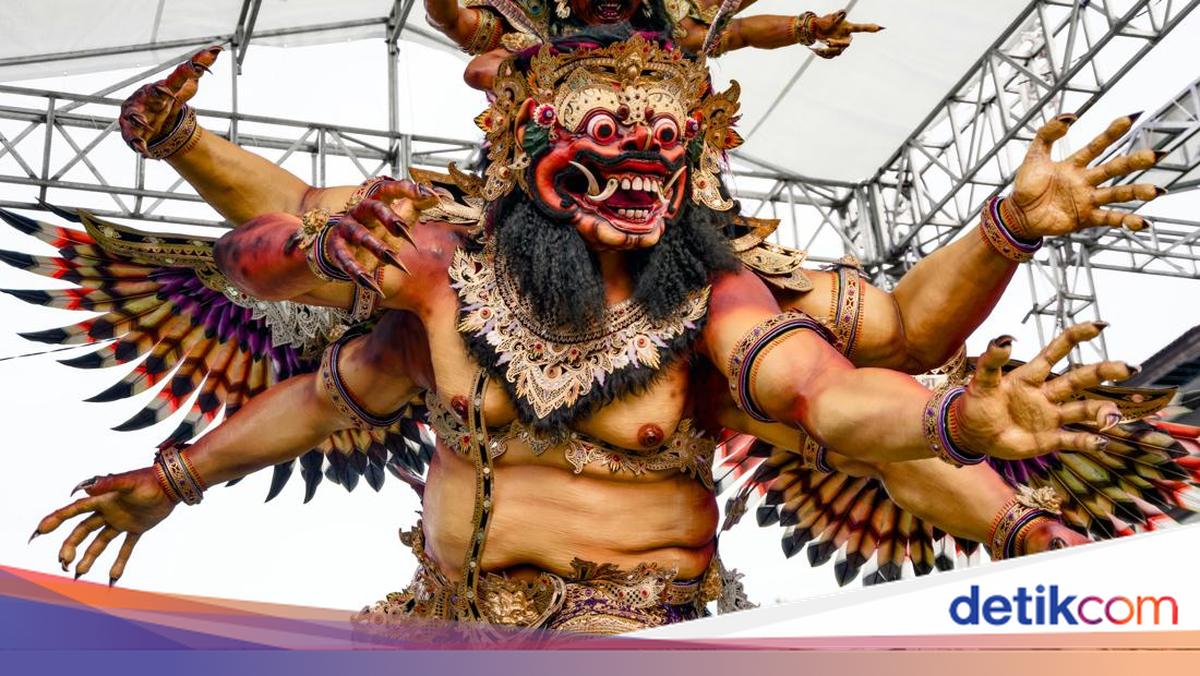
Before Nyepi, Indonesian Hindus typically parade large objects in the form of giant statues with a frightening appearance. These objects are known as ogoh-ogoh.
According to the book “Ogoh-ogoh: Bali’s Cultural Tradition That Went Global – History and Development in Denpasar City” by Dana and Adnyana, ogoh-ogoh are actually distinct from statues. Ogoh-ogoh can be defined as three-dimensional objects made from assemblies of solid, soft, or flexible materials wrapped in layers of paper or cloth, coloured, adorned with hair, and resembling the form of a deity, Bhuta Kala, a human, an animal, or a combination of human and animal.
Ogoh-ogoh are typically paraded and then burned, marking the end of Tawur Kesanga. Tawur Kesanga itself is a ceremony to purify and balance nature.
Origins of Ogoh-ogoh: Existing Since the End of the 20th Century
According to articles titled “Aesthetic Transformations of Ogoh-ogoh: From Conventional Giant Figures to Hybrid Myth-Popular Culture Characters” by Suardana and colleagues and “Development of the Ogoh-ogoh Parade from a Religious Ritual to a Tourist Attraction in Bali” by Prianta and Sulistyawati, ogoh-ogoh refers to three-dimensional objects that are swung back and forth. Ogoh-ogoh became part of the pre-Nyepi procession, specifically during the Pengerupukan ritual.
Ogoh-ogoh can be displayed in various forms, typically possessing a fierce appearance. Commonly, ogoh-ogoh are displayed as Bhuta Kala, which represents unpredictable natural forces (bhu) and time (kala). This creature symbolises negative and destructive power that exists in Bhuwana Agung (macrocosm) and Bhuwana Alit (microcosm) and is interpreted as a reflection of the dark side of human nature. Bhuta Kala is depicted as a tall, large, and frightening creature. Bhuta Kala is often portrayed with a terrifying face and long fangs.
Although closely associated with Nyepi celebrations, ogoh-ogoh are not actually known in the Vedas or Hindu traditions from India. Ogoh-ogoh are products of the creativity of Balinese Hindus and are only part of the Hindu tradition in Indonesia.
The ogoh-ogoh tradition first appeared in Denpasar in 1980 with the term “onggokan”, whose origins are linked to agricultural practices and local rituals such as lelakut (scarecrows), funeral effigies, and Barong Landung. The term onggokan was used around 1984 and meant “something lifted or raised (dionggok)”.
The term ogoh-ogoh was formally used in 1984, following the formal designation of Nyepi as a national holiday through Presidential Decree No. 3/1983. From that point on, ogoh-ogoh became part of the pre-Nyepi ceremony, symbolising the purification of Bhuta Kala before Nyepi.
During the period from 1990 to the 2000s, the form of ogoh-ogoh evolved into diverse shapes, including popular cultural characters and public figures. Ogoh-ogoh competitions also began to be held in various regions. Today, ogoh-ogoh continue to undergo transformation, often incorporating various technologies, such as LED lights and hydraulic systems to make them move.
Role of Ogoh-ogoh in Nyepi Celebrations
According to the article titled “Religious Educational Values in Nyepi Holiday Celebrations” by Maulana and colleagues, one day before Nyepi, Hindus perform the Tawur Kesanga procession, which is then continued with the Pengerupukan ceremony. At this moment, villagers will parade ogoh-ogoh around the village accompanied by various sounds.
After being paraded, ogoh-ogoh are burned (dipralina). According to the explanation on the Bali Provincial Government’s Ceraken website, the burning of ogoh-ogoh aims to allow the bhuta (spirits) who have enjoyed the tawur or caru offering to return to their realm with peaceful feelings. The hope is that Hindus can then perform Nyepi with solemnity.
Meaning of Ogoh-ogoh
Ogoh-ogoh are the result of Hindu creative expression in interpreting religion through meaningful symbols. Bhuta Kala ogoh-ogoh represent bad, evil, and destructive qualities that need to be dissolved through the Panyomian ritual to neutralise negative energy so that human life is not disturbed.
The essence of ogoh-ogoh symbolisation is to awaken humanity to the values of Rwa Bhineda (positive and negative energies) whose balance must be maintained by upholding dharmic teachings. By prioritising positive values and reducing negative values, it is hoped that Hindus will aspire to a life that is peaceful, harmonious, and prosperous in accordance with the goal of religion.
As part of the pre-Nyepi ritual, ogoh-ogoh also represents reverence for the cycle of life, from human birth (utpeti), the time when humans become aware of their life’s needs (stiti), until humans finally experience non-existence/death (prelina). Additionally, ogoh-ogoh also marks an expressive sign of the creativity of Hindus in celebrating the change of the Saka year.