
What is eSIM? A Complete Guide to How It Works, Advantages, and Activation in Indonesia
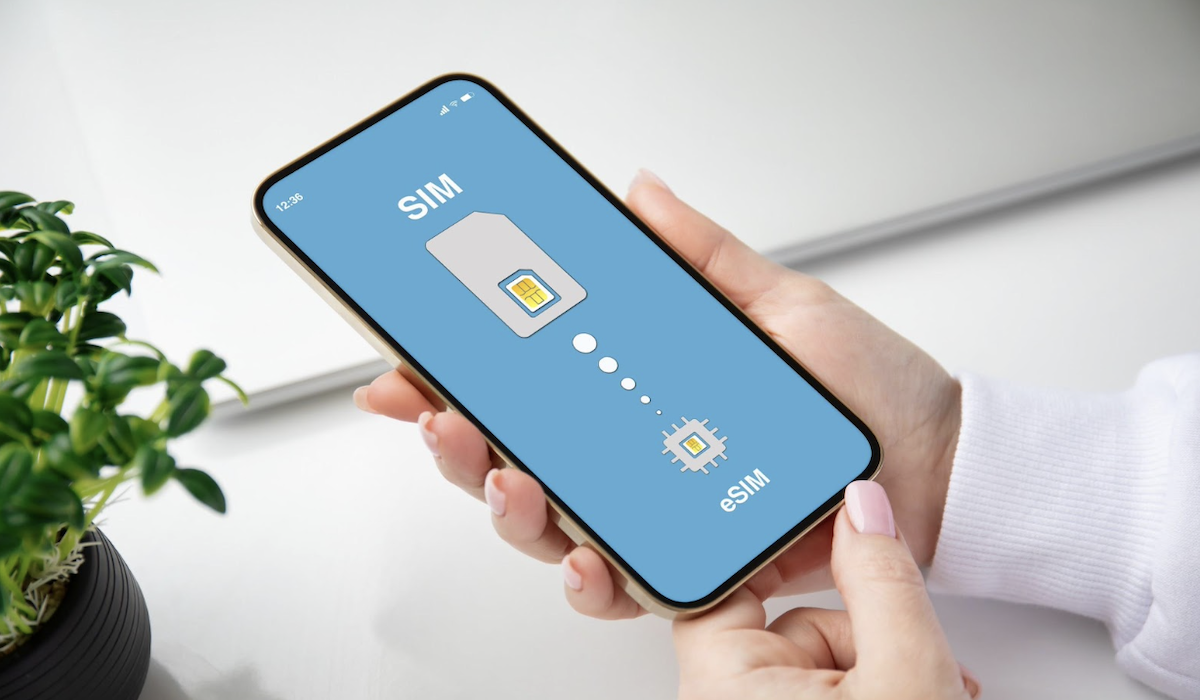
For years, the physical SIM card has undergone almost no major changes. Indeed, its size has continued to shrink, from full size to micro SIM and then nano SIM, but the concept remains the same: a small card that must be inserted into a phone slot.
When switching operators or travelling abroad, users still have to buy and install a new card manually.
The arrival of eSIM has dramatically changed that. No more physical cards, no need to open the SIM tray, and no hassle searching for an ejector pin. All processes are done digitally, directly from the device.
Since the Indonesian government, through the Ministry of Communication and Digital, began promoting the migration from physical SIM to eSIM in April 2026, this technology has become increasingly relevant to the wider public. eSIM is now not just a feature for premium phone users or international travellers, but part of the direction of mobile connectivity development in Indonesia.
This article will discuss eSIM comprehensively: from its definition, how it works, differences with physical SIM, supported devices, activation steps, to its benefits for daily use and international travel.
eSIM stands for Embedded SIM or Embedded Subscriber Identity Module. Simply put, eSIM is a SIM that is embedded directly into the device and cannot be removed like a regular SIM card.
In the easiest explanation, eSIM is the digital version of a physical SIM card. All the main functions of the SIM remain, but they are run by a small chip that is permanently installed on the phone’s motherboard. This chip can store several operator profiles, and users can select or switch active profiles directly from the settings menu.
The eSIM chip itself is very small, about 6 x 5 millimetres. Though small, its capabilities are more flexible than conventional SIMs because it does not rely on a plastic card.
eSIM technology first appeared commercially around 2016, mainly for Internet of Things (IoT) devices and smartwatches. One consumer product that made eSIM widely known was the Apple Watch Series 3 in 2017.
After that, eSIM entered the mainstream smartphone market when Apple released the iPhone XS and iPhone XR in 2018. Since then, more and more major phone manufacturers have adopted it.
In Indonesia, eSIM was introduced on a limited basis around 2019. However, its popularity only increased a few years later, especially when major operators began offering broader support. Entering 2026, all major mobile operators in Indonesia have provided eSIM services, and its adoption continues to be promoted as part of strengthening digital security.
To understand eSIM, we first need to look at the basic function of a SIM card. Basically, the SIM stores customer identity in the mobile network. This identity is known as IMSI or International Mobile Subscriber Identity. Through this data, the operator identifies the customer and determines the services that can be accessed.
With eSIM, the function is the same, but the customer identity is stored in the form of a digital profile on the embedded chip in the device. This profile can be downloaded remotely via the operator’s system, without needing a physical card.
The process is usually like this:
One eSIM chip can store multiple profiles at once. However, in most cases, only one profile is active at a time, although some modern devices allow two profiles to be active simultaneously.
This technology operates based on global standards from GSMA, specifically the SGP.22 standard for consumers. This standard ensures eSIM compatibility across various devices and operators worldwide.
In terms of function, eSIM and physical SIM both connect users to the operator’s network. The differences lie in form, activation method, and usage flexibility.
Physical SIM is a plastic card that must be inserted into the phone slot. If you want to switch operators, the old card must be removed and replaced manually. This type of SIM can be directly transferred to another device as long as the slot matches.
In contrast, eSIM has no physical form. Everything is done digitally from the settings menu. Users do not need to remove or insert anything when wanting to switch operators or add packages.
In daily use, the most noticeable differences appear in two conditions:
eSIM offers several advantages that make it increasingly attractive to modern users.
Users can purchase and activate services directly from their phone without having to visit a store. The process can be done anytime as long as there is an internet connection.
Many modern phones support a combination of one physical SIM and one eSIM. This means users can use two active numbers at once without relying on two physical card slots.
Because it cannot be easily removed, eSIM provides an additional layer of protection. If the phone is lost, the number cannot be immediately deactivated just by removing the SIM.
This is one of the biggest reasons people are switching to eSIM. Users can purchase international data packages before departure and use them immediately upon landing.
One device can store multiple eSIM profiles from different operators. This makes it easier for users who want to separate personal, work, and travel numbers.
Although practical, eSIM still has some limitations that need to be considered.
Older phones are generally not compatible with eSIM. Even on newer models, eSIM support can vary depending on the country or device variant.
If changing phones, eSIM cannot simply be removed and inserted into a new device. Users usually have to go through a remigration process via the operator.
Because profiles are downloaded digitally, initial activation usually requires a stable Wi-Fi or other internet connection.
Major operators in Indonesia do support eSIM, but services from operators