
West Papua Encourages Indigenous Papuan Contractors to Use Online Business Licensing System
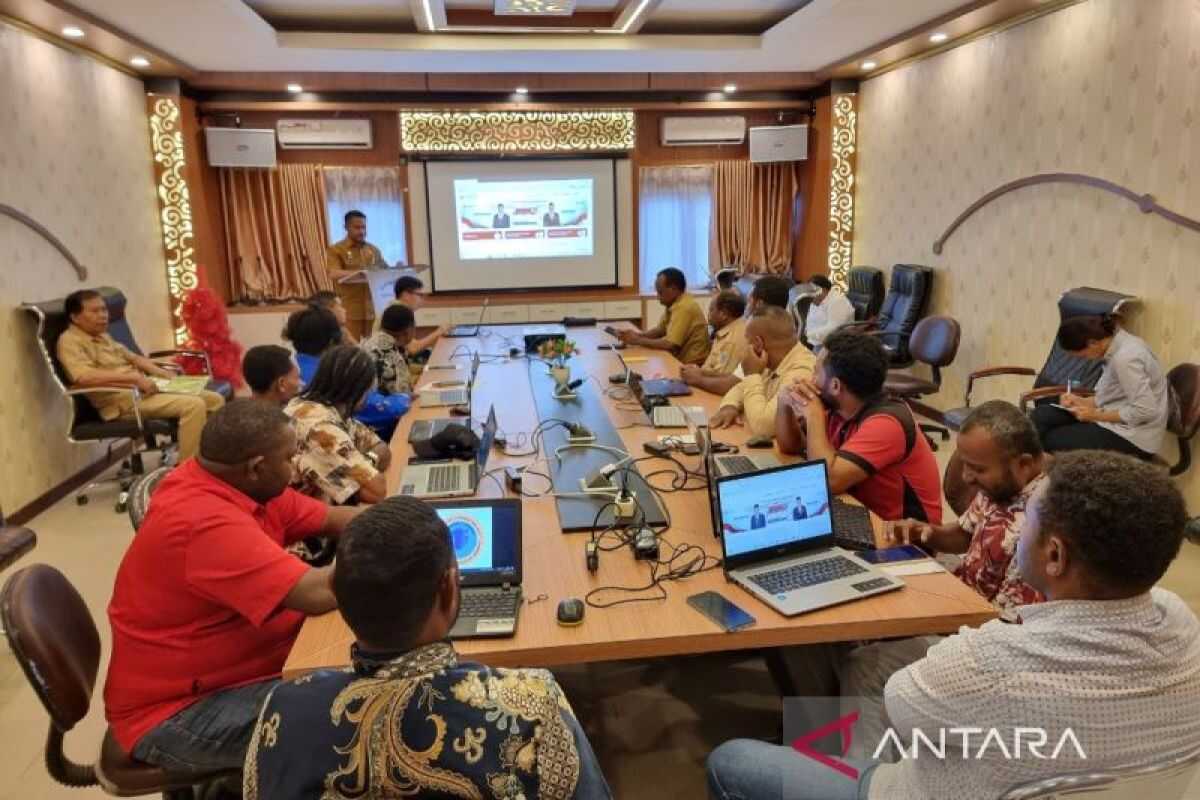
Manokwari (ANTARA) - The Investment and One-Stop Integrated Services Agency (DPMPTSP) of West Papua Province is accelerating the participation of indigenous Papuan (OAP) contractors in using the Online Single Submission Risk-Based Approach (OSS RBA) application.
DPMPTSP West Papua Head Godlief Aponno said in Manokwari on Tuesday that the regional government is committed to creating a more inclusive, transparent and accountable business licensing system.
“The government has already implemented the risk-based business licensing system, or OSS RBA, but not all OAP contractors understand it yet,” said Godlief.
His office has initiated training on the use of the OSS RBA application to improve the capacity and quality of OAP contractors in accessing business opportunities legally through the digital system. This has had a positive impact on optimising the implementation of the OSS RBA system launched by the government to accelerate and simplify business licensing services.
“Improving capacity and digital literacy aims to enable indigenous Papuan entrepreneurs to take part in formal economic activities,” he said.
According to him, the training and technical guidance for OAP construction service entrepreneurs is in line with Governor Dominggus Mandacan’s affirmative policy, namely the launch of the Productive West Papua programme.
DPMPTSP also continues to ensure that all OAP business operators hold a Business Identification Number (NIB) to make it easier to obtain capital assistance through the People’s Business Credit (KUR) scheme.
“If a business operator has a NIB, they are entitled to receive capital assistance from banks,” said Godlief.
He hopes that OAP entrepreneurs will properly understand the Indonesian Standard Industrial Classification (KBLI), select the appropriate business classification, and know the stages for fulfilling standard certificates through OSS RBA.
OAP entrepreneurs are given space to participate in government procurement of goods and services in accordance with Law Number 2 of 2021 on Papua Special Autonomy. Other regulations governing OAP entrepreneur participation include Government Regulation Number 5 of 2021, Presidential Regulation Number 17 of 2019, Presidential Instruction Number 9 of 2020, and BKPM Head Regulation Number 5 of 2021.
“Then there is West Papua Regional Regulation Number 1 of 2022. DPMPTSP is always present to provide assistance for OAP entrepreneurs,” he said.
The Chairman of the West Papua Local Association of Indigenous Papuan Contractors (PAL KOAP), Alex Septinus Wonggor, expressed appreciation for the technical guidance session on the use of the OSS RBA application. The dozen or so participants attending the OSS RBA training were reminded to focus and concentrate on absorbing all the material so it can be passed on to other PAL KOAP members.
“We can pass on this valuable knowledge to other members so they can understand the OSS RBA system,” he said.
West Papua PAL KOAP Secretary Lewis Wanggai explained that the number of OAP contractors who have already obtained a NIB stands at 2,741 entrepreneurs, whilst 759 entrepreneurs are still in the process of obtaining their NIB.
OAP contractor entrepreneurs recognise that the ability to adapt to digital-based systems is essential for developing their construction businesses.