
West Java Transportation Agency Predicts Traffic Congestion on Major Non-toll Routes During 2026 Lebaran Exodus
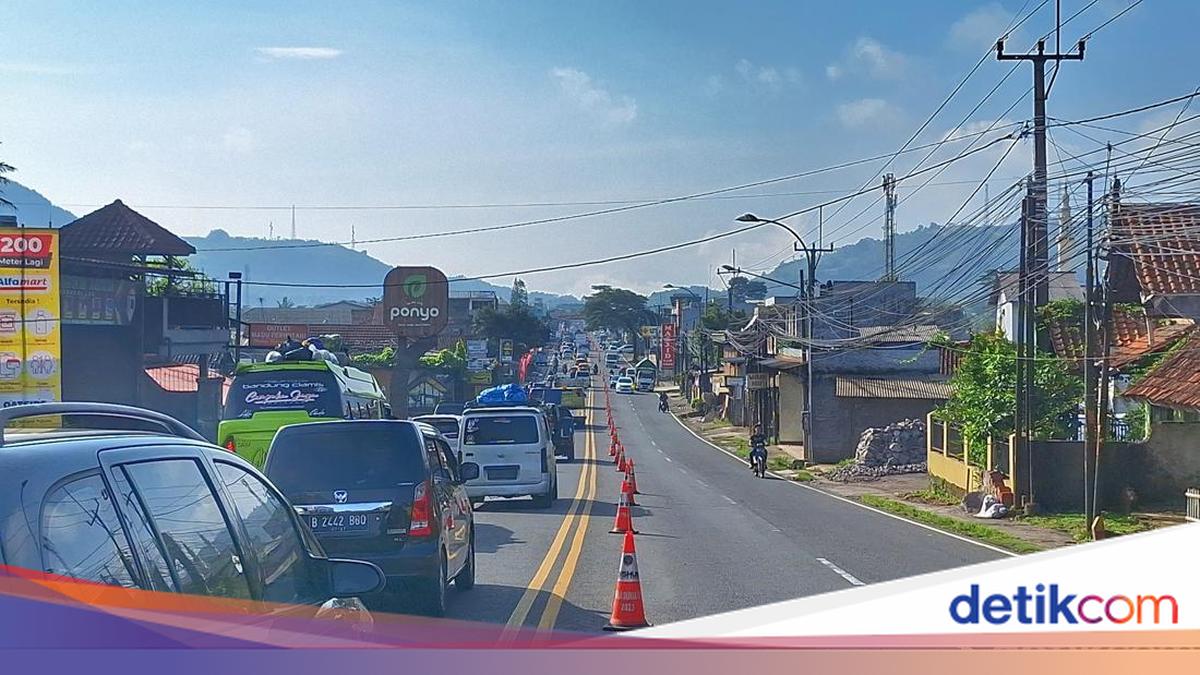
Several major non-toll routes in West Java are expected to experience traffic congestion during the Lebaran exodus and return journey in 2026. To anticipate vehicle congestion, the West Java Transportation Agency is preparing a number of traffic management measures.
The Head of the West Java Transportation Agency, Dhani Gumelar, stated that the main routes expected to experience congestion include the Jomin Intersection-Mutiara Intersection and Cikopo. On these sections, the West Java Transportation Agency together with the National Road Implementation Office will close a number of U-turn lanes.
A total of 47 U-turns will be closed with only 8 U-turn lanes remaining open to reduce the potential for congestion on these routes.
Additionally, another major route predicted to experience high traffic volumes is the Ciawi-Cibadak-Sukabumi corridor. Police will take action against drivers of three-axle and larger freight vehicles using this route during peak exodus and return periods.
Local government will also regulate illegal parking and street vendors selling on road shoulders to avoid disrupting traffic flow.
Congestion is also predicted on the Ciawi-Simpang Gadog-Puncak route in Bogor Regency. To address this, police will implement an odd-even vehicle system and one-way traffic in the area.
Meanwhile, traffic police will regulate public activities deemed to disrupt traffic flow to prevent congestion from worsening.
The West Java Transportation Agency is also anticipating potential congestion at the Cileunyi Interchange and Nagreg in Bandung Regency. One of the measures being prepared is the use of mobile electronic toll card readers.
“In addition, we are preparing additional information boards in case traffic is diverted to the Cisumdawu Toll Road,” said Dhani in a written statement on Friday (13 March 2026).
Besides these routes, potential congestion is also expected on the Limbangan-Malangbong and Gentong sections. Traffic police will regulate public activities that disrupt traffic flow on these routes.
Another route predicted to experience vehicle congestion is the Pelumbon-Kadawung-Cirebon corridor.
“Local government will regulate roadside parking and street vendors on road shoulders to reduce congestion levels on the Pelumbon-Kadawung-Cirebon route,” added Dhani.
To avoid congestion on major routes, travellers can also use several alternative routes during the 2026 Lebaran exodus.
In the northern West Java region, there are eight alternative routes available for travellers. These routes include Sukamandi-Kalijati spanning 22 kilometres, Pamanukan-Subang spanning 31 kilometres, Kadipaten-Jatitujuh-Jatibarang spanning 40.7 kilometres, and Haurgeulis-Patrol spanning 19 kilometres.
Other alternative routes in the northern region include Cikamurang-Jangga spanning 35 kilometres, Budur-Tegalgubug-Jagapura-Mundu spanning 32 kilometres, Losari-Ciledug-Cidahu-Kuningan spanning 95 kilometres, and Cirebon-Sumber-Rajagaluh-Majalengka spanning 32 kilometres.
Meanwhile, in the central West Java corridor, there are four alternative routes: Subang-Lembang-Bandung spanning 41 kilometres, Sumedang-Jalan Cagak-Wanayasa-Purwakarta spanning 85 kilometres, Talaga-Bantarujeg-Wado-Sumedang spanning 79 kilometres, and Kuningan-Cikijing-Majalengka-Kadipaten spanning 45 kilometres.
In the southern West Java region, travellers can also use five alternative routes. These include Garut-Banyuresmi-Leuwigoong-Kadungora-Cijapati-Majalaya-Bandung spanning 78 kilometres, Sasak Beusi-Cibatu-Leles spanning 19 kilometres, and Banjar-Manonjaya-Tasikmalaya spanning 44 kilometres.
Additionally, there is the Malangbong-Wado route spanning 15 kilometres and Parakan Muncang-Warung Simpang spanning 9 kilometres.