
West Java Provincial Government and Bandung City Government Establish THR Service and Complaint Posts
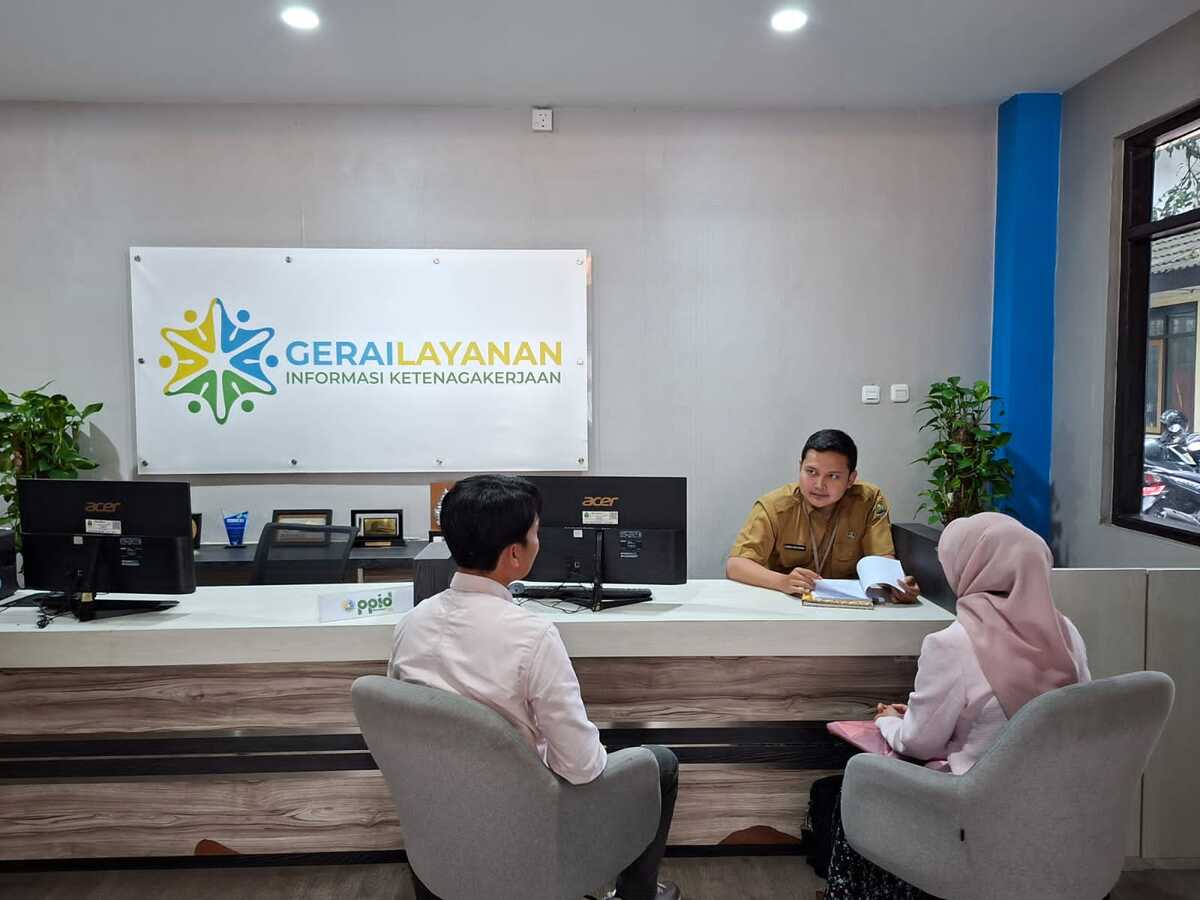
The West Java Provincial Government (Pemprov Jabar) is establishing a religious holiday allowance (THR) service and complaint post to ensure that employers pay THR to workers. Employers are required to pay THR no later than seven days before Idul Fitri. The head of the West Java Department of Manpower and Transmigration (Disnakertrans), I Gusti Agung Kim Fajar Wiyati Oka, announced that the THR consultation and complaint service post is opened at the West Java Disnakertrans office, Jalan Soekarno Hatta No. 532, Bandung. In addition, workers can report THR issues to five district technical implementing units for labour supervision (UPTD Pengawasan Ketenagakerjaan) under Disnakertrans West Java in Bogor, Karawang, Cirebon, Bandung, and Garut. The THR service post has been open since 2 March 2026 and will close on 27 March 2026.
“For workers who cannot come to the Disnakertrans office, complaints can be submitted online via WhatsApp number 08112121444 or at the site poskothr.kemnaker.go.id,” he said. According to Oka, complaint reports will be followed up by labour inspectors who will conduct checks at the company to verify the information provided. At Idul Fitri last year, Disnakertrans Jabar received 344 THR payment complaints. “Most of the companies reported were in the tourism sector. The reason is economic factors that cause companies to struggle to pay THR,” he added.
Similar to the provincial government, Disnaker Kota Bandung also established a THR Complaint Post to receive reports from workers facing payment difficulties. The department will also socialise to companies the obligation to pay THR on time in accordance with legislation.
“We will coordinate with provincial labour inspectors if there are indications of violations. We hope all employers in Bandung will pay THR no later than seven days before the holiday. THR is a worker’s right that must be fulfilled,” he said.
It should be noted that the Directorate General of Labour Inspection and K3 (Ditjen Binwasnaker & K3) is committed to ensuring employer compliance with THR obligations for 2026. Enforcement will refer to legislation including Law No. 13 of 2003 on Labour, Law No. 11 of 2020 on Job Creation, Government Regulation No. 36 of 2021 on Wages, and Minister of Manpower Regulation No. 6 of 2016 on THR.
Workers who are entitled to THR are those who have continuously worked for at least one month, whether under a fixed-term (PKWT) or indefinite-term (PKWTT) contract. In addition, permanent workers who were laid off within 30 days before the religious holiday remain eligible for THR. By contrast, workers whose contract ends before the holiday for fixed-term contracts are not entitled to THR.
Employees who are transferred to another company with continuing service are also entitled to THR, provided they have not yet received THR from the previous employer. For employees with 12 months or more of service, THR equals one month’s wage. For those with 1 to less than 12 months, THR is paid proportionally to service duration. The wage base for THR calculation includes basic wages and fixed allowances, or net pay without allowances (clean wages). For daily-wage workers, the calculation is based on their average pay. The Government emphasises that THR must be paid in cash no later than seven days before the religious holiday and paid once per year on or before the holiday for each worker.
If THR amounts are set higher in a Work Agreement (PK), Company Regulation (PP), or Collective Labour Agreement (PKB), employers must pay according to those higher terms. As Eid al-Fitr 2026 is estimated to fall between 20–24 March 2026, intensified monitoring will take place 13–19 March 2026, with oversight continuing after the holiday on 25–27 March 2026.