
West Java Governor Secures Backing for Rp2 Trillion Loan to Bridge Fiscal Deficit
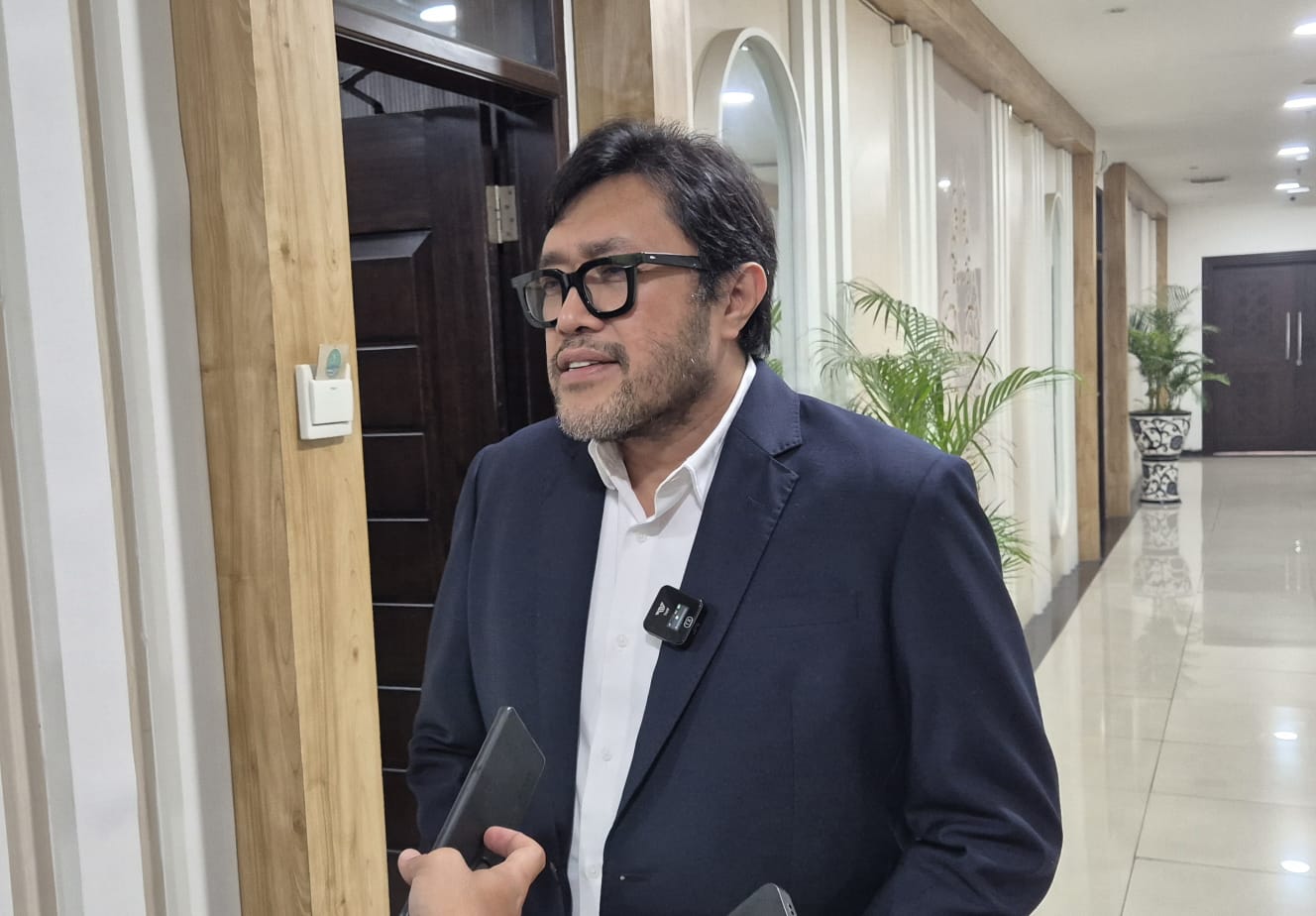
West Java Governor Dedi Mulyadi has proposed securing a loan of Rp2 trillion to cover a fiscal deficit. Support for the plan has come from PDI Perjuangan West Java Chair Ono Surono, who serves as Deputy Chair of the West Java Provincial Parliament.
The regional loan of Rp2 trillion would be requested from Bank bjb to support the 2026 regional budget. According to Ono, this step is realistic given that West Java faces fiscal pressure due to central government cuts to regional transfer allocations (TKD) totalling Rp2.4 trillion.
The fiscal deficit also stems from unpaid revenue-sharing funds (DBH) since 2023 and local revenue (PAD) falling short of targets. Most recently, the West Java Provincial Government must settle outstanding payments of Rp631 billion to be completed in 2026.
“Generally, we have received initial information from the Governor regarding this borrowing plan. This relates to TKD cuts by the central government, unpaid DBH, PAD that failed to meet targets, and outstanding payment arrears. This borrowing scheme is very feasible rather than halting or revising programme priorities already agreed with the provincial parliament,” Ono stated on Saturday (28 February).
Regarding the formal mechanism, Ono stated that the loan would be discussed with the West Java Provincial Parliament and requires official approval, which would likely be formalised through amendments to the 2026 regional budget.
He emphasised that borrowing remains permissible even though the 2026 budget has been ratified and become a regional regulation, as the process would follow budget amendment procedures.
“The borrowing mechanism from bjb will be discussed with the provincial parliament, with approval that will certainly be set out in amendments to the 2026 regional budget,” he added.
Ono also addressed concerns regarding the projects to be financed, such as the Puncak Bogor II road construction and other initiatives.
All projects have been discussed by the governor and the West Java Provincial Parliament. Whilst this is the case, no new projects outside the regional budget programme exist, as the loan is intended to support activities already planned.
“All projects to be financed are indeed already set out in the 2026 regional budget, meaning they have been discussed between the Governor and the provincial parliament,” he said.
Regarding the loan repayment source, Ono estimates the burden would be spread over 3-4 years starting in 2027 until around 2030, with annual instalments of approximately Rp200 billion to Rp300 billion.
He hopes West Java’s budget structure can bear the cost, particularly as major infrastructure burdens would reduce after 2026. Currently, the province must service past debts of approximately Rp600 billion annually, including from the National Economic Recovery Programme (PEN) that has not been restructured by the central government.
“We hope the instalments amount to at least Rp200 billion to Rp300 billion per year, plus with the planned Rp2 trillion loan debt divided over the next 3-4 years. Hopefully our budget structure can manage it,” Ono expressed.
These projects are prioritised because they focus on infrastructure supporting economic growth and alleviating congestion in economic centres such as Puncak Bogor, Bekasi City, and the Rebana region.
“The priority projects will generally relate to infrastructure that can stimulate the economy. For instance, Puncak is an economic growth centre experiencing extraordinary congestion daily. In the Rebana area as well, if we do not address it now, congestion will emerge in the future,” he explained.
Ono emphasised that this support is expected to help West Java shift focus towards a regional budget that emphasises direct economic growth for the people following major infrastructure development.
“What is important is the restructuring of PEN debt to ease the fiscal burden ahead,” he said.
West Java Governor Dedi Mulyadi has assured that infrastructure development will continue despite current fiscal constraints. Despite reductions in regional budget revenues, this is not an obstacle to continuing construction of various infrastructure projects in the province.
This was conveyed by Dedi before regents and city mayors in West Java on Thursday (26 February) in Bandung.
Dedi explained that one strategy to maintain infrastructure development whilst facing fiscal constraints is by applying for a loan.
“I will apply for a Rp2 trillion loan to complete infrastructure,” he said.
The loan would be requested from Bank bjb, a state-owned enterprise owned by the West Java Provincial Government.
“This only applies during my tenure. Repayment extends until 2030,” he said.
The borrowed funds would be used to construct several important infrastructure projects such as Puncak 2, underpasses, elevated roads, and other major infrastructure projects.
They share a joint commitment to promoting regional economic transformation based on good governance and sustainability principles. Through the Sapawarga application, the public can access current information regarding travel during the mudik (homecoming period) in West Java and safe travel routes. In January, 54 dengue cases were reported, a significant decline compared to the same period in 2025. The budget reduction has affected development in 10 sub-districts that must be recalculated. This inaugural and historic event will feature activities synergising religious outreach, education, and community economic development. Compensation for becak (three-wheeled vehicle) drivers operating on the north coast route will be prepared. Police units are committed to working hard to resolve the case, with investigation steps conducted transparently and professionally. This circular is to optimise the use of MSME products and assist traders in traditional markets.