
West Java Governor Highlights Contradictory Waste Management Regulations Hampering Infrastructure Development
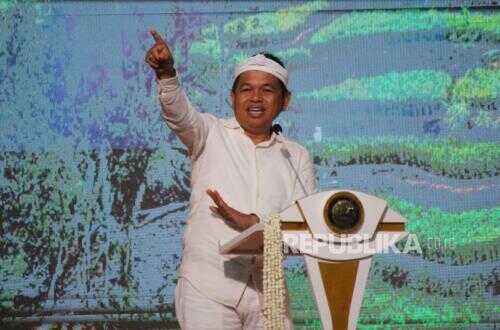
BANDUNG — West Java Governor Dedi Mulyadi has identified a fundamental contradiction in the province’s waste management regulatory framework: authorities strictly forbid waste incineration and open dumping under criminal penalty, yet require six years or more to issue permits for waste-to-energy power plants (PLTSa).
Speaking in Bandung on Thursday, 27 February 2026, Mulyadi criticised what he called an “odd, complicated, and overly convoluted” policy approach that undermines practical waste management solutions on the ground. He highlighted the case of the Legok Nangka Integrated Waste Processing and Recycling Facility (TPPAS), which has remained mired in permitting procedures for years while waste continues to accumulate.
Mulyadi, formerly Regent of Purwakarta, argued that the solution lies in regulatory simplification and the adoption of affordable small-scale technologies. He contended that each district could independently develop its own waste-to-energy facility if not forced to pursue investments worth trillions of rupiah. He pointed to technologies from China, Singapore, and Germany available for approximately 50 billion rupiah with generation capacity of several megawatts.
“For me, the regulations should be simple. PLTSa facilities need not be large-scale. Issue permits for smaller operations, and God willing, each district can be resolved,” he stated.
Beyond permitting complexity, Mulyadi also criticised the mandatory monopoly on electricity sales from waste-to-energy plants through the state utility company PLN. He characterised this arrangement as excessively bureaucratic, as price determination requires ministerial-level agreement and involves prolonged negotiation.
As an alternative, Mulyadi has advocated permitting direct electricity sales from PLTSa facilities to end-users or offering electricity as social compensation. He proposed that if legislation allowed, electricity generated from waste could be provided free of charge to residents living near landfill sites, thereby transforming waste management into a source of community benefit.