
West Java Government Expands BPJS Employment Coverage for Informal Workers
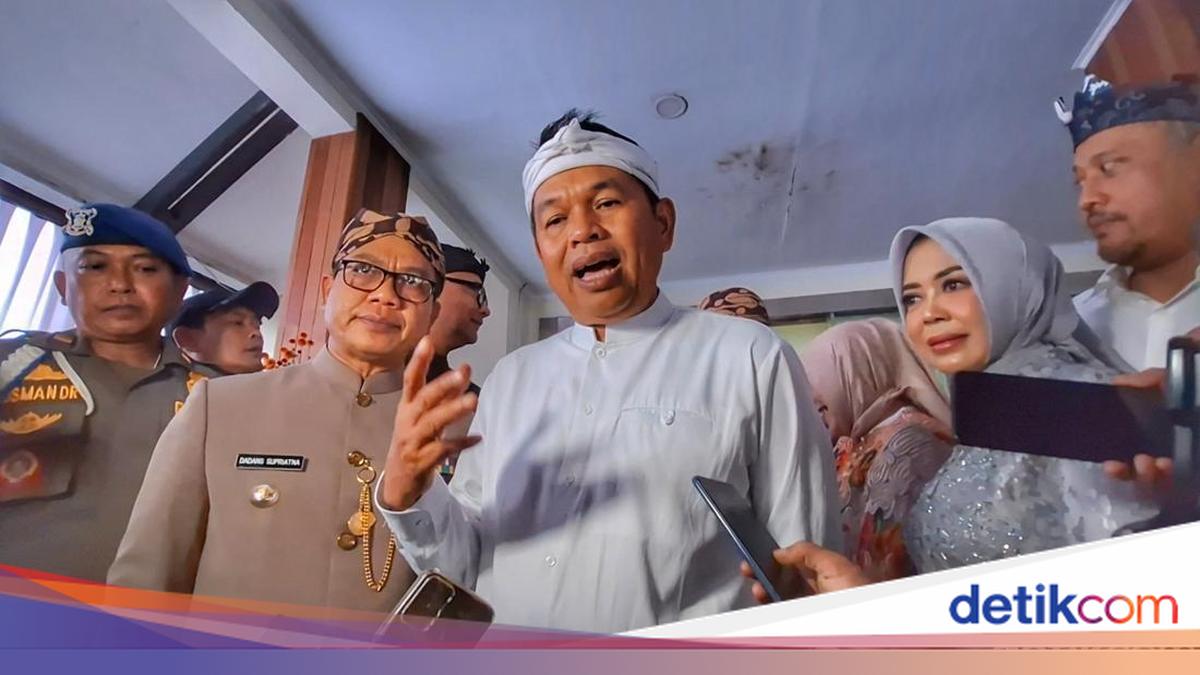
The Provincial Government of West Java (Pemprov Jabar) is working to expand the coverage of BPJS Ketenagakerjaan protection, particularly for informal and vulnerable workers. West Java Governor Dedi Mulyadi (KDM) stated that the BPJS Ketenagakerjaan programme provides tangible benefits for people who suffer workplace accidents. This was conveyed by KDM after attending the ‘BPJS Ketenagakerjaan Beneficiary Appreciation’ event at Bale Gede Pakuan, Gedung Pakuan, Bandung City. During the event, BPJS Ketenagakerjaan and the West Java Provincial Government handed over benefits to 1,515 participants, with a total benefit value reaching Rp 49.3 billion. He cited the example of a construction worker who died after undergoing treatment in hospital. All medical costs were covered by BPJS Ketenagakerjaan, and his family received compensation of Rp 42 million. “I met again with a man who was injured after being run over by a container; his hospital bill of Rp 442 million was paid entirely by BPJS Ketenagakerjaan, plus a guarantee after he was discharged from hospital and unable to work, of Rp 1 million per month,” said KDM in a written statement on Friday (19/6/2026). According to KDM, these stories are proof that the employment social security programme (jamsostek) plays an important role in maintaining the economic resilience of workers’ families when facing occupational risks. The West Java Provincial Government will continue to increase the number of workers receiving BPJS Ketenagakerjaan protection according to the region’s financial capacity. This effort will be carried out through synergy between the provincial government, district/city governments, and village governments. “For example, this year we have Rp 1 million, hopefully in the future it can be Rp 2 million or Rp 3 million. God willing, it could be Rp 10 million,” said KDM. KDM also believes that increasingly broad protection for vulnerable workers can be an instrument to reduce the poverty rate in West Java. “Now, if all the people of West Java who are not military, police, state-owned enterprise employees, civil servants, or company employees who are not protected by employment insurance are all protected, then there will be no more poverty in West Java,” said KDM. KDM emphasised that the expansion of participation will be focused on the informal sector, which has not yet fully received jamsostek protection. “If BPJS Kesehatan is already a legal obligation, BPJS Ketenagakerjaan is not yet a legal obligation,” KDM stressed. “So we will work on what is not yet a legal obligation,” he continued. Meanwhile, BPJS Ketenagakerjaan Director of Human Capital and General Affairs Harjono Siswanto appreciated the West Java Provincial Government’s steps in expanding Universal Coverage Jamsostek (UCJ). According to Harjono, the programme implemented by West Java can serve as an example for other regions in Indonesia. Harjono said BPJS Ketenagakerjaan will continue to strengthen collaboration with local governments to expand protection for vulnerable and informal workers, including through financing support from local governments. “We continue to collaborate and synergise between the provincial government, district/city governments, and BPJS Ketenagakerjaan ranks in the regions to expand worker protection, including through subsidies from local governments,” said Harjono. Harjono is optimistic that the good practices carried out by the West Java Provincial Government can be replicated in various regions, so that more Indonesian workers receive jamsostek protection.