
West Java DPRD and KPID Push for Revision of Broadcasting Law to Protect Young Generation
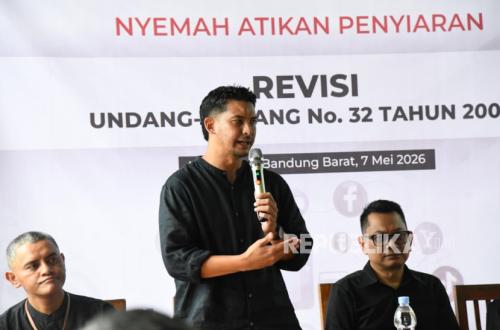
REPUBLIKA.CO.ID, WEST BANDUNG – The West Java Provincial Legislative Council (DPRD) together with the West Java KPID is strengthening synergy to push for the revision of Law No. 32 of 2002 on Broadcasting. The revision is deemed urgent amid the rapid flow of digital information that is not fully covered by existing regulations.
West Java DPRD member Tobias Ginanjar Sayidina stated that West Java faces significant challenges in overseeing the digital space due to its large population and high mobile phone usage among the public.
“Mobile phone users in West Java are very numerous. There are gaps in the law that have not yet been regulated. This must be addressed immediately to protect future generations,” said Tobias after the Broadcasting Education event titled Revision of the Broadcasting Law in West Bandung Regency, Thursday (7/5/2026).
According to Tobias, collaboration between the DPRD and KPID needs to be expanded through strengthening media literacy in various regions of West Java. This effort is important so that the public has awareness of the impact of digital content while understanding the importance of revising broadcasting regulations.
He emphasised that aspirations from the public and local broadcasting institutions will be forwarded to the DPR as part of the push to accelerate the revision of the Broadcasting Law.
“Do not let this country fall further behind due to outdated regulations. We are already late, and we must not let it drag on longer,” he said.
West Java KPID Chairman Adiyana Slamet views the revision of the Broadcasting Law as an urgent need amid the rapid development of information technology disruptions. According to him, the current broadcasting regulations are not yet able to address the challenges of overseeing digital content that has the potential to influence the mindset of the young generation.
“This information disruption threatens the cognitive aspects of the young generation. Therefore, the public needs to return to television and radio broadcasts that have clear regulations,” said Adiyana.
He added that the absence of a specific state institution to oversee digital content makes the digital space vulnerable to being filled with content that can erode national values and local culture.