
West Jakarta suggests residents raise catfish to help tackle waste problem
Jakarta (ANTARA) - The West Jakarta Environmental Office (Sudin LH) has suggested that the public rear catfish as one way to help address the waste problem, particularly organic waste.
“Catfish are the easiest for eating organic waste, right? That’s the most effective; set up catfish farming,” said the Head of Sudin LH West Jakarta, Achmad Hariadi, when contacted in Jakarta on Monday evening.
This was stated in response to the reduction in the quota for West Jakarta’s waste disposal to the Bantar Gebang Integrated Waste Processing Site (TPST) from 308 to 190 trucks per day, due to the landslide incident on 8 March at Southeast Asia’s largest such facility.
According to Hariadi, this quota limitation should serve as an alarm for the public to become more aware of the importance of waste management.
“Seeing conditions like this, we can no longer rely solely on Bantar Gebang. So residents must be wise in managing waste,” he said.
Some areas that do not yet have Temporary Waste Collection Points (TPS), such as in Kalianyar, Tambora, said Hariadi, make waste management solutions even more crucial.
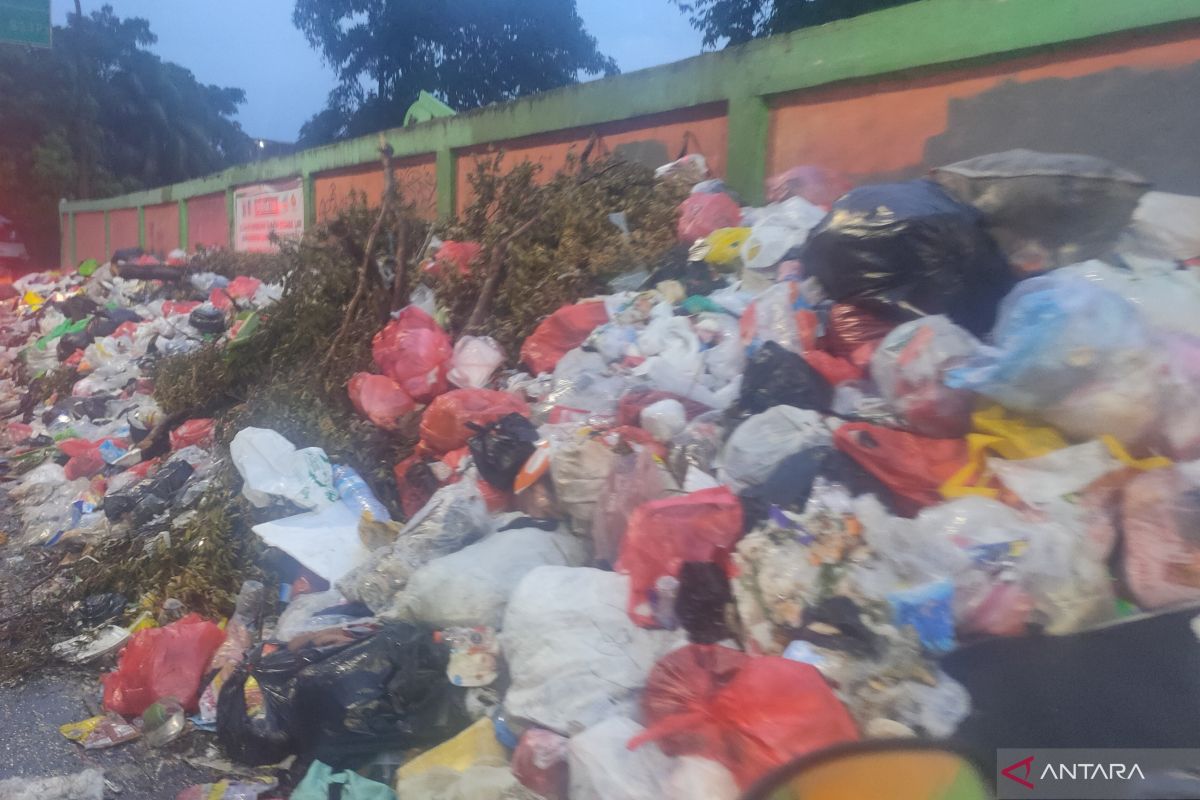
Residents in those areas had previously complained about rubbish accumulation on Jalan Kanal Banjir Barat, which was deemed to cause increasingly foul odours and disrupt road users.
In addition, they are also encouraging the public to implement composting methods to speed up the decomposition of organic waste and address limited farming space.
“Residents with limited land can also make composters using certain materials like gallon containers; those can be turned into composters,” he said.
He emphasised that if residents encounter difficulties in sorting waste, Sudin LH officers are ready to intervene. “So to all residents, apologies, but please sort your waste. If residents have already sorted the waste but can’t resolve it, they can ask LH for help in handling the organic waste,” he stated.
Previously, the West Jakarta Environmental Office implemented a staggered transportation strategy to respond to the 38 percent reduction in the waste disposal quota to the Bantar Gebang TPST.
“So, small trucks are not operated to Bantar Gebang, but their carrying capacity is consolidated into large trucks for transport to Bantar Gebang,” he said.
“We send two loads. What was usually one load becomes two. One load of large trucks carries the usual routine, and the other load is the collection from several small trucks,” he said.