
West Jakarta PPKUKM Targets 1,000 Certified Halal SMEs by 2026
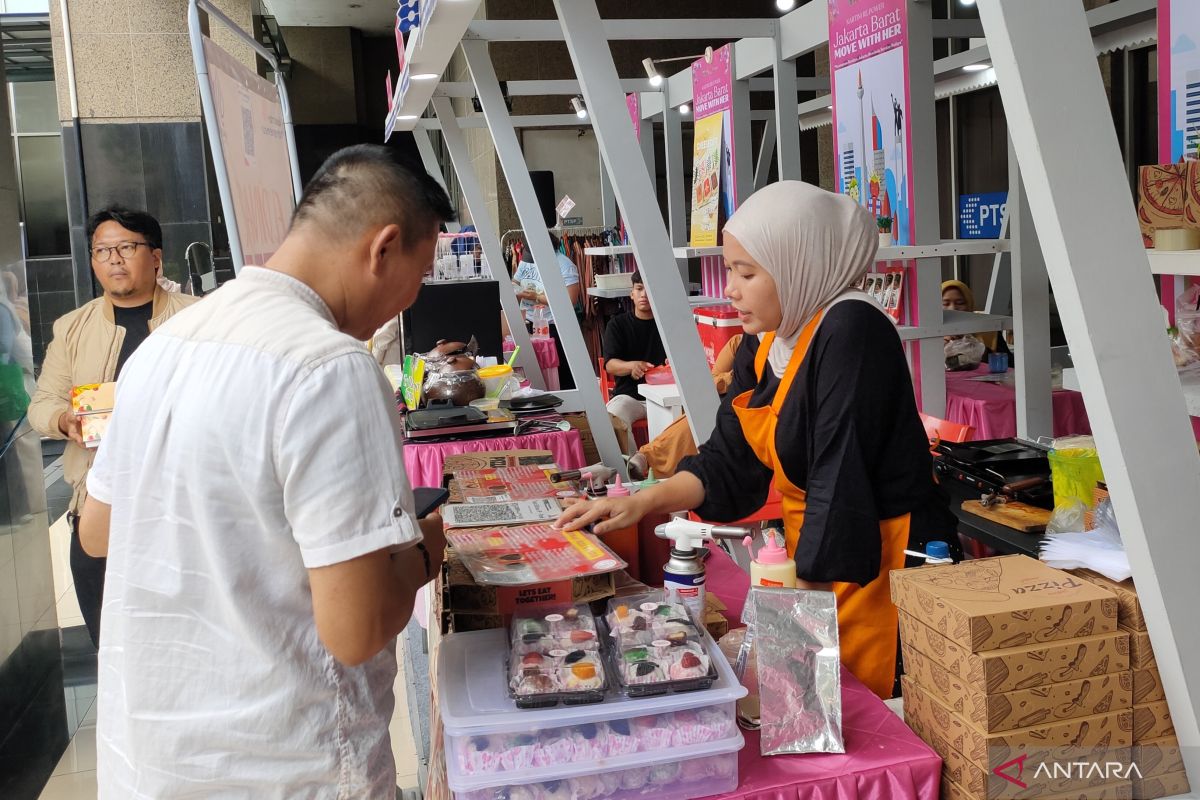
Jakarta (ANTARA) - The West Jakarta Administrative City Government, through the Department of Industry, Trade, Cooperatives, and Small and Medium Enterprises (PPKUKM), targets 1,000 micro, small, and medium enterprise (MSME) actors to obtain halal certificates by 2026.
The Head of the West Jakarta PPKUKM Department, Iqbal Idham Ramid, when contacted by ANTARA in Jakarta on Monday, explained that his office has facilitated halal certification since 2022, with a target of 200 MSME actors each year.
“From 2022, 2023, 2024, and 2025, there are already 800 MSMEs under our guidance that are halal certified. This year, we are assisting another 200 MSMEs through technical guidance (bimtek) in eight districts. So by the end of the year, the target will be 1,000 MSMEs. This does not include those handling it independently,” said Iqbal.
The characteristics of the facilitated MSMEs are those who want to scale up or develop their businesses.
“So for micro businesses that are still roadside, with a micro scale or without development, we do not require it,” Iqbal stated.
Iqbal said that halal certification aims to boost the value of MSME products.
In addition, in line with the mandate of Law No. 33 of 2014 on Halal Product Assurance (JPH) and Government Regulation No. 42 of 2024 on the Implementation of Halal Product Assurance, starting 18 October 2026, all food and beverage products of micro and small business actors (UMK) must be halal certified.
“This is also to follow the government programme that requires food products to include halal certification. Because halal certification will become mandatory for food and beverage products circulating in Indonesia,” he said.
In the bimtek held from 13-16 April 2026 in eight West Jakarta districts, MSME actors are given an understanding of the importance of halal certificates for their products.
“During the bimtek, participants receive training materials on the halal certification process, what halal raw materials are, production processes, halal provider training, how to obtain halal raw materials, and finally the issuance of halal decisions,” said Iqbal.
Technically, the bimtek participants receive assistance regarding the preparation of the Halal Product Assurance System Manual (SJPH), inputting participant and product data into the SiHalal application.