
West Bandung Regency Maps Congestion and Accident-Prone Routes for 2026 Mudik Exodus
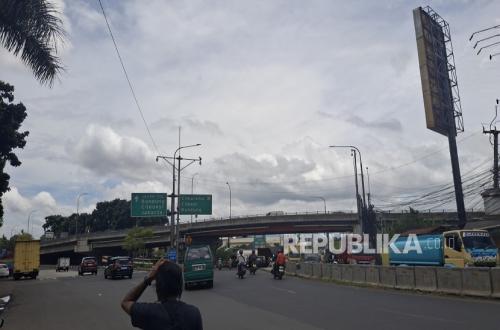
West Bandung Regency has completed a mapping exercise to identify congestion and accident hotspots ahead of the 2026 Eid al-Fitr holiday exodus and return traffic. The regency government has prepared anticipatory schemes and hundreds of personnel to manage the mudik (homecoming) journey within West Bandung Regency (KBB), West Java.
According to mapping conducted by the KBB Transportation Department, at least 15 congestion hotspots have been identified for the Eid holiday period. These include Rajamandala Kulon Market, Saguling Market, Batujajar Market, BBS-Cipatik Junction, Tagog Padalarang Market, Purabaya Junction, Whoosh Padalarang Station Junction, Gedong Lima, Chombipar Bridge, Caringin Junction, Cimareme Junction, Cibogo Petrol Station Junction, Panorama Lembang Market, Ingimetal Junction, Beatrik Junction, and the Farmhouse area.
Meanwhile, six road sections have been identified as accident-prone: Dago Giri Road, Punclut Road, Purwakarta Main Road, Cipatat Main Road, Lembang Main Road, and Cipeundeuy-Cikalongwetan Road.
“We have already mapped the congestion and accident-prone points. We have prepared anticipatory measures,” said Mochammad Ridwan Evi, Head of the KBB Transportation Department, when confirmed on Wednesday (11/2/2026).
The department has prepared strategies to anticipate congestion during both the outbound mudik and return traffic for this year’s holiday. Traffic engineering measures will be implemented at congestion points along the mudik routes, tailored to field conditions.
“We will adjust the traffic engineering management according to field conditions, including lane canalisation and other measures. Our personnel will be positioned at congestion points throughout West Bandung,” said Ridwan Evi.
The department has also urged travellers to exercise greater caution when passing through the identified accident-prone sections, which are characterised by uphill and downhill stretches, sharp curves, poor lighting, and straight sections that encourage speeding.
The department predicts that the first wave of the mudik exodus will occur on 14-15 March 2026 due to the implementation of work-from-anywhere (WFA) policies, with a second wave expected on 18-19 March 2026 coinciding with the Nyepi holiday.
“We anticipate two waves of mudik traffic surges. The first on 14-15 March coinciding with the WFA implementation, and the second on 18-19 March extending into the weekend,” said Ridwan Evi.