
Welcoming Eid al-Fitr, Purwakarta Regency Holds Drum Festival
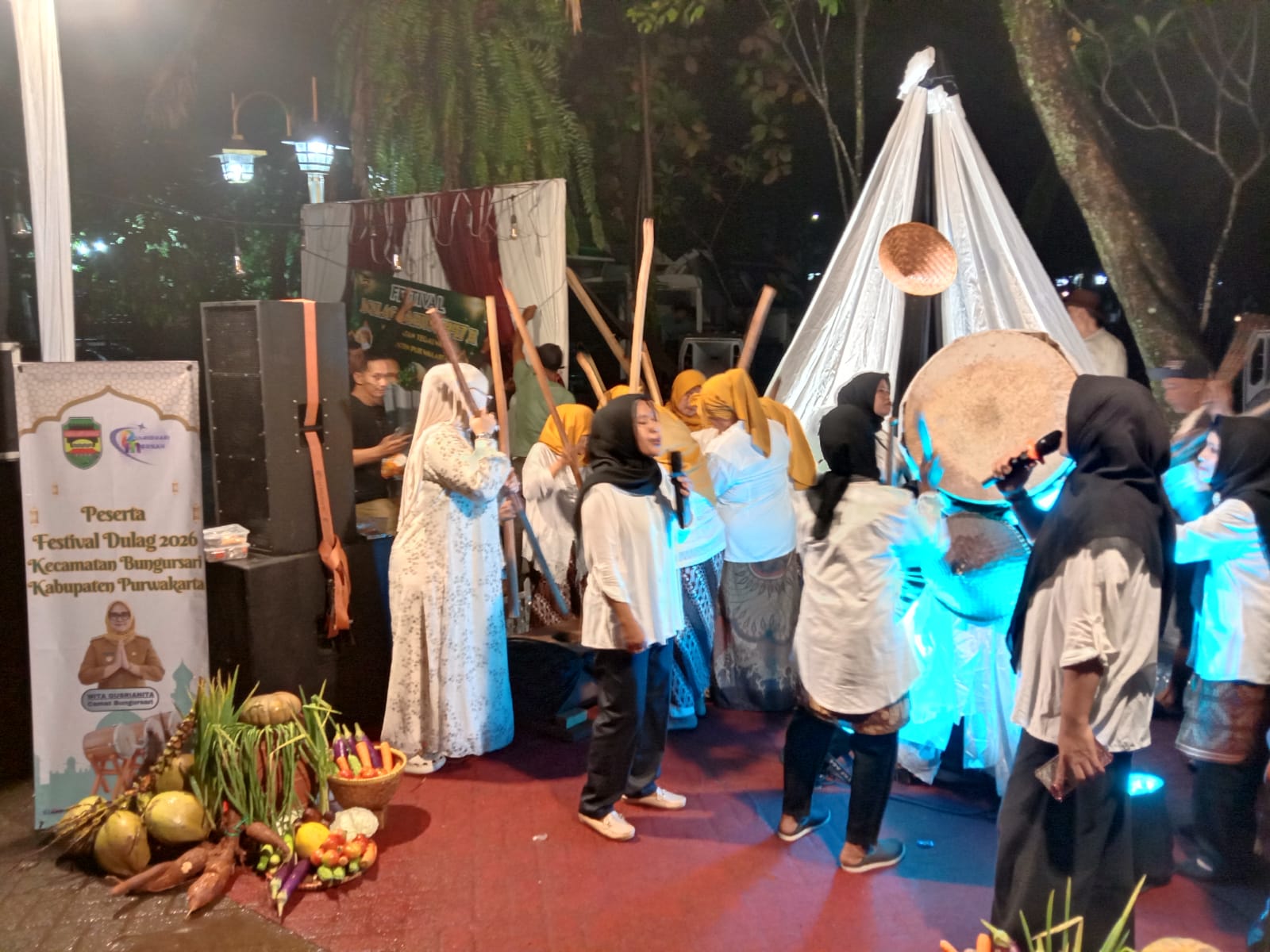
In anticipation of the Eid al-Fitr 1447 Hijriah celebration, the Purwakarta Regency government in West Java held a Drum Festival participated in by 17 sub-districts and 30 Regional Device Organisations at Taman Pasanggrahan Padjadjaran on Thursday night (19/3). This annual event, held at Lapangan Pajajaran in the Purwakarta Regency government complex, integrated the tradition of drumming with a religious atmosphere through salutations, differing from previous years which were typically associated with the echoes of takbir on Eid al-Fitr eve. The Secretary of the Regency (Sekda) Purwakarta, Sri Jaya Midan, stated that in welcoming Eid al-Fitr 1447 H, the Purwakarta Regency Government organised the Dulag or Beduk Festival. “The beduk is part of the history of the Wali Songo spreading Islam across the Archipelago. This needs to be preserved, so that our young people know that the beduk represents the history of Islam’s dissemination in the Nusantara,” said Sri Jaya Midan. Meanwhile, the Head of Bungursari Sub-district, Wita Gusrianita, said that her area’s participation featured a unique concept involving the group ‘The Power of Emak-emak’. “This is not just an ordinary drum festival. From Bungursari, we bring the power of housewives playing various traditional musical instruments, from bedug, pestles, to tatalu. All this potential is purely from our community,” said Wita. At one corner of the arena, the performance of the Bungursari housewives became the centre of attention. With full enthusiasm, they beat the drums and struck the pestles in unison, accompanying the salutations being chanted. Their movements were simple yet full of energy, creating a warm and entertaining atmosphere. Wita Gusrianita explained that the dulag participants from Bungursari Sub-district were deliberately all from housewives, especially with the collaboration of traditional pestle arts that further strengthened their bid to win the regency-wide dulag festival. In this dulag festival, the judging criteria focused more on the compactness of the performance, harmony, uniqueness, and neatness in playing the bedug combined with other supporting musical instruments.