
Weighing Jimly Asshiddiqie's Idea: The General Elections Commission as a Fourth Branch of Power
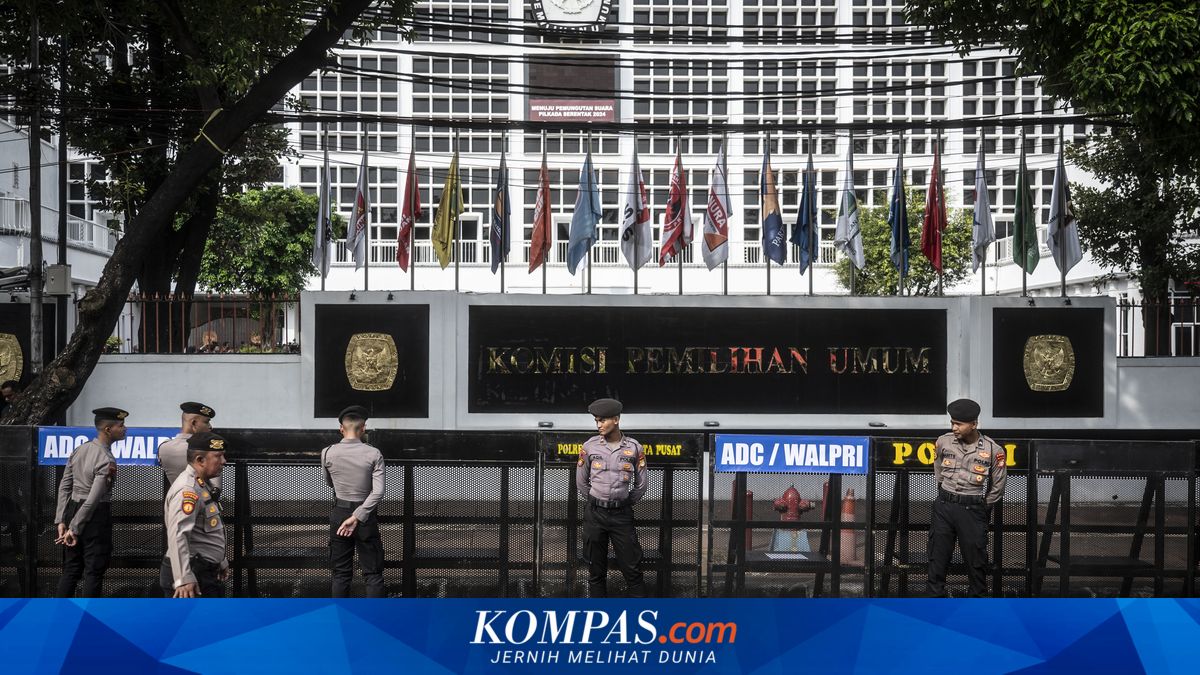
JAKARTA – Proposals to establish the General Elections Commission (KPU) as a fourth branch of state power within Indonesia’s system of governance have resurfaced.
Typically, three branches of power exist in the country: legislative, executive, and judicial. However, Jimly Asshiddiqie has advanced a novel concept.
The former Constitutional Court (MK) chairman and head of the Honour Council of Election Administrators (DKPP) presented this idea during a public hearing with Commission II of Indonesia’s House of Representatives on Thursday, 12 March 2026.
“Can you imagine if the KPU were the fourth branch of power? Executive, legislative, judicial—and this [KPU] as the fourth branch,” Jimly said.
Electoral researcher Titi Anggraini views the proposal to establish the KPU as a fourth branch of power as a relevant concept in the dynamics of Indonesia’s constitutional arrangements and elections.
Titi, also a board member of the Association for Elections and Democracy (Perludem), believes elections constitute the primary mechanism for forming political power in democratic states.
Consequently, the institution administering elections holds a fundamental role in preserving the integrity of power circulation and ensuring political competition occurs fairly.
“In practice, election administrators do not merely perform administrative functions but also possess regulatory and technocratic authority that critically determines the quality of electoral democracy,” Titi told Kompas.com on Thursday, 12 March 2026.
The KPU establishes technical rules for elections, manages the complex stages of the electoral process, and oversees the entire procedure until the announcement of results.
“With such strategically significant authority, it is reasonable that ideas emerge to strengthen the institutional position of election administrators to prevent them from being easily influenced by political forces that themselves participate in such competition,” Titi said.
From the perspective of modern election governance, she believes election administrators must be protected from intervention by political forces.
“They must be positioned as independent institutions protected from interference by political power,” said the constitutional law lecturer at the Faculty of Law, University of Indonesia.
“Therefore, the idea of placing the KPU as a fourth branch of power can be understood as an effort to affirm that election administration constitutes one of the main pillars of constitutional democracy,” she added.