
Weaving the Victory of Idul Fitri in the Movement of Sharia Economy
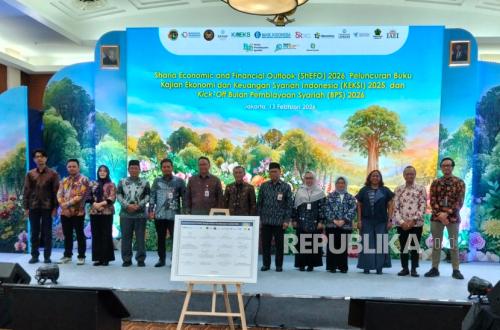
Idul Fitri is not merely a marker of the end of Ramadan. It always arrives carrying a subtle reminder for us to return to our essence, to a pure, balanced nature, and to recognise our limitations before Allah. In the echoes of takbir resounding from villages to cities, we find the deepest meaning of victory. Victory is no longer understood merely in worldly terms, but as the ability to subdue base desires. This is not about the end of a struggle, but rather the beginning of new awareness, the nurturing of the heart and the straightening of intentions. At this point, fitrah acts as a lantern of revival. It illuminates the way we view the economy: that it is not merely a game of numbers, charts, and balances, but a reflection of equilibrium between work and prayer, between personal rights and collective interests. Sharia economy emerges to nurture that balance, through principles of justice, honesty, and care that form the soul of every transaction. In recent years, this endeavour has become increasingly tangible. National planning documents now position the sharia economy as one of the important pillars of welfare. Furthermore, through the Masterplan Ekonomi Syariah Indonesia (MEKSI), sharia programmes are no longer standalone, but integrated into policies of various ministries and institutions. Thus, the sharia economy shifts from a “sectoral programme” to a shared perspective that penetrates bureaucratic barriers and binds many actors in one aspiration of justice and blessings for all citizens. The light of that lantern then descends to the regional level. The integration of sharia economy programmes into the Local Government Information System (SIPD) ensures that directions for just and sustainable development do not stop at the desks of central policymakers, but become practical references for district and city governments. In many regions, we all witness directly how discussions on development programmes and budgets begin to incorporate dimensions of the halal value chain, strengthening sharia-based MSMEs, and developing social instruments through ziswaf. At the operational level, the role of local governments and communities finds form through the Regional Committee for Sharia Economy and Finance (KDEKS). In this forum, local governments, ulama, business actors, academics, and various communities sit at the same table, formulating steps close to the needs of their citizens: from accelerating halal certification for small business actors, sharia-based business mentoring, to managing productive zakat and waqf that truly reach pockets of poverty.