
Weaving the future from creativity
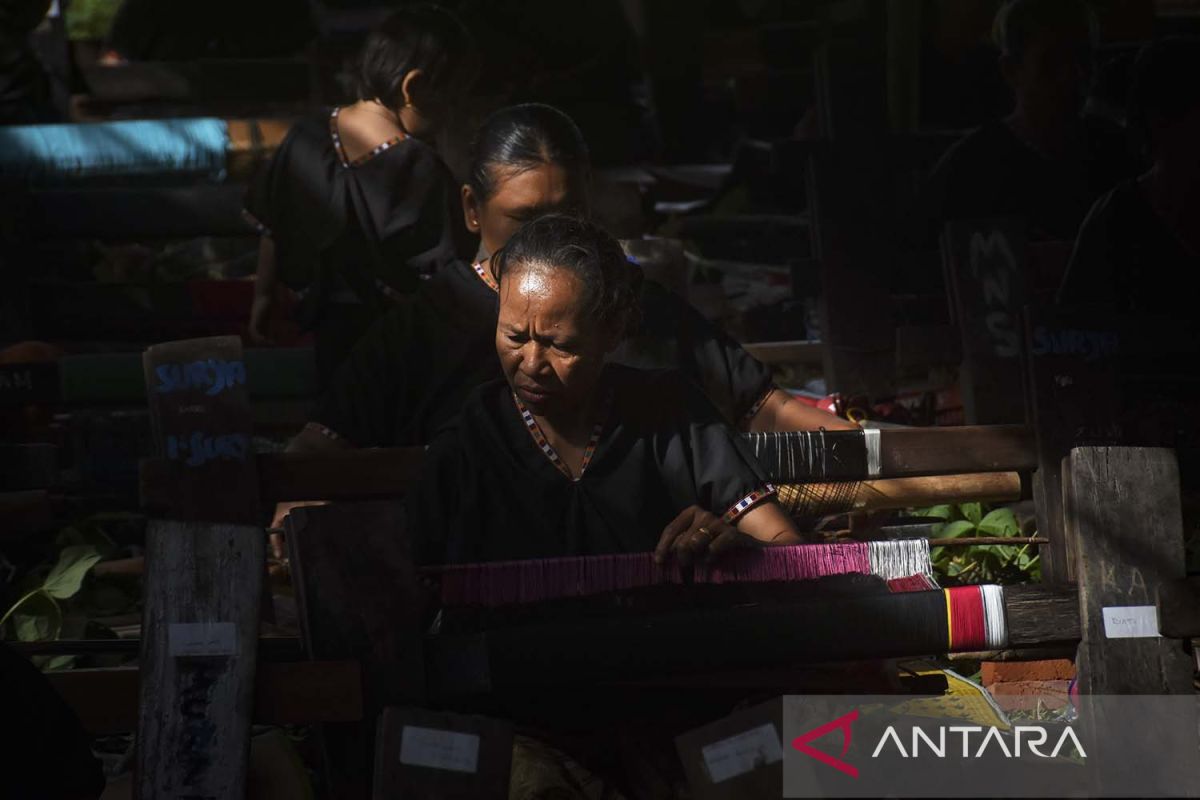
The future of NTB’s economy is not determined solely by natural resources or major infrastructure projects. That future is equally shaped by the region’s ability to nurture the creativity of its citizens.
Mataram (ANTARA) — Mornings in many villages across West Nusa Tenggara (NTB) often begin with sounds that are not always uniform. In some places, the clinking of looms moving slowly can be heard. Elsewhere, young people are busy photographing handicraft products for marketing on social media.
Meanwhile, in the city, several small workspaces are filled with graphic designers, content creators, and app developers working from their laptops. All these activities share the same common thread: creativity gradually transforming into the economy.
Over recent years, the creative economy has begun to be viewed not merely as a complement to the tourism sector, but as a new engine of growth for the region.
The government has even positioned the Bali Nusa Tenggara corridor as a super-hub region for international-standard tourism and creative economy within the long-term development vision towards 2045.
Amid these dynamics, NTB now finds itself at an interesting juncture. The region possesses not only cultural wealth and community creativity, but is increasingly being positioned as a national laboratory for creative economy policy, particularly through the People’s Business Credit financing scheme for creative economy practitioners.
This momentum raises an important question: is NTB truly ready to make the creative economy the foundation of the region’s economic future?
The creative economy is fundamentally based on one inexhaustible resource: human ideas. Within the national framework, this sector encompasses at least 17 sub-sectors ranging from culinary, crafts, fashion, film, music, to digital applications and game development.
In NTB, this potential is evident from various cultural and community creativity-based economic activities. Traditional weaving in Lombok and Sumbawa, for instance, is not only a cultural heritage but also a source of income for thousands of families.
In West Sumbawa District, the local government has even conducted a 20-day training programme on developing weaving motifs to enhance product quality whilst strengthening market competitiveness. The programme is not merely about teaching weaving techniques, but also paving the way for new designs with higher commercial value.
Beyond crafts and fashion, the creative economy also develops through various festivals and local product exhibitions. NTB Creative Works and the Lombok Sumbawa Weaving Festival exemplify how cultural promotion can be transformed into an economic stage for small business operators.
These festivals showcase not only woven products, but also craft bazaars, artistic performances, and culinary markets. Such activities demonstrate that the creative economy has wide-ranging cascading effects, from production through to consumption.
Another interesting phenomenon emerges from villages beginning to leverage culture as the basis for creative economy development. The establishment of village museums in several areas of Lombok shows how the preservation of history can be combined with new economic activity.