
Weaving Sharia into the Tourism Route
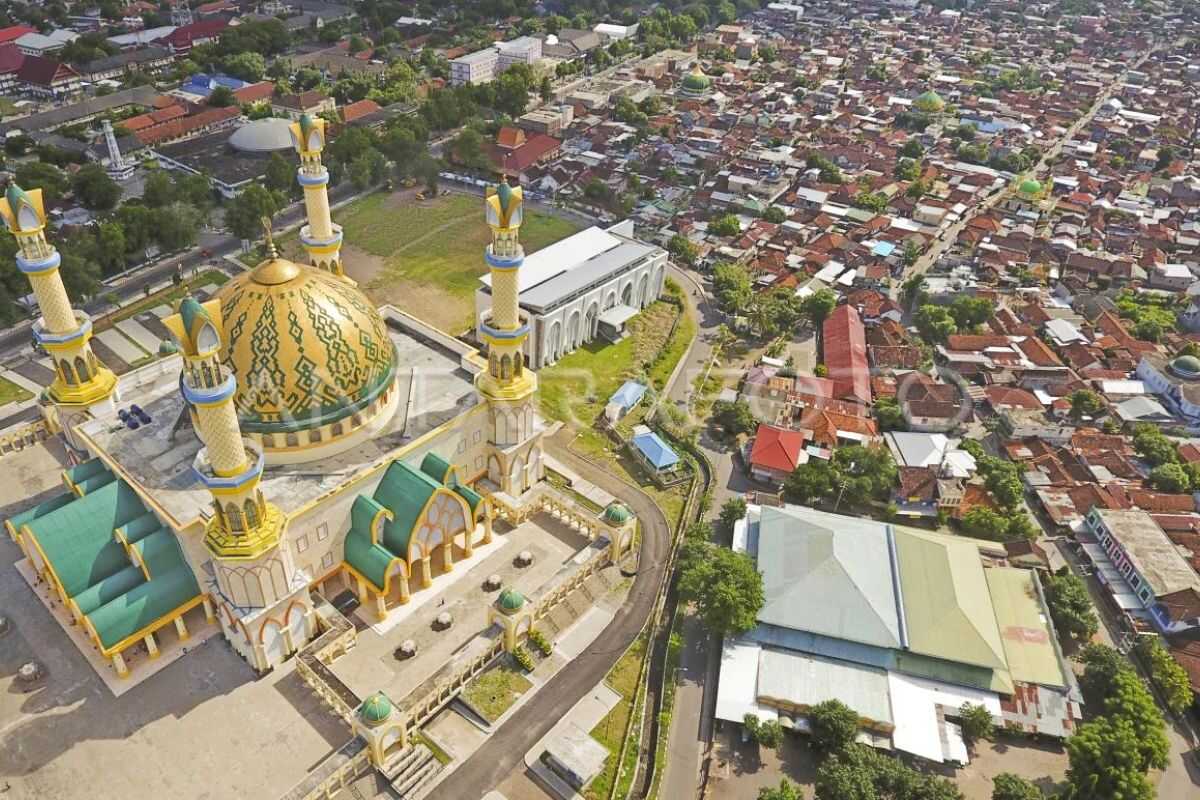
Mataram (ANTARA) — On the veranda of the Hubbul Wathan Islamic Center Mosque, the pulse of West Nusa Tenggara’s (NTB) sharia economy seems to have found its symbol. The mosque is no longer merely a place of worship, but a marker of the direction of development.
From there, ideas about an economy that is just, sustainable, and rooted in local values have gradually taken shape as concrete policy. NTB is not simply talking about halal as a label, but as a system.
For nearly a decade, the province has established itself as a laboratory for sharia economics. Since the conversion of Bank NTB into Bank NTB Syariah in 2018, the regional financial ecosystem has undergone a transformation.
Data from the Financial Services Authority (OJK) as of August 2025 shows total Islamic banking assets in NTB reaching Rp24.85 trillion, growing 11.02 per cent year-on-year. Third-party funds reached Rp16.66 trillion and financing stood at Rp18.23 trillion.
These figures signal momentum. Yet behind the growth lies unfinished work. Approximately 86.79 per cent of financing remains absorbed by the consumer sector.
This means the sharia economy in NTB has not yet fully become a production engine. It remains predominantly a supporter of spending, rather than a lever for industry.
This is where the latest developments become interesting. The NTB Provincial Government is pushing for the integration of the sharia economy with tourism and the creative economy.
At an economic forum in Mataram in February 2026, this commitment was affirmed as a strategy to make NTB a national sharia economic centre based on sustainable tourism. The focus is no longer on chasing tourist numbers, but on the quality and sustainability of destinations.
This step merits close attention. NTB has long been known as a halal tourism destination. But the halal concept is now being expanded into an ecosystem.
Electronic ticketing, cashless payments, and the integration of tourism village transactions are being directed through the Islamic banking system so that money circulation remains within the village.
If implemented consistently, this model could become a national example of how religious values can be combined with modern governance.
Sharia Transformation
Institutional transformation forms the initial foundation. When Bank NTB converted to an Islamic bank, some quarters doubted its competitiveness. Those concerns have gradually been answered by asset growth and financing expansion. Indeed, from the outset it was emphasised that the sharia system is inclusive and open to all.
Now regional Islamic banking is not only channelling financing but managing tourism village transaction systems. All economic activities, from homestays to souvenirs, are directed through a single integrated financial system. The objective is clear: economic leakage is suppressed, and benefits remain within local communities.
This approach aligns with efforts to make NTB the centre of sharia economics in Eastern Indonesia. At the Indonesia Sharia Economy Forum and Expo 2025 in Mataram, the regional government affirmed the sharia economy as a driver for SMEs and halal industry. The projected global market potential of US$6.5 trillion by 2027 provides the backdrop for this optimism.
However, optimism without production readiness will merely turn NTB into a market. Global experience shows that non-Muslim countries such as the United Kingdom and Japan have become halal industry players due to their system readiness and product quality. NTB must heed this lesson. A halal label is insufficient without quality standards, certification, and price competitiveness.
In the fashion sector, for instance, NTB textiles such as the Subahnale motif from Central Lombok have reached the international stage. Their cultural and spiritual value is strong.
But to become an industry, a well-organised supply chain, access to productive financing, and digital marketing are needed. The sharia economy must bridge financing and production, not stop at festival ceremonies.
Halal Ecosystem
NTB’s unique strength lies in its network of Islamic boarding schools (pesantren). Bank Indonesia data from 2021 recorded 684 pesantren in NTB. Through the establishment of Hebitren, pesantren are being encouraged not only as centres of education and religious outreach, but also of economic empowerment.
The concept of a halal value chain is being introduced so that production, distribution, and consumption are integrated.
If managed seriously, pesantren could become nodes for halal food production, Muslim fashion, and religious educational tourism. This model is not merely economic, but also character education in values-based entrepreneurship.
Sharia financial literacy is also being promoted through schools, mosques, and family health posts (posyandu) to prevent communities from becoming ensnared by illegal online lending.
This educational dimension is important. The sharia economy is not merely interest-free transactions, but principles of justice and blessing. When communities understand its essence, they are not easily tempted by digital loan sharks. In this way, the sharia economy functions as both social protection and empowerment.
Nevertheless, literacy remains a challenge. The OJK has recorded asset growth, but the level of public understanding is not yet evenly distributed. Without strong literacy, the sharia economy risks becoming trapped as a symbol of identity rather than an instrument of welfare.
Policy Consistency
NTB now stands at a critical crossroads. On one hand, its institutional foundations are strong. Islamic banking is growing, pesantren are organised, tourism is directed towards sustainability, and international connectivity is being expanded with new flight routes to Darwin and Bangkok. On the other hand, the still predominantly consumer-oriented financing structure shows that the transformation is not yet complete.
For this leap to truly materialise and not remain mere jargon, there are three urgent agendas that need to be pursued consistently and measurably. The first step is to shift the proportion of financing towards productive sectors.
Support for halal SMEs, food processing industries, and village-based creative economies cannot remain mere rhetoric — it must be realised through tangible and sustainable incentives.
Risk-sharing financing schemes need to be designed more progressively so that business operators have the confidence to expand and increase their productive capacity.