
Weaving Ketupat Since Childhood, Rosida Now Struggles Amidst Sparse Customers
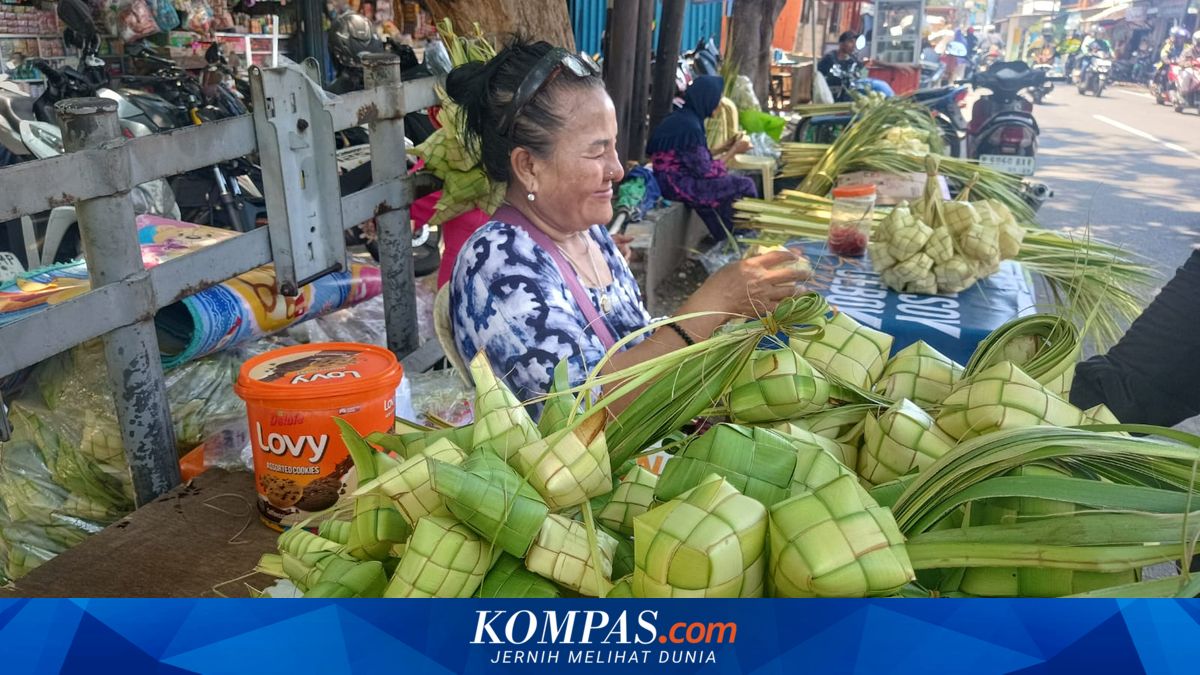
In the midst of economic pressures and rising raw material prices ahead of Eid, Rosida (45) persists in selling woven ketupat at the Rawa Badak Utara Market in Koja, North Jakarta. The skill she has honed since childhood now serves as the primary support for her family’s economy, although sales this year have tended to decline. The woman who has been weaving ketupat since she was young admitted that her expertise was inherited from her mother, who previously ran a similar seasonal business. “As usual, every Eid I’m here. Every year I sell here, replacing my parents,” she said. However, Rosida noted that sales this year are quieter compared to previous years. She suspects this condition is influenced by many residents who have already returned to their hometowns earlier, thus reducing the number of buyers in the city. In addition to the drop in demand, she also faces an increase in the price of janur—the young coconut leaves that are the main material for weaving ketupat. “The janur from the supplier is Rp 100,000 per bundle. It contains 200 pieces,” said Rosida. This price has risen by about Rp 20,000 compared to last year. This increase forces her to adjust the selling price, although the profits have not yet been felt. “The profits this year haven’t shown yet,” said Rosida. She explained that the business conditions started to feel heavy since the COVID-19 pandemic and have not fully recovered until now. “It’s been almost four years. Since COVID-19,” she added. Amid economic limitations, Rosida continues selling because the income helps meet household needs, especially with her husband’s casual work. “My husband’s work is casual. We have schoolchildren, rented house, oh dear. If we just sit idle, my mother would hang herself,” she added.