
Weaving Devotion in the Holy Land
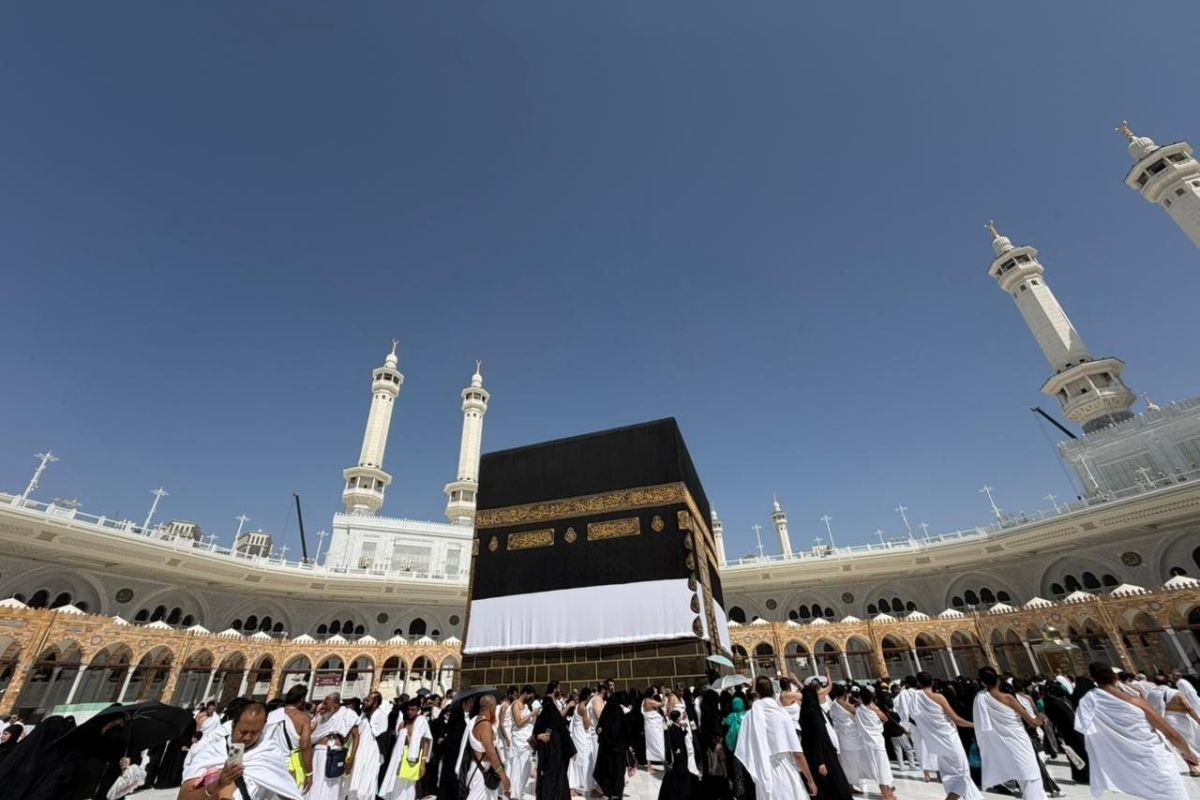
Serving Hajj pilgrims is not merely an administrative obligation or a paid state duty, but a manifestation of the most noble form of worship. Jeddah (ANTARA) - The sky slowly changes form, ushering in steps filled with sincerity towards the House of God. The year 2026, or 1447 Hijriah, now bears witness to the mass movement of Indonesian Muslims. With a total quota of 221,000 people, comprising 203,320 in the regular congregation and 17,680 in the special congregation, the success of organising the Hajj pilgrimage certainly requires a strong supporting pillar. That pillar is embodied in around 1,600 Hajj Organising Officials (PPIH). After the Hajj officials from the Airport Area Office (Daker) and Madinah Area Office first set foot and opened the service gates in the Holy Land, including welcoming the arrival of the first batch of Hajj pilgrims on Wednesday (22/4), it is now the turn of the officials from the Makkah Area Office to join the ranks. Their departure is not merely an ordinary journey, but the culmination of a long wait, tireless physical and mental preparation, and a pure intention to serve the guests of Allah. On their shoulders rests the hope of hundreds of thousands of pilgrims from Indonesia who long to perform the fifth pillar of Islam with devotion, safety, and comfort. The long journey of these servants of Allah’s guests truly does not begin when they sit in the aeroplane seats, but has stretched far since December 2025. At the end of that year, when many people were preparing to welcome the new year with festive holidays, they were instead occupied with stacks of learning materials, uninterrupted prayers in the last third of the night, and a series of rigorous selection exams. Thousands of applicants from various backgrounds, from medical personnel, academics, civil servants, TNI/Polri, media, to other institutions, competed to seize this noble opportunity. Passing the selection is merely the first step, it is the initial gateway to true self-forging. The time has come for them to be forged. For 20 full days, the Hajj Dormitory in Pondok Gede, Jakarta, became a silent witness to their transformation in Education and Training (Diklat) with a semi-military atmosphere. In this place, sectoral egos are dismantled. Ranks, academic degrees, and social status are completely shed, replaced with one identical identity: servants of the Hajj congregation. From before dawn breaks until late at night, their physical and mental resilience is tempered to withstand extreme temperatures and psychological pressures that will await them in Saudi Arabia. Discipline, team cohesion, and quick crisis response are instilled deeply. It does not stop there; the forging continues into the intellectual realm through 10 days of online training. In this phase, they delve into the complex map of Saudi Arabia’s regions, Hajj jurisprudence, crisis management, and crowd psychology. This total of 30 days of intensive preparation is designed for one absolute goal: to dismantle the “I” into “we”, ensuring they are ready to become the protective guard for Indonesian Hajj pilgrims. My Task is My Worship.