
Weaving Back a Life Torn Apart by Flash Floods
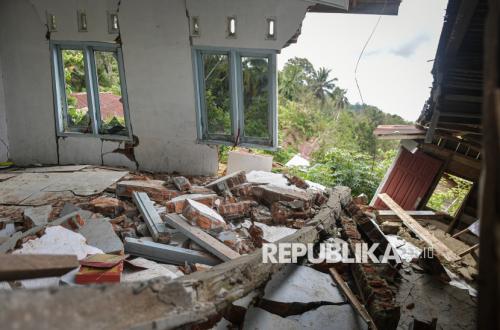
Under the unrelenting sun, Ingotan Tua Draha stands on land he no longer recognises as home. Dried mud encases the remnants of buildings, swallowing walls, rooms, and memories that once formed the fabric of his family’s life. Only fragments remain visible, like traces refusing to vanish completely, marking the spot where a warm house once stood. Occasionally, he gazes blankly at the mound of earth. That was where his children once played, his wife cooked, and the family lived simple days. Now, everything has vanished in an instant, swept away by flash floods and landslides that struck Tukka Subdistrict, Pasar Tukka Ward. The disaster did not merely demolish homes but compelled Ingotan and his family to start life anew from scratch. With his wife and eight children, he chose to rent a simple house. This decision was not born of financial ease but of pressing necessity. “Living in a tent is impossible. We are many, with eight children,” he said softly. For Ingotan, his children’s comfort is non-negotiable. He does not want them to grow up in the cramped confines of an evacuation shelter, limited in every way. Yet this choice brings new burdens: additional expenses amid an economy weakened by the catastrophe. Before the disaster, life in Pasar Tukka followed a familiar rhythm. Residents, mostly rice and rubber farmers, lived in a strong web of mutual cooperation. Fields and gardens were their mainstay, as well as social spaces binding neighbourly ties. Now, the landscape has changed drastically. Rice paddies are buried, gardens gone, and economic activities seem to have halted. The once-bustling village is now silent, leaving empty spaces hard to fill. In this scarcity, many residents, including Ingotan, have switched professions. Work as a construction labourer has become one path to survival, though uncertain. “The gardens are gone, no work left. Now, if a friend invites me to work on construction, I join,” he said. Savings set aside for the future are slowly depleting, used to pay rent and daily needs. But for Ingotan, this is not a loss but an effort to keep his family safe. Hope flickered when promises of rental assistance from the government emerged. Yet months after the disaster, the aid has not materialised. “They say there’s rental aid, but it hasn’t been disbursed. We’ve waited a long time,” he said, his tone more resigned than disappointed. Nevertheless, he chooses to persevere. Amid uncertainty, he leaves no room for surrender. For him, as long as his children can sleep peacefully, the struggle is worth continuing.