
Weather Anomalies Cause Losses for Kusamba Salt Farmers
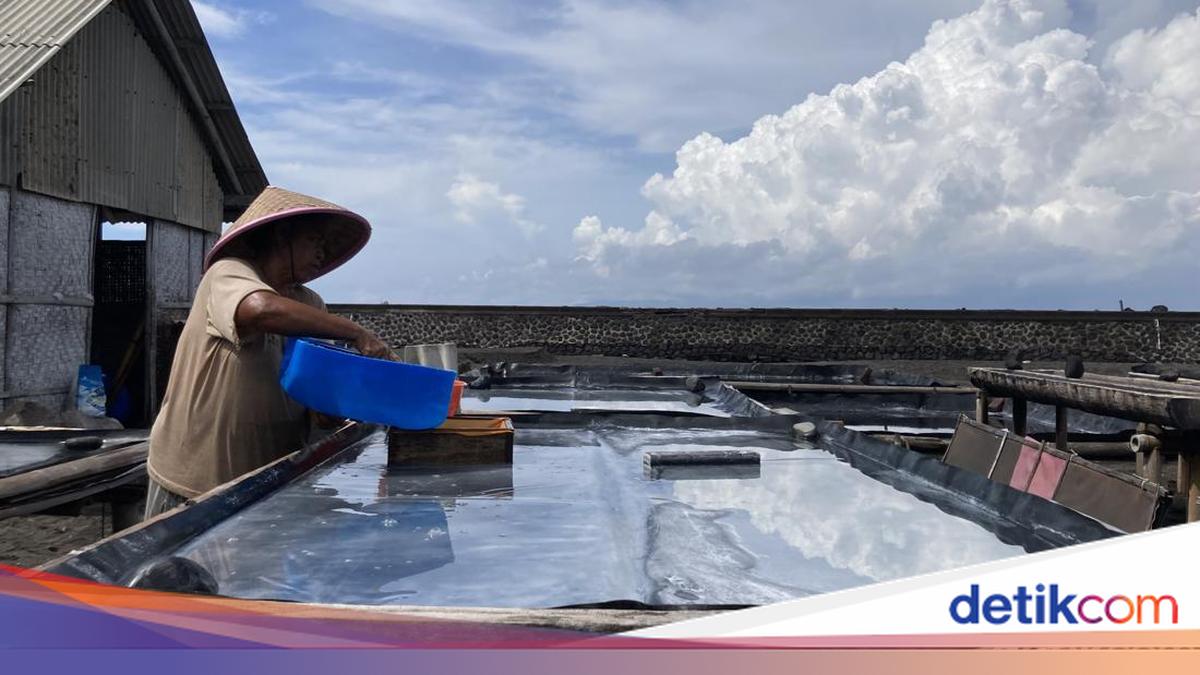
Salt farmers in Kusamba Village, Dawan Subdistrict, Klungkung, Bali, are increasingly pressured by weather anomalies. Almost daily rain has stalled salt production and triggered losses.
A Kusamba salt farmer, Nyoman Koplag (60), furrowed his brow when met by detikBali. He has incurred losses over the past three days due to continuous rain.
“It’s been raining non-stop for three days. Not a single batch has been completed,” said Koplag on Wednesday (29/4/2026).
In front of him, several salt evaporation ponds appeared to be starting to crystallise, but not yet ready for harvest. The situation worsens if the sun is obscured by clouds. Koplag said the potential for losses would continue today.
According to him, the rain not only eliminates the harvest but also causes operational costs to swell. Fuel for pumping seawater to the salt fields is still used even when production fails. Throughout April, he admitted to losing more often than profiting.
“Indeed, the current season is unpredictable. In the past, April was the time for continuous harvesting,” he explained.
In normal weather conditions, Koplag only needs one day to produce around 20 kilograms of salt from several ponds. But now, the same amount takes a week to obtain.
“I sell it for Rp 20,000 per bundle,” he clarified.
The Chairman of the Sarini Segara Kusamba Salt Farmers Group, I Nengah Diana (51), said farmers are forced to rely on survival strategies by setting aside income during harvest times.
“If we don’t set it aside, times like this would be very difficult. Sometimes we even have to take out loans to meet needs,” explained Diana.
She mentioned that government assistance is still available. Farmers receive attention from the Klungkung Food Security and Fisheries Office (DKPP), particularly in providing production equipment.
“All this equipment was given to us. Additionally, we are still monitored regularly,” she said.
The price of Kusamba salt varies depending on the production process. Salt processed using evaporation channels made from coconut tree trunks is sold for Rp 20,000 to Rp 25,000 per kilogram. Meanwhile, salt from regular ponds is priced at around Rp 15,000 per kilogram.
“For buyers, there are no issues. It’s not every day, but demand remains steady,” she concluded.