
Water Issues in the Architecture of Modern Conflict
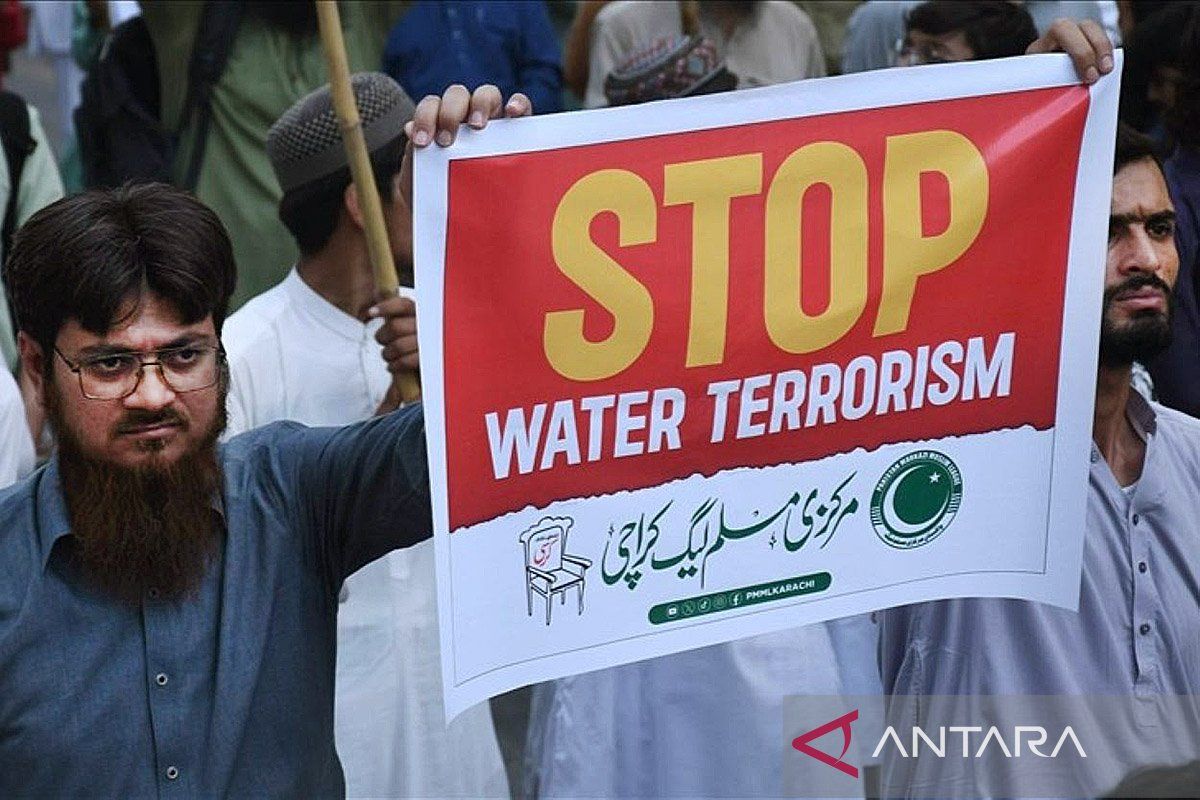
Water security must be positioned as an integral part of national defence strategy, not merely as an environmental or economic issue, but as a pillar of state stability in the new era of global conflict. Jakarta (ANTARA) - In the last two decades, natural resources are no longer viewed solely as economic commodities but also as strategic instruments in global conflicts. Among these various resources, water has emerged as one of the most crucial. The increasingly limited availability of clean water, uneven distribution, and pressures from climate change have turned water into a sensitive geopolitical variable. In such situations, water is slowly evolving from a basic human need into a potential “weapon of war” in the future, serving as a target for attacks, a means of political pressure, or a strategic weapon in modern conflicts. Conceptually, this phenomenon has long been anticipated by international relations thinkers. In 1995, former World Bank Vice President Ismail Serageldin stated that “the wars of the 21st century will be fought over water.” That statement now feels increasingly relevant amid rising conflicts over water resources in various regions of the world. Water is not just a basic human need but also the main pillar supporting agriculture, energy, and the social and political stability of a country. From a military strategy perspective, water can be utilised in various forms of operations. First, as an object of territorial control. Mastery over dams, transboundary rivers, or strategic water sources can provide significant leverage against an opponent. Second, as an instrument of political and economic pressure, when water flows are deliberately reduced or manipulated to weaken downstream countries. Third, as a direct target of attack in armed conflicts, aimed at crippling vital infrastructure while triggering humanitarian crises. Several empirical events demonstrate that water is beginning to play an important role in the dynamics of modern conflicts. One of the most evident examples occurred in the Syrian conflict. Armed groups, including ISIS, systematically seized major dams such as the Tabqa Dam on the Euphrates River. This control allowed them to manage electricity and water supplies for millions of residents. In several cases, water was even used as a tool of pressure by cutting supplies to areas controlled by opponents. The impact was not only military but also triggered widespread humanitarian crises. Another example can be seen in the tensions between Egypt, Sudan, and Ethiopia regarding the construction of the Grand Ethiopian Renaissance Dam (GERD) on the Nile River. For Egypt, which heavily relies on the Nile River flow for domestic and agricultural needs, the project is viewed as an existential threat. On several occasions, Egyptian officials have even stated that all options, including military measures, remain open to protect their water rights. This situation illustrates how water infrastructure can become a flashpoint for inter-state conflicts. From the theory of war perspective, this phenomenon aligns with Carl von Clausewitz’s thinking that war is the continuation of politics by other means. In the context of water resource disputes, political and economic interests can easily escalate into open conflict when a country’s vital needs feel threatened. Water, in such situations, becomes not only an object of contention but also a medium in coercive diplomacy practices. Furthermore, global security expert Peter Gleick from the Pacific Institute has developed a water conflict database showing a significant increase in water-related incidents since the early 21st century. The data indicates that water is not only a trigger for conflicts but also utilised as a tactical tool in warfare, from sabotaging water infrastructure to contaminating water sources.