
Water Hyacinth Dominates Pluit Reservoir, Warning Signal from Domestic Waste
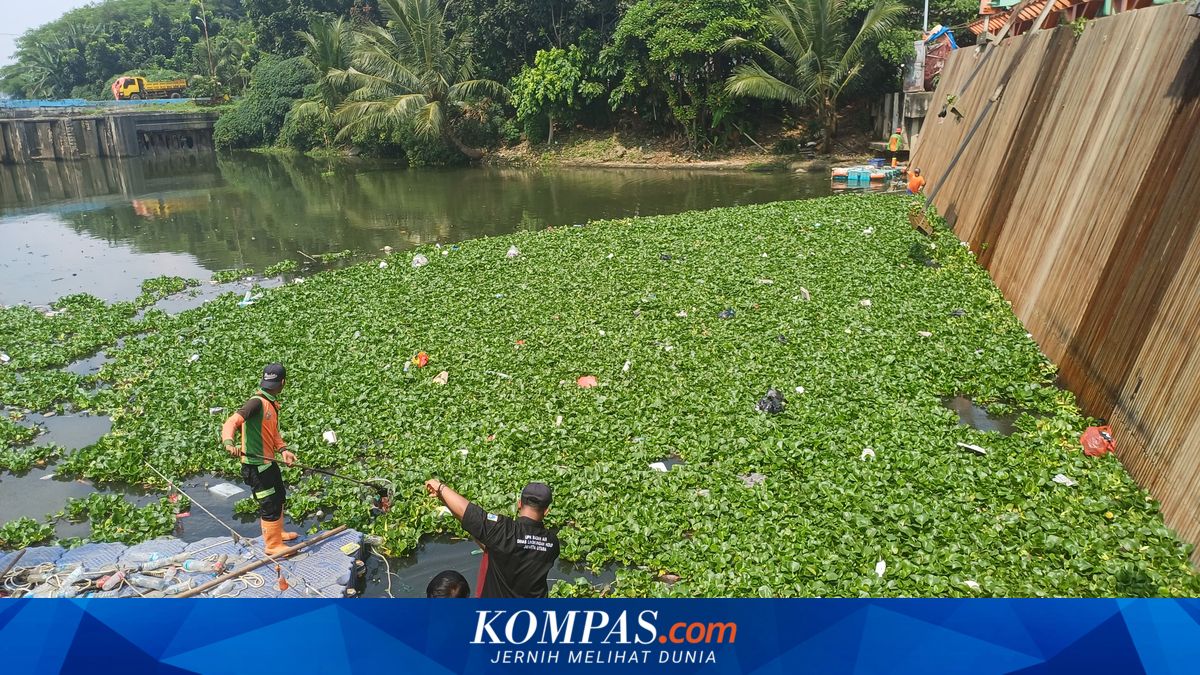
JAKARTA - A lecturer from the School of Environmental Science at the University of Indonesia, Mahawan Karuniasa, assesses the widespread growth of water hyacinth in the Pluit Reservoir, Penjaringan, North Jakarta, as an indicator of pollution.
He explains that the massive emergence of this aquatic plant is linked to high nutrient levels in the water.
“Scientifically, the explosion of water hyacinth is almost always an alarm for eutrophication: water that is too rich in nutrients, particularly nitrogen and phosphorus,” he stated when contacted by Kompas.com on Thursday (2/4/2026).
However, ecologically, this indicates pollution pressure.
“It does not automatically mean that every parameter is always extreme on the same day, but ecologically, this strongly indicates an excessive nutrient load,” he said.
“It is very possible that what is happening is a combination of rapid growth, fragments from existing colonies, then accumulated by wind, currents, and increased runoff after rain,” he added.
According to Mahawan, this condition is generally triggered by the influx of waste from various sources, particularly in urban areas.
“In the urban context like Jakarta, the more direct triggers are often domestic waste, detergents, organic rubbish, residential runoff, and pollutant loads from rivers entering the reservoir,” he stated.
Mahawan also revealed that several previous studies have shown the water quality of the Pluit Reservoir to be in an suboptimal condition.
“For the Pluit Reservoir itself, previous academic studies have already shown water quality that is unfit for fishing activities, and other reports have recorded high BOD and COD levels,” he said.
He added that this condition is related to Jakarta’s inadequate wastewater treatment system.
“The problem is that the coverage of piped wastewater services and centralised treatment in Jakarta is still very low compared to the amount of waste produced,” he explained.
“Most washing water, kitchen water, detergents, and household waste still enter directly into drains, canals, and reservoirs,” he added.