
Waste to Energy Projects Prepared as Public Spaces and Environmental Education Centres
Jakarta — Indonesia’s waste-to-energy (WTE) projects are not merely designed as waste-based electricity generation facilities. The government, together with Danantara Indonesia, is also preparing WTE areas as public spaces and environmental education centres so that communities can directly observe modern waste management processes.
This approach forms part of efforts to change public perception of urban waste management facilities. Historically, waste treatment plants have been associated with closed-off areas located far from community activities.
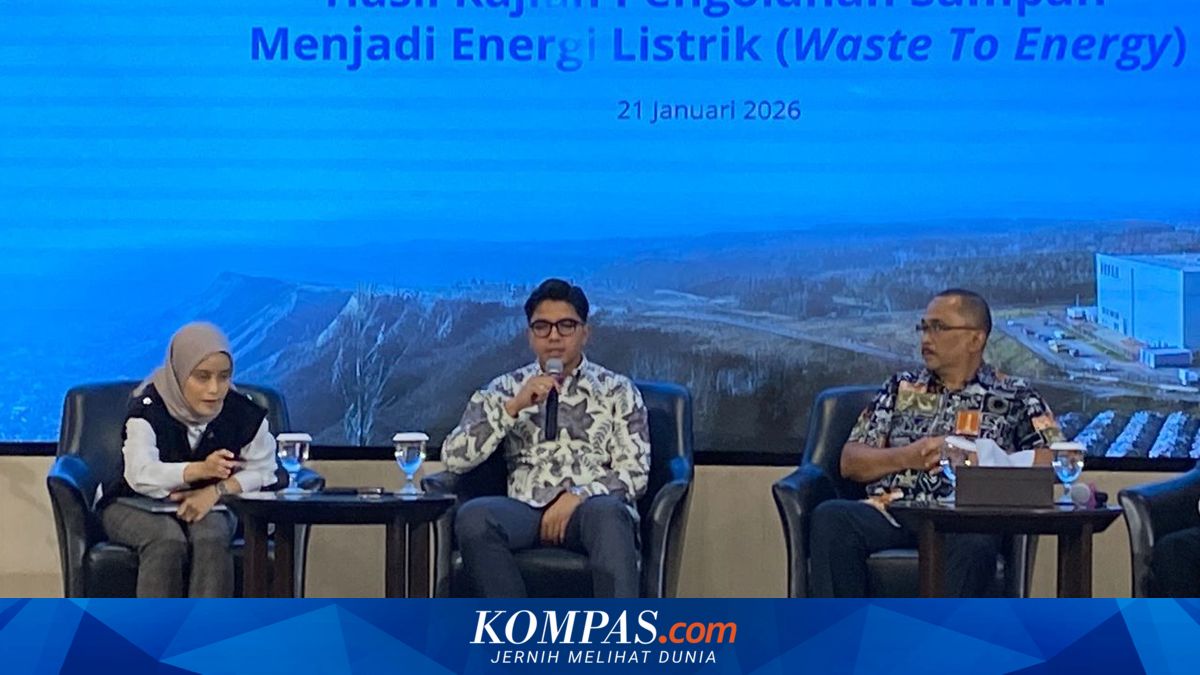
Fadli Rahman, Director of Investment at Danantara Investment Management (DIM), stated that the Waste to Energy concept being developed focuses not only on electricity production from waste, but also on transforming the overall waste management system.
“This is not a project about burning waste to generate electricity. This is a waste management project that serves as a catalyst for waste management transformation in the region,” Fadli told reporters in Jakarta on Friday, 6 March 2026.
According to Fadli, the support framework is designed to operate for approximately 30 years to ensure the project runs sustainably and does not stall midway.
Economically, the Waste to Energy project is projected to become one of Indonesia’s large-scale environmental infrastructure projects. Investment value for each facility is estimated at approximately 150 to 170 million US dollars, or equivalent to approximately 2.4 to 2.7 trillion rupiah per location.
According to Fadli, the project is also designed to attract global investment whilst opening opportunities for modern waste management technology transfer to Indonesia.
One example of this concept is planned for the WTE project in Bekasi, which will be developed with an open area approach.
“The intention is actually for it to become a public area. The Bekasi one we designed so that people can walk around it, so it’s like an ecopark, with a café on top, and a learning centre to see the process inside,” said Fadli.
Through this concept, waste management facilities are expected to no longer be viewed as areas that must be kept away from communities. Instead, Waste to Energy areas can become public spaces that introduce modern waste management technology.