
Waste-to-Energy Projects Accelerated, Danantara Allocates Up to Rp2.8 Trillion per Site
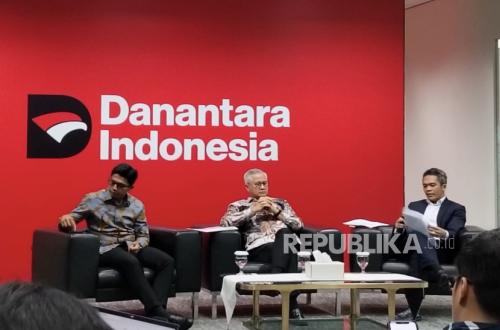
Danantara Investment Management is preparing significant investments for waste-to-energy (WTE) projects in several cities across Indonesia, as part of efforts to accelerate the handling of the national waste crisis.
Lead of Waste-to-Energy and Director of Investment at the company, Fadli Rahman, stated that the investment value for one WTE project ranges from Rp2.5 trillion to Rp2.8 trillion, depending on the capacity of the facility being built.
“The investment ranges from Rp2.5 to Rp2.8 trillion. Because the capacity is quite large in some locations, the investment can reach Rp2.8 trillion,” Fadli said during a Coffee Session with the media on Thursday (6/4/2026).
He explained that the project ownership structure will consist of 70% from partners and 30% from Danantara. This collaboration is being carried out with a new entity named Daya Energi Bersih Nusantara, which was established on 1 April 2026 to manage all WTE projects under Danantara.
In its implementation, each project will have one special purpose vehicle (SPV) or implementing business entity (BUP). Several locations being prepared include Denpasar or Badung in Bali, Bogor and Bekasi in West Java. In addition, the project in Yogyakarta is still in the partner selection stage for the next development phase.
The project’s funding relies on a mixed scheme with a debt portion of around 70%. Fadli emphasised that this investment falls under the category of foreign direct investment (FDI), which is expected to provide a positive contribution to Indonesia’s investment climate.
“It falls under foreign investment in Indonesia, which is good for the investment climate in Indonesia,” he said.
He added that the partner selection process, particularly for the Yogyakarta project, greatly considers the speed of construction. This is due to the urgency of the waste problem that must be addressed immediately.
“The most important thing is in terms of timeline. Because of the urgency of the waste problem in Jogja, we don’t want to choose partners whose construction process is very long,” he stated.
In addition to building facilities, Danantara will also encourage an increase in the waste collection rate (collection rate) in the investment location areas. However, Fadli stressed that investments can only be made in regions with a minimum waste capacity of 1,000 tonnes per day, in accordance with applicable regulations.
“For regions where waste collection is not above 1,000 tonnes, we are not allowed to make that investment. So, the regional government must be committed and ready,” he said.
He affirmed that all projects must meet aspects of commercial, technical, financial feasibility, as well as risk management before they can be carried out. This becomes the main prerequisite in investment decision-making.