
Waste-to-Energy Project: How Urgent Is It?
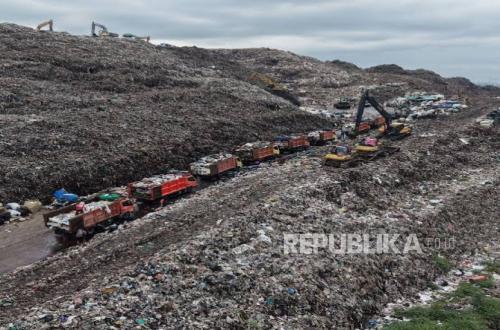
REPUBLIKA.CO.ID, JAKARTA — Waste-to-energy (WtE) projects are gaining momentum as one of the solutions to address the increasingly pressing national waste issue. However, behind the acceleration of the projects and the influx of major investments, the strategic role of WtE in the national waste and energy management system remains not fully defined in its entirety.
Prabowo Subianto is targeting the acceleration of the downstream programme through the laying of the first stone for 21 projects in April 2026. In addition, the government will also conduct groundbreaking for WtE projects in various regions.
State Secretary Minister Prasetyo Hadi stated that the WtE projects, previously planned at 33 locations, are now adjusted to around 29 locations and targeted to begin construction in the same month.
“This includes 21 downstream projects for which we ask for prayers and, God willing, in April this year all can undergo groundbreaking,” he said.
From the investment side, Danantara Investment Management is accelerating the development of these projects. The company is preparing investments of around Rp2.5 trillion to Rp2.8 trillion for each WtE project in several cities.
Lead of Waste-to-Energy and Director of Investment at Danantara, Fadli Rahman, said the investment amount depends on the capacity of the facility being built.
“The investment ranges from Rp2.5 to Rp2.8 trillion. Because the capacity is quite large in some locations, the investment can reach Rp2.8 trillion,” he said.
As regional interest increases, Danantara is also opening a tender for the second phase of WtE projects in 25 cities in April 2026. Managing Director of Stakeholder Management and Communications at Danantara, Rohan Hafas, said the number has increased compared to the initial phase, in line with the high interest from regional governments. “So almost all provincial capitals will get waste processing facilities,” he said.
In the initial phase, WtE projects in Bogor and Denpasar were won by a company from China, Zhejiang Weiming, while the project in Bekasi was won by Wangneng Environment Co., Ltd. This cooperation model also opens up opportunities for foreign investment and technology transfer in waste management.
To strengthen the management structure, Danantara has also formed a special entity, PT Daya Energi Bersih Nusantara (Denera), as a holding company that will consolidate all WtE projects nationally. Chief Investment Officer Pandu Patria Sjahrir said the formation of this entity aims to build more structured and integrated investment governance.
“With this, operational standards, investment governance, and coordination with domestic and international partners can run more effectively and accountably,” he said.
Indonesia currently produces around 68–70 million tonnes of waste per year, with most still ending up in final processing sites (TPS). This condition poses serious pressure on the environment as well as urban waste management systems. In this context, WtE is starting to be positioned as one option to reduce the burden on TPS while utilising waste as an energy source.
Minister of Environment/Head of BPLH Hanif Faisol Nurofiq emphasised that conventional approaches are no longer relevant. “Waste management can no longer rely solely on TPS. We must ensure that waste is processed through environmentally friendly technology so that only residue enters the TPS,” he said.
Several projects are being prepared in various regions. In Pekanbaru Raya, the WtE facility is designed to have a processing capacity of 1,215 tonnes of waste per day. Meanwhile, in Bandung Raya, the planned capacity reaches 3,515 tonnes per day from several agglomeration areas.
Technically, one WtE facility requires a minimum supply of around 1,000 tonnes of waste per day. With that capacity, the plant can generate around 10–15 MW of electricity, with a conversion ratio of about 500–650 kWh of electricity per tonne of waste. On an annual scale, one facility can process around 365,000 tonnes of waste. If developed nationally on a scale of 30 to 60 facilities, the processing potential can reach 30,000–60,000 tonnes of waste per day, or equivalent to about 20% to 30% of national urban waste generation.
In the circular economy framework, WtE does not stand alone but is part of a more comprehensive waste management system. This facility is at the downstream stage, after reduction at source, sorting, and recycling. Ideally, waste management composition includes 20% to 30% reduction, 30% to 40% recycling, and 20% to 30% energy conversion such as WtE, with less than 10% residue ending up at final processing sites.
However, in practice, most waste in Indonesia is still directly disposed of to TPS without adequate sorting. This condition impacts the quality of waste entering WtE facilities, especially due to high moisture content and contamination with non-organic materials, which ultimately affects the efficiency of the processing process.
With investment needs reaching Rp2.5 trillion to Rp2.8 trillion per project, WtE development demands certainty from technical and operational aspects. One of the main requirements is the availability of a minimum waste supply of 1,000 tonnes per day so that the project can operate optimally. Fadli emphasised that all projects must meet technical, commercial, financial feasibility, as well as risk management aspects before being implemented. “The regional government must be committed and ready,” he said.