
Waste Production in Cimahi City Rises 40 Percent During Ramadan
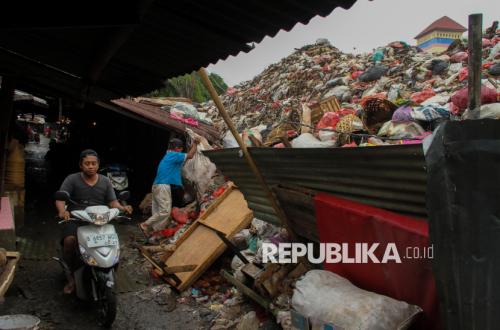
Waste production in Cimahi City, West Java, has surged during the holy month of Ramadan 1447 Hijriah. The increase in food and beverage consumption, along with the Free Nutritious Meals (MBG) programme, has triggered this rise.
The Head of the Environmental Agency (DLH) of Cimahi City, Chanifah Listyarini, stated that on normal days, the waste produced by residents in Cimahi City is around 250 tonnes per day. However, during this Ramadan, it has increased by up to 40 percent.
“Very high, the increase is very high. The waste increase is around nearly 30-40 percent. Now it can be more than 300 tonnes every day during this fasting month,” said Chanifah when contacted on Thursday (19/3/2026).
From the analysis, she revealed, the rise in waste production during this Ramadan is not only due to the increased consumption of food and drinks by the community. It is also because of the MBG that is taken home during the fasting month.
“Everything is packaged, and this has an effect. Yesterday we conducted a small survey, chatting with one neighbourhood unit (RT), initially the volume was less than 9 carts. But once the MBG is not eaten at school during Ramadan because it is distributed and taken home, the waste increased again to 12-13 carts,” explained Chanifah.
This surge in waste production certainly impacts the disposal to the Sarimukti landfill in Cipatat, West Bandung Regency. This is because the quota prepared for Cimahi City by the West Java Provincial Government is depleted more quickly.
As known, according to the Circular Letter from the Regional Secretary of West Java Province Number: 6174/PBLS.04/DLH regarding Warnings and Restrictions on Waste Disposal to the Regional Sarimukti Waste Disposal Site, waste shipments from Cimahi City are limited to a maximum of 1,668 tonnes every two weeks. “Meanwhile, the disposal quota has not been increased at all by the province. The trips are very restricted, especially now with the weighing system. The quota that should last 14 days only suffices for 10 days,” said Chanifah.
This means, continued Chanifah, that a lot of waste is not sent to the Sarimukti landfill, resulting in piles at several temporary disposal sites (TPS) in Cimahi City. Her side is urging the community to reactivate waste sorting from home to reduce the management burden.
“Automatically, waste piles continue to accumulate. Because disposal to Sarimukti today we cannot add trips like last year, so we have to ration the trips given for two weeks,” she said.