
Waste Production in Bandung City Spikes During Eid, Now Gradually Returning to Normal
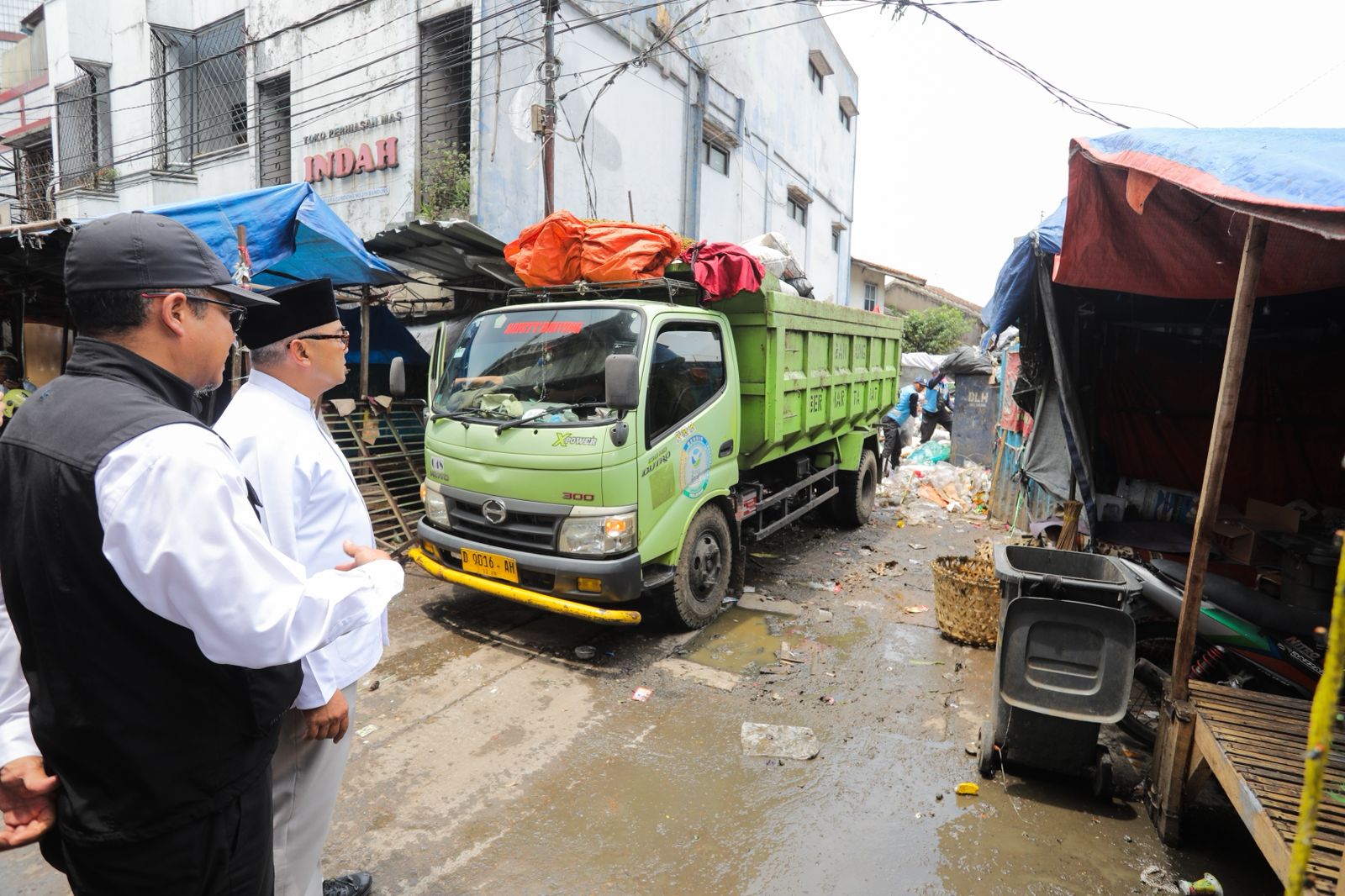
The Bandung City Environmental Agency (DLH) recorded a significant surge in waste during Eid al-Fitr 1447 Hijriah in Bandung City. The waste volume on the night of Takbiran reached 438 cubic metres, equivalent to 208 tonnes, an increase of about 20 per cent compared to the previous Eid al-Fitr.
Head of DLH Bandung City, Darto, stated on Tuesday (31/3) that this increase is an annual pattern that often occurs during Ramadan up to Eid. Nevertheless, the current waste management situation is gradually returning to normal.
“Post-Eid al-Fitr up to H+2, waste collection has returned to normal operations after the Sarimukti landfill was reopened. Previously, it was halted on H-day and H+1 due to holidays,” he explained.
Due to this situation, Darto said, there was temporary accumulation at several Temporary Waste Collection Points (TPS). Currently, DLH is focusing efforts on cleaning overload points, such as TPS Binong, TPS Kebon Binatang on Jalan Tamansari, and TPS Kosambi. The cleaning process is carried out using heavy equipment to speed up handling.
By region, DLH data shows varied dynamics in waste volumes. In Bojonegoro, the volume actually decreased from 77 cubic metres in 2025 to 60 cubic metres in 2026. A similar trend occurred in Cibinjing, dropping from 127 cubic metres to 112 cubic metres, and Ujungberung from 51 cubic metres to 42 cubic metres.
“However, on the other hand, several areas experienced quite significant increases. Karees rose from 58 cubic metres to 78 cubic metres, Kordoba from 8 cubic metres to 16 cubic metres, and Tegalega surged from 107 cubic metres to 130 cubic metres,” he added.
Darto mentioned that to anticipate this surge, DLH Bandung City deployed a total of 2,266 personnel and 423 vehicles distributed across 263 monitoring points during the H-1 to H+2 Eid period. On H-1, 926 personnel with 127 vehicles were deployed at 66 points. On H-day, the number decreased to 200 personnel and 47 vehicles at 17 points. Entering H+1, reinforcement was carried out with 445 personnel and 115 vehicles at 108 points. Meanwhile, on H+2, 695 personnel and 134 vehicles were on standby at 72 points.
Meanwhile, Head of Waste and Hazardous Waste Management Division of DLH Bandung City, Salman Faruq, added that operational strategies were also strengthened, one of which was advancing the working hours of street sweepers.
“Street sweeping now starts from 04:00 in the morning, so by 06:00 the streets of Bandung City are already clean when people start their activities,” he explained.
In addition, Salman continued, community-based waste processing through organic waste management programmes at the RW and sub-district levels is starting to have a positive impact. This programme is able to reduce the volume of waste that needs to be transported to TPS and landfills. To date, the cleanliness conditions in Bandung City are still under control. Waste piles that temporarily increased due to volume surges and landfill operational holidays are being cleaned up gradually. DLH also urges the public to continue increasing awareness in waste management at the source.
“Implementing the reduce, reuse, recycle (3R) principles, waste sorting, and organic waste processing at the household level are considered key to suppressing future waste volumes. With synergy between government and the community, post-Eid waste handling is expected to fully recover and return to control soon,” he concluded.
To address the waste piles that could not be disposed of at the Sarimukti landfill, they already have options to dispose of waste in other areas.
Nineteen waste processing facilities continued to operate up to the eve of Eid H-day.
Inter-agency collaboration is key to accelerating city arrangements ahead of Eid.
Along with that, waste handling at several points is now gradually returning to normal conditions.