
Waste Management Requires More Than Payment: Bandung Mayor Calls for Shared Responsibility
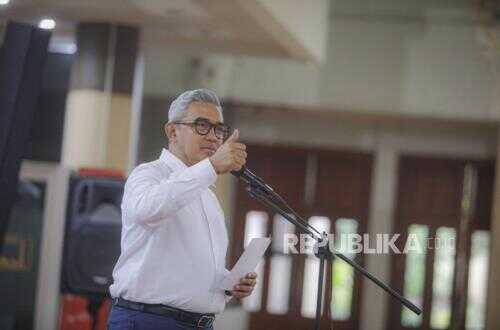
Bandung Mayor Muhammad Farhan has stated that waste management cannot be resolved solely through waste collection and the payment of waste disposal fees. He made these remarks during the tenth Ramadhan visit to Bandung Grand Mosque on Saturday, 28 February 2026.
Farhan revealed that Bandung is currently under central government supervision for waste management. Since 14 January, the city has been declared in a state of waste emergency and placed under direct central government oversight.
“Bandung is a city under government supervision, meaning we are directly observed. The question is: what have we done? Are we genuinely viewing waste as a collective problem?” Farhan stated.
He emphasised that waste cannot be considered resolved merely because it has been removed from the front of homes. Residents’ complaints about kitchen waste and environmental cleanliness are evidence that this remains a real issue felt by the community. “Whatever we pay to remove waste from our sight does not eliminate our social responsibility,” he stressed.
In response, the Bandung municipal government has introduced the Gaslah programme (Waste Sorters and Processors). However, Gaslah is not a technical solution to address the entire volume of municipal waste. Instead, it is designed to raise awareness and change public behaviour towards waste management.
According to Farhan, the key to resolving the waste problem lies in changing residents’ mindsets. He also emphasised the importance of religious teachings in shaping behaviour.
The waste issue will be disseminated through the Indonesian Council of Islamic Scholars at various levels. Religious leaders, preachers, mosque caretakers, and mosque management committees are expected to advocate for behavioural change through a religious approach.
“Waste is not resolved because we can afford collection fees. Waste is resolved when we shift our mindset from merely paying to make it disappear from sight to taking responsibility from our homes,” he explained.
He called on mosques to become the starting point for a cleanliness movement, encompassing not only physical cleanliness but also responsible waste management practices.
At Bandung Grand Mosque, which has stood for over two centuries, Farhan affirmed that major change can begin from places of worship. “We are part of a large community called Bandung, and from this mosque we can begin this behavioural change,” he said.