
Waste from three regions in South Sulawesi converted into electricity through PSEL
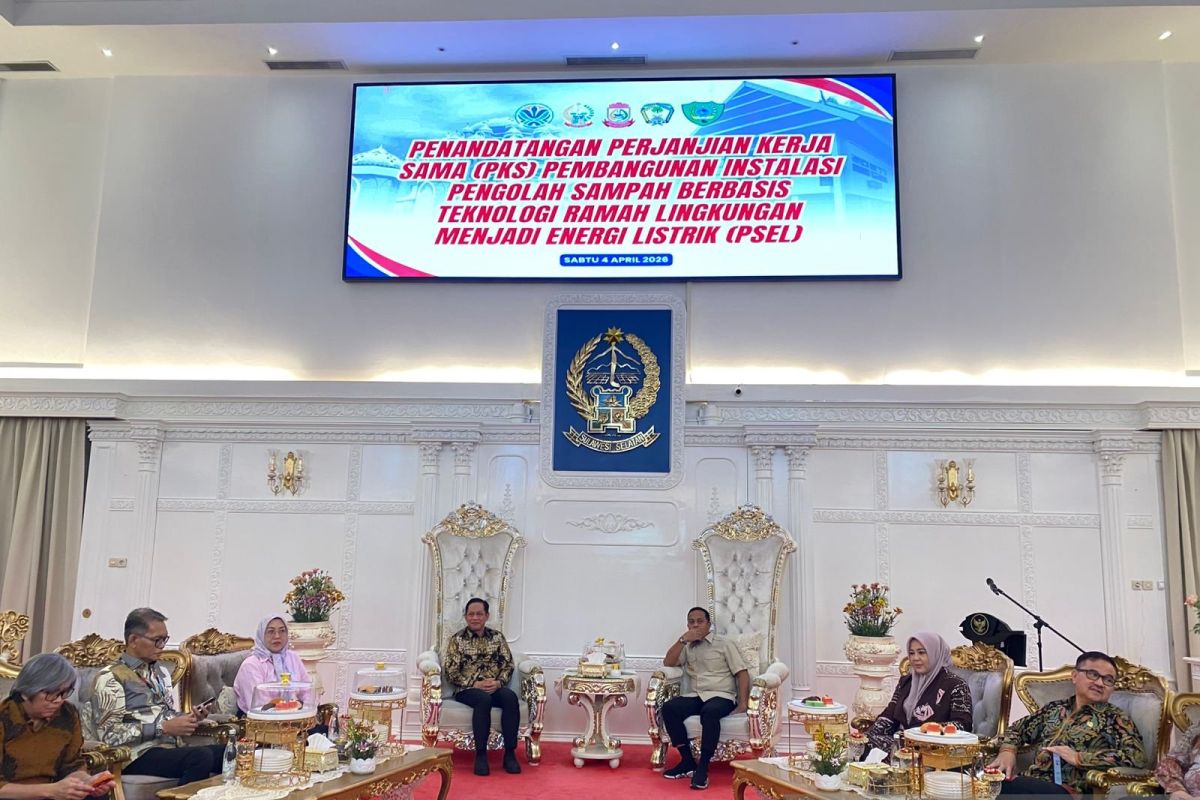
Makassar (ANTARA) - Hundreds of tonnes of waste from three regions in South Sulawesi Province, namely the City of Makassar, Gowa Regency, and Maros Regency, will be processed into electrical energy through Waste-to-Energy Electricity (PSEL). The procurement of PSEL was officially initiated with an inter-regional collaboration agreement witnessed directly by the Minister of Environment (LH) Hanif Faisol Nurofiq and the Governor of South Sulawesi Andi Sudirman Sulaiman at the Governor’s Official Residence in Makassar on Saturday. “The waste accumulation almost reaches 2,000 tonnes per day in those three regencies and cities, so the quickest solution is undoubtedly waste-to-energy. This has been issued through Presidential Regulation No. 109,” said Hanif Faisol Nurofiq. The PSEL facility is projected to process around 1,000 tonnes of waste per day. The waste will come from the City of Makassar at 800 tonnes, with additional supply from Gowa Regency at around 150 tonnes, and Maros Regency at around 50 tonnes per day. However, the transportation capacity held by the Makassar City Government is currently only around 67 per cent, so improvements need to be made to maximise waste transportation services. He stated that the implementation of PSEL is based on President Prabowo’s advice, who highlighted the urgency of waste issues based on the condition of Final Disposal Sites (TPA) that have an average age of 17 years. This collaboration is expected to break the cycle of current waste management. Because PSEL is certain to minimise daily waste accumulation by up to 20 per cent. He emphasised that the development of PSEL is an important step in addressing the increasing waste accumulation problem in urban areas. “This is a long step that has been taken; the implementation of this activity is expected to break the cycle of current waste management,” he said. Meanwhile, the Mayor of Makassar Munafri Arifuddin explained that the collaboration with an agglomeration approach together with the two neighbouring regencies is designed to ensure that the waste problem is not solved partially, but through inter-regional cooperation.